

Thursday 13 March 2025
The quest for machines that can learn and adapt has been a longstanding challenge in the field of artificial intelligence. Recently, a team of researchers made significant progress in this area by developing a system that can acquire knowledge from videos and apply it to novel situations.
The system, called Video- MMU, uses a combination of computer vision, natural language processing, and machine learning algorithms to analyze video lectures and identify key concepts and relationships. By leveraging these insights, the system is able to adapt its understanding of complex topics, such as thin film interference or projectile motion, and apply this knowledge to solve problems in new and creative ways.
One of the key features of Video-MMU is its ability to comprehend the underlying principles and relationships between different concepts. This allows it to generalize its learning and make connections between seemingly unrelated ideas. For example, when presented with a problem involving thin film interference, the system can draw upon its knowledge of wave behavior, optical properties, and material science to arrive at a solution.
The system’s ability to learn from video lectures is also noteworthy. By analyzing the visual and audio components of these lectures, Video-MMU is able to identify key concepts, such as equations and formulas, and extract relevant information. This allows it to build a comprehensive understanding of complex topics without requiring explicit instruction or guidance.
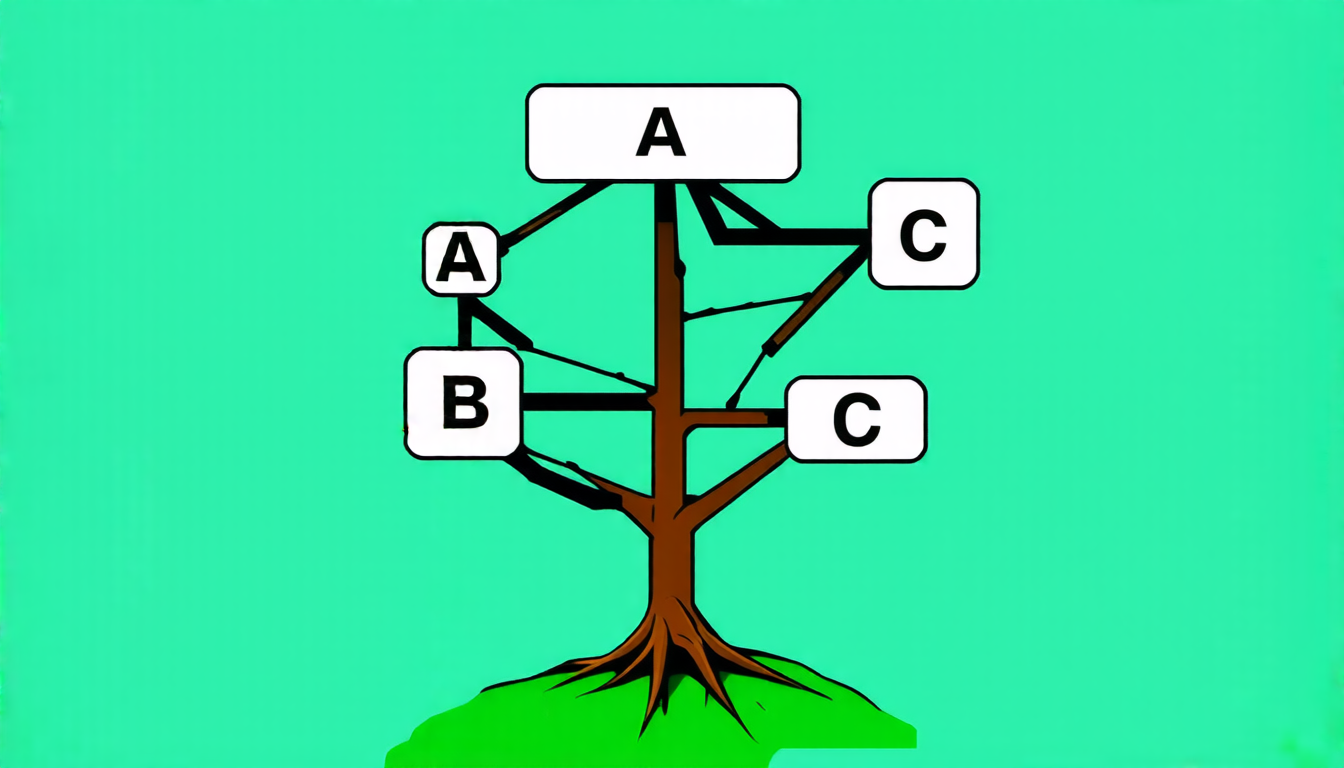
In one demonstration of its capabilities, Video-MMU was tasked with solving a series of problems involving 2-3 trees, a data structure used in computer science to efficiently store and retrieve data. The system’s ability to comprehend the underlying principles of tree reorganization and node insertion allowed it to correctly solve a range of problems, from simple insertions to more complex scenarios.
Another impressive demonstration of Video-MMU’s capabilities was its solution to a problem involving projectile motion. By analyzing the video lecture on the topic, the system was able to understand the fundamental principles of trajectory calculation and apply them to a novel scenario. Its ability to convert between metric and imperial units, handle unit conversions, and correctly calculate the horizontal distance traveled by the projectile were all impressive feats.
While Video-MMU’s capabilities are certainly noteworthy, there are still many challenges that need to be addressed before it can become a widely used tool. One of the main limitations is its reliance on high-quality video lectures as input data. The system requires extensive training and validation data to build its knowledge base, which can be time-consuming and resource-intensive.
Cite this article: “Machine Learning System Can Learn from Videos and Apply Knowledge in Novel Ways”, The Science Archive, 2025.
Artificial Intelligence, Machine Learning, Computer Vision, Natural Language Processing, Video Lectures, Knowledge Acquisition, Problem Solving, Thin Film Interference, Projectile Motion, Tree Data Structures





