

Friday 14 March 2025
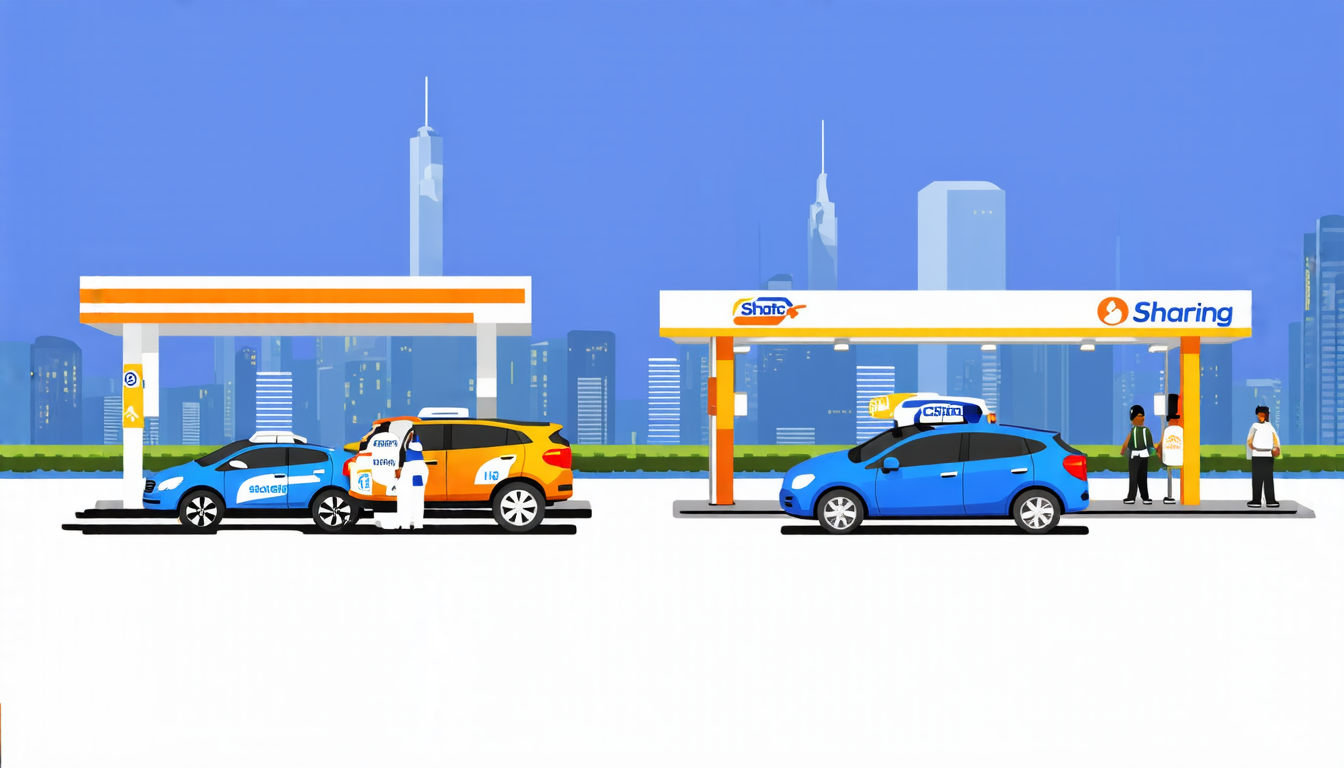
The quest for a more efficient and environmentally friendly transportation system has led scientists to explore innovative solutions. A recent study delves into the world of one-way car-sharing systems, where vehicles are relocated between different stations to maintain an optimal fleet balance. The researchers have developed a novel multi-stage optimization approach that outperforms previous methods in terms of scalability and efficiency.
One-way car-sharing systems have gained popularity in recent years as they offer users flexibility and convenience while also promoting sustainable transportation. However, the relocation process is a complex task that requires careful planning to minimize costs and maximize fleet utilization. The study’s authors approached this problem by decomposing it into three independent decision stages: vehicle selection, route optimization, and relocation scheduling.
The first stage involves selecting vehicles for relocation based on their location and availability. The algorithm considers factors such as the distance between stations, traffic conditions, and the demand for vehicles at each location to determine which vehicles should be moved. The second stage focuses on optimizing the routes taken by relocators – the individuals responsible for moving the vehicles. By minimizing the distance traveled and reducing idle time, the algorithm ensures that relocators are utilized efficiently.
The third and final stage involves scheduling relocation tasks to maximize fleet utilization while balancing demand across different stations. This is achieved by considering the availability of vehicles at each station, as well as the probability of future requests for those vehicles. The algorithm’s multi-stage approach allows it to adapt to changing conditions in real-time, ensuring that the relocation process remains efficient and effective.
The study’s authors tested their approach using a large dataset of taxi trips in New York City. They found that their method outperformed existing solutions in terms of both efficiency and scalability. The results showed that the proposed algorithm was able to minimize relocation costs while maintaining high levels of fleet utilization and demand satisfaction.
The implications of this research are significant, as it could lead to more efficient and sustainable transportation systems. By optimizing vehicle relocation, car-sharing companies can reduce their operating costs and environmental impact. Additionally, the study’s findings could be applied to other industries that rely on vehicle relocation, such as ride-hailing services or logistics companies.
The researchers’ innovative approach to vehicle relocation has opened up new possibilities for improving the efficiency of transportation systems. As cities continue to grow and urban populations increase, finding effective solutions to manage the flow of people and goods will become increasingly important.
Cite this article: “Optimizing One-Way Car-Sharing Systems for Efficient and Sustainable Transportation”, The Science Archive, 2025.
Car-Sharing, Vehicle Relocation, Optimization, Logistics, Transportation, Sustainability, Efficiency, Scalability, Urban Planning, Smart Cities





