

Friday 14 March 2025
The quest for the perfect fried potato has led mathematicians down a rabbit hole of complexity, yielding unexpected breakthroughs in computer science and geometry. In a recent paper, researchers have developed an algorithm that can efficiently solve a classic problem known as Conway’s Fried Potato Problem, which dates back to the 1970s.
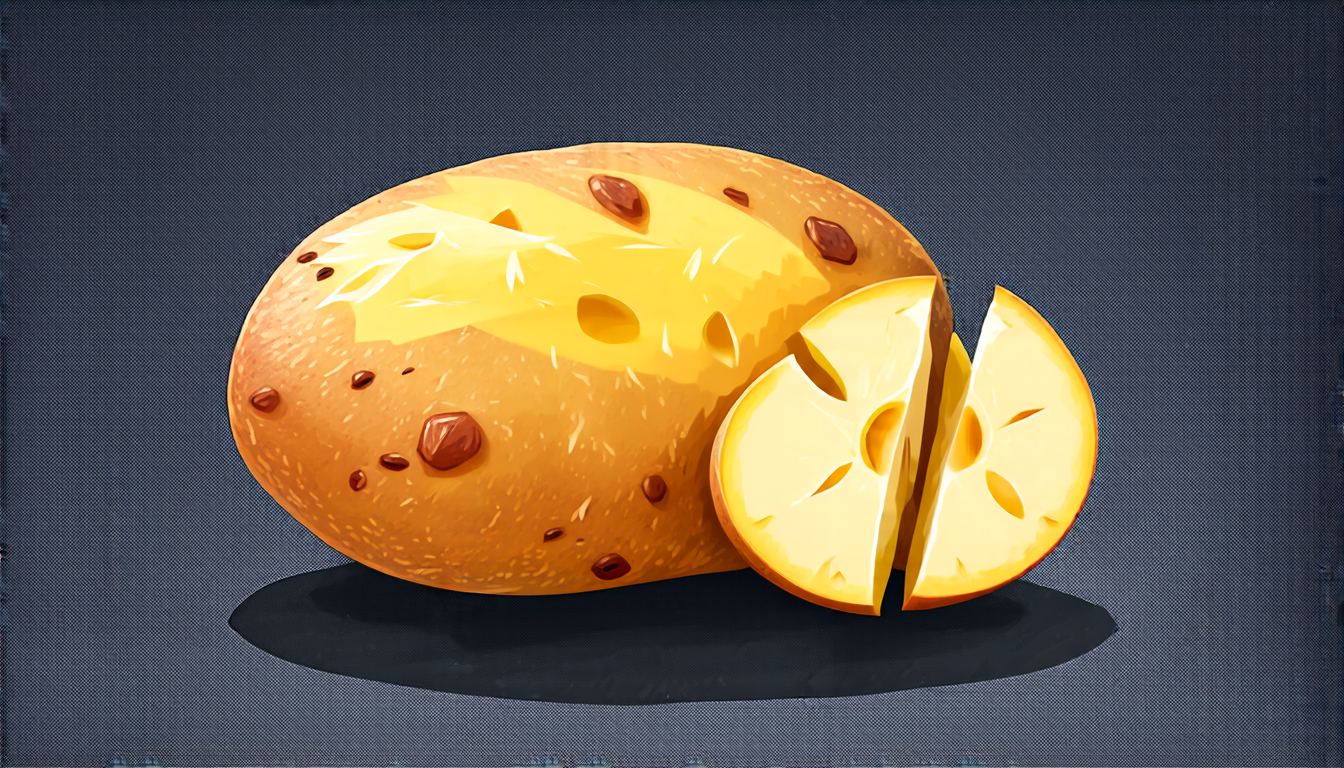
Conway’s problem involves dividing a convex body (think of it like a potato) into pieces by cutting it with hyperplane cuts in such a way that minimizes the maximum radius of the resulting pieces. Sounds simple, but it turns out to be a fiendishly difficult problem, requiring an understanding of advanced mathematical concepts like geometry and linear programming.
The researchers’ solution involves a clever use of a data structure called the Dobkin-Kirkpatrick hierarchy, which was originally developed for solving problems in computer science. By applying this hierarchy to Conway’s problem, they were able to reduce the complexity of the algorithm from quadratic time to quasi-linear time, making it much faster and more efficient.
The implications of this breakthrough are far-reaching. For one, it has significant implications for computer-aided design (CAD) software, which relies heavily on geometric algorithms to create complex shapes and models. By improving the efficiency of these algorithms, researchers can create better CAD tools that can handle larger and more complex designs with ease.
But the impact goes beyond just CAD software. The algorithm also has applications in fields like computer graphics, robotics, and even medical imaging. For example, it could be used to optimize the design of surgical robots or to improve the accuracy of medical imaging algorithms.
The beauty of this breakthrough lies in its simplicity. Despite the complexity of the underlying mathematics, the solution is surprisingly elegant and intuitive, relying on a clever combination of existing techniques rather than any radical new ideas.
In essence, the researchers have shown that even seemingly intractable problems can be solved with a bit of creative thinking and a deep understanding of mathematical principles. And who knows? Maybe one day, their algorithm will help us create the perfect fried potato – or at least, a really efficient way to cut it up.
Cite this article: “Cracking the Code of Conways Fried Potato Problem”, The Science Archive, 2025.
Mathematics, Computer Science, Geometry, Algorithm, Potato, Convex Body, Hyperplane Cuts, Linear Programming, Dobkin-Kirkpatrick Hierarchy, Cad Software
Reference: Francisco Criado, Francisco Santos, “The algorithmic Fried Potato Problem in two dimensions” (2025).





