

Friday 14 March 2025
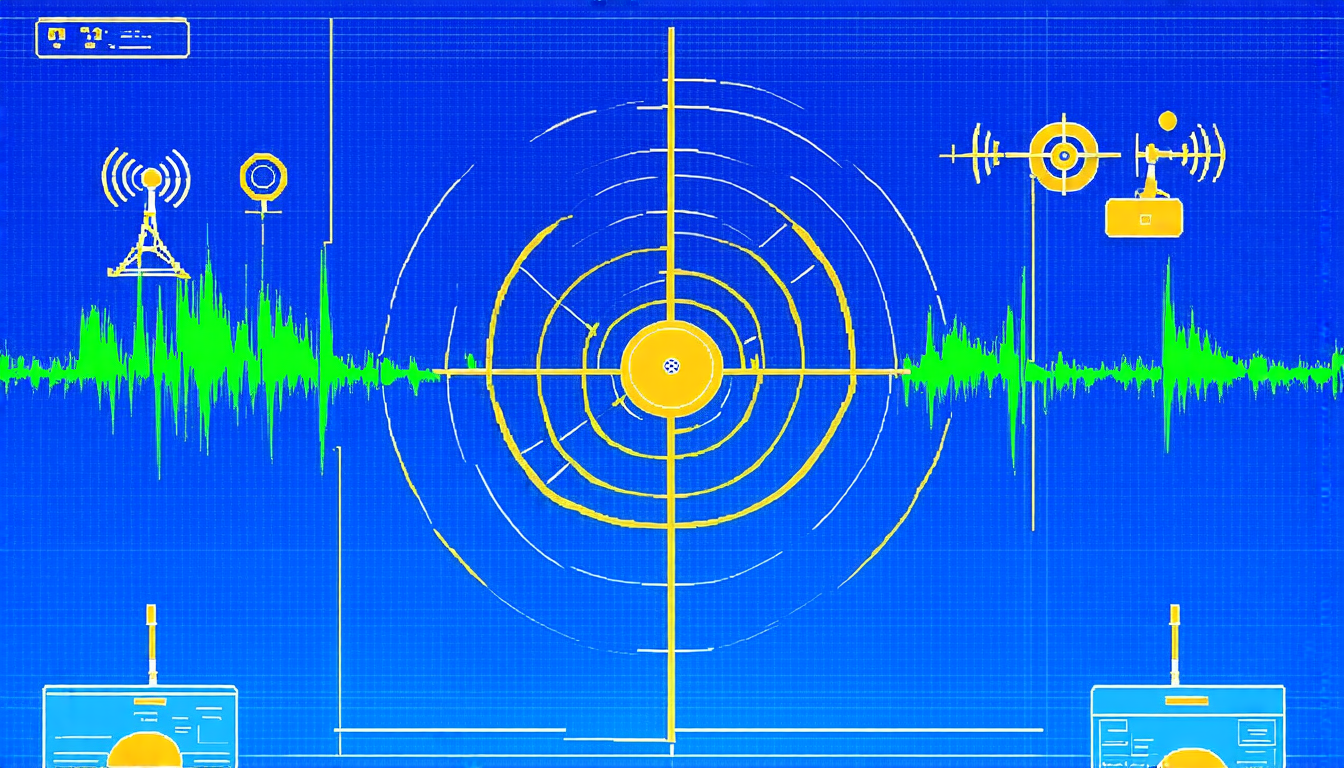
A new approach to radar waveform design has been unveiled, which promises to improve the performance of military and civilian surveillance systems alike. The technique, developed by a team of researchers, relies on a mathematical framework that allows for the reconstruction of complex waveforms from incomplete data.
Radar systems use radio waves to detect and track targets, such as aircraft or missiles. However, designing these waveforms to optimize performance is a notoriously challenging task. One key issue is the need to balance the conflicting demands of resolution, range, and sensitivity. A waveform that is too simple may not provide sufficient information about its target, while one that is too complex may be difficult to process and analyze.
The researchers’ solution is to use a fractional Fourier transform (FrFT) to represent the radar waveform as a sum of multiple frequencies. This allows them to decouple the frequency and time domains, making it possible to design waveforms that are tailored to specific applications.
One key advantage of this approach is its ability to handle non-uniform sampling, which is a common problem in radar systems. When targets move at different speeds or have varying levels of reflectivity, it can be difficult to ensure that the waveform is accurately sampled and processed. The FrFT-based method can handle these challenges by using a combination of frequency and time-domain processing.
The researchers have demonstrated the effectiveness of their technique through simulations and experiments with real radar data. In one test scenario, they were able to recover complex waveforms from incomplete data sets, achieving improved resolution and sensitivity compared to traditional methods.
The implications of this work are significant. Radar systems will be able to provide more accurate and reliable information about targets, which could have major benefits in fields such as air traffic control, border security, and weather monitoring. The technique may also find applications in other areas where waveform design is critical, such as sonar and seismic imaging.
The next step for the researchers is to further develop and refine their method, with a view to implementing it in real-world radar systems. They are also exploring potential applications in other fields, such as optics and signal processing.
In practical terms, this means that the team will need to work closely with industry partners to develop and test the technology. This may involve collaborating with companies that specialize in radar system design and development, as well as working with government agencies and research institutions.
Ultimately, the potential benefits of this new approach to radar waveform design are significant.
Cite this article: “Revolutionary Radar Waveform Design Technique Unveiled”, The Science Archive, 2025.
Radar, Waveform, Design, Fractional Fourier Transform, Frft, Sampling, Processing, Resolution, Sensitivity, Signal Processing





