

Friday 14 March 2025
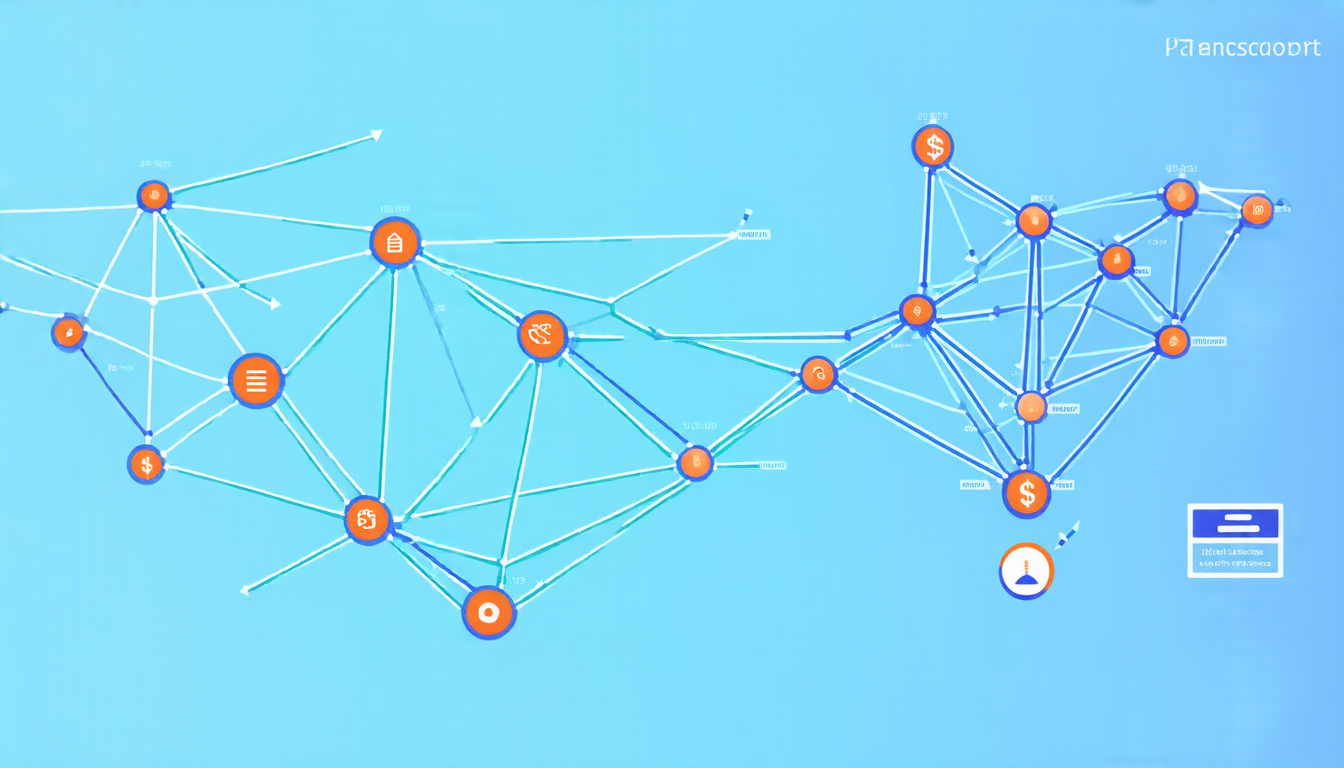
In recent years, artificial intelligence has made tremendous progress in detecting anomalies and irregularities within complex networks, such as social media platforms and financial transactions. One specific area of focus is graph anomaly detection, where AI algorithms are designed to identify unusual patterns or nodes within a network that don’t conform to the norm.
Researchers have developed various techniques to tackle this challenge, including graph neural networks (GNNs) which learn to recognize anomalies by analyzing node features and relationships within a graph. However, existing methods often struggle to balance the importance of different features and edge types, leading to suboptimal performance.
Enter Bi-directional Curriculum Learning (BCL), a novel approach that addresses this issue by introducing a training strategy that considers both homogeneous and heterogeneous characteristics in the network. The idea is simple: by gradually increasing the difficulty of node samples during training, the model learns to focus on the most important features and relationships, resulting in improved anomaly detection performance.
In practice, BCL achieves this by employing a curriculum learning framework that adjusts the balance between homogeneity and heterogeneity based on the node’s difficulty score. This score is calculated using a combination of node attributes and edge types, allowing the model to prioritize nodes with higher similarity to neighbor nodes for easier training, and those with lower similarity for more challenging learning.
To evaluate BCL’s effectiveness, researchers conducted extensive experiments on seven widely used datasets, including social media networks, financial transactions, and molecular structures. The results show that BCL significantly outperforms other graph curriculum learning methods, achieving state-of-the-art performance in anomaly detection tasks.
One key finding is that the optimal balance between homogeneity and heterogeneity varies depending on the dataset and GAD method used. For example, some datasets benefit from a stronger emphasis on homogeneous features, while others require a more balanced approach. BCL’s adaptability to these variations makes it a versatile tool for tackling diverse anomaly detection challenges.
The researchers also explored the impact of hyperparameters such as λ0 and T on BCL’s performance. These parameters control the initial number of training nodes and the speed at which difficult nodes are introduced, respectively. Surprisingly, they found that optimal values for these parameters can vary depending on the dataset and GAD method used.
The implications of BCL are far-reaching, with potential applications in fraud detection, disease diagnosis, and quality control, among others.
Cite this article: “Advancing Graph Anomaly Detection with Bi-Directional Curriculum Learning”, The Science Archive, 2025.
Artificial Intelligence, Graph Anomaly Detection, Bi-Directional Curriculum Learning, Node Features, Edge Types, Graph Neural Networks, Curriculum Learning Framework, Node Attributes, Edge Types, Anomaly Detection Tasks.





