

Friday 14 March 2025
The quest for a unified language in business process modeling has been an ongoing challenge for researchers and practitioners alike. The traditional dichotomy between procedural and declarative approaches has led to a fragmented landscape, making it difficult to seamlessly integrate different models and engines. However, a recent development may be about to change the game.
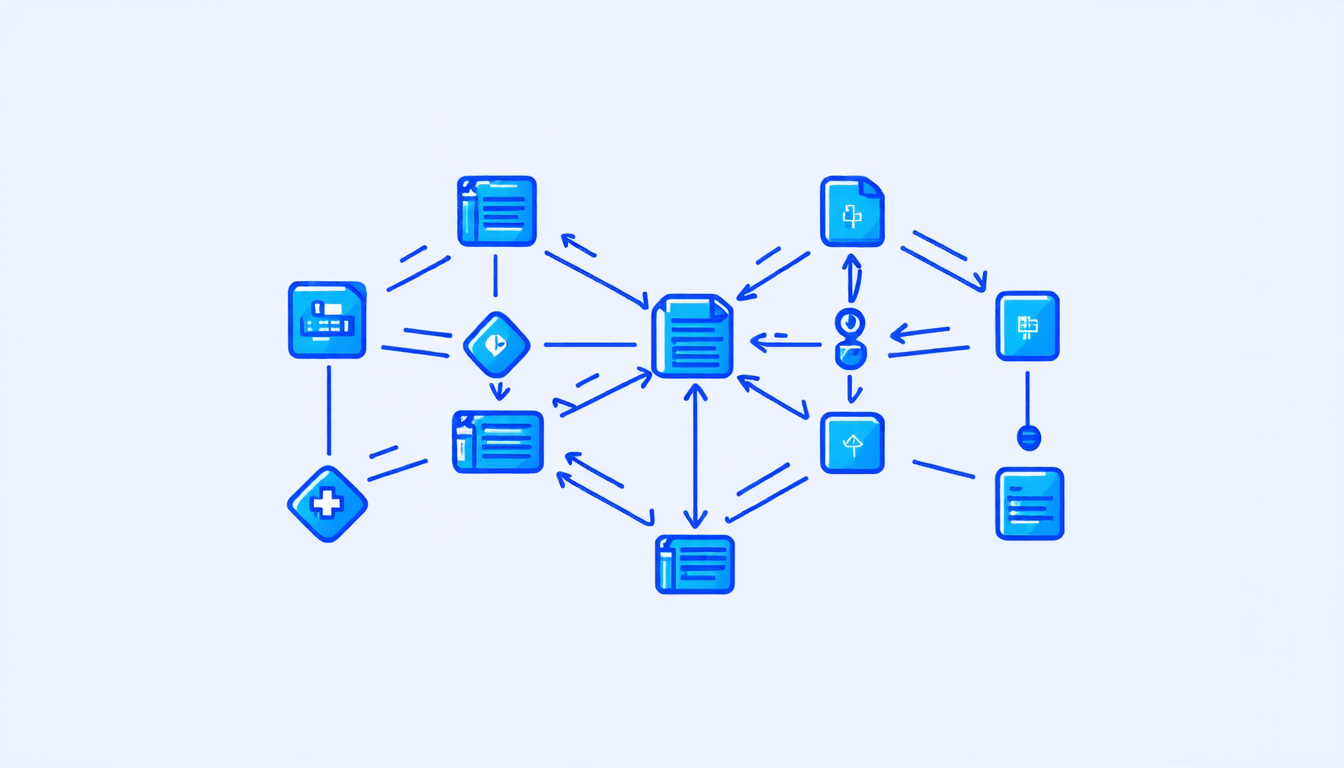
By leveraging streams, tables, and Continuous Query Language (CQL), a novel approach seeks to bridge the gap between diverse process modeling notations. The idea is simple yet powerful: instead of forcing business processes into a single mold, why not design an execution engine that can adapt to various models and languages?
The proposed system relies on CQL, a query language specifically designed for continuous queries over streams and relations. By encoding business processes in CQL, the engine can execute them dynamically, responding to changing event streams and updating tables accordingly. This approach eliminates the need for explicit transformations or translations between different modeling languages.
One of the key benefits of this system is its flexibility. Unlike traditional engines that are tied to a specific process model or language, this approach allows for seamless integration with various notations, including BPMN and DCR graphs. This means that organizations can leverage their existing models while still enjoying the benefits of a unified execution engine.
Another advantage is its ability to handle complex event processing (CEP) tasks. By incorporating CEP capabilities directly into the engine, businesses can detect patterns and trigger actions in real-time, without the need for additional software or infrastructure.
The system’s scalability is also noteworthy. By leveraging distributed computing architectures and parallel processing, it can handle large volumes of data and events with ease, making it an attractive solution for organizations dealing with massive amounts of information.
While this approach may not be a silver bullet for all business process modeling challenges, it represents a significant step forward in the quest for a unified language. By providing a flexible and adaptable execution engine, researchers hope to make process modeling more accessible and efficient for businesses of all sizes.
The implications are far-reaching. Imagine, for instance, a healthcare organization that uses multiple process models to manage patient care. With this system, they could integrate these models into a single engine, streamlining their operations and improving overall efficiency.
Similarly, organizations in the financial sector could use this approach to automate complex workflows and detect anomalies in real-time. The possibilities are endless, and it will be exciting to see how this technology evolves and is applied in various industries.
Cite this article: “Unified Business Process Modeling: A Breakthrough in Execution Engine Technology”, The Science Archive, 2025.
Business Process Modeling, Unified Language, Procedural Approaches, Declarative Approaches, Continuous Query Language, Cql, Execution Engine, Event Streams, Complex Event Processing, Distributed Computing Architectures.





