

Friday 14 March 2025
Researchers have been scrutinizing the performance of Apple Silicon devices for machine learning training, and the results are telling. Despite their promise of portability and affordability, these chips simply don’t cut it when it comes to crunching complex calculations.
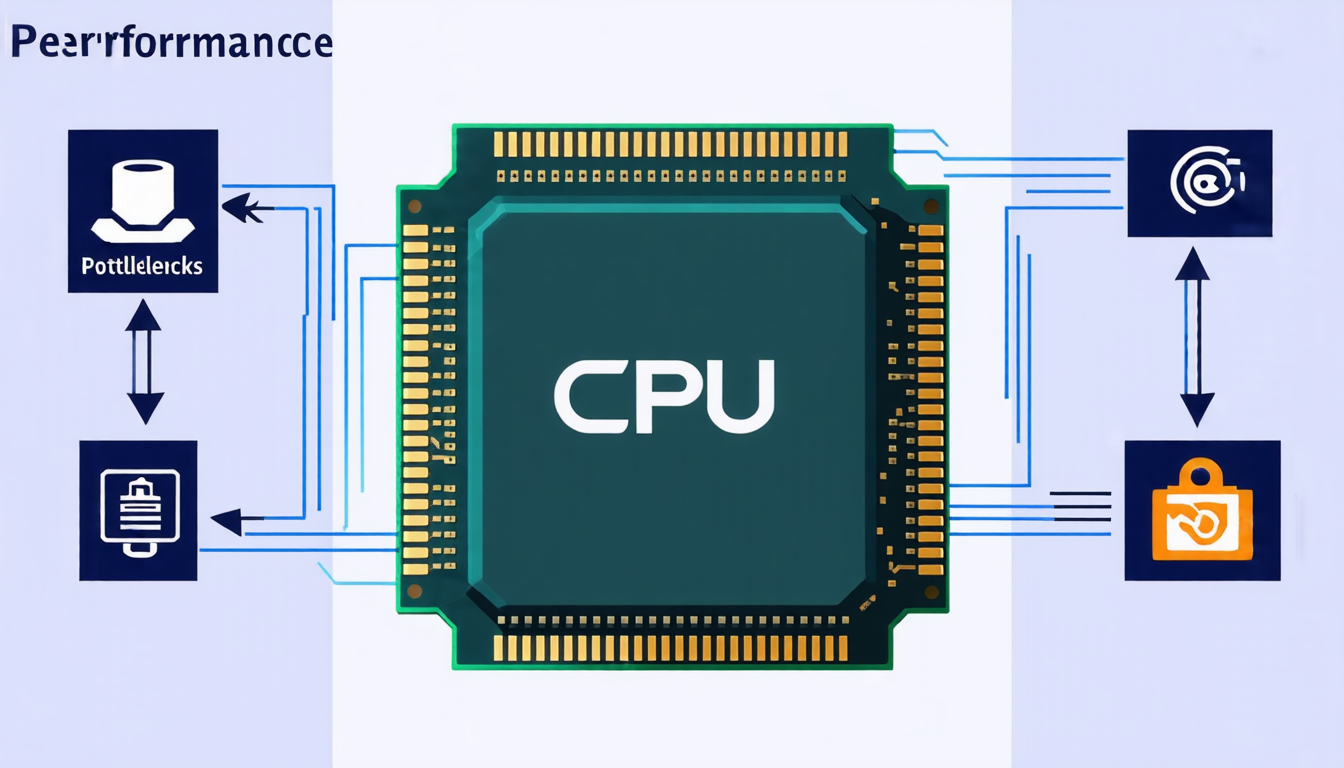
The problem lies not just in the hardware itself, but also in the way it’s designed to handle memory management. Unlike NVIDIA GPUs, which have traditionally dominated machine learning training, Apple Silicon devices use a unified memory architecture that integrates CPU and GPU memory. While this might seem like an innovative approach, it actually leads to significant performance bottlenecks.
When training large language models (LLMs), which require massive amounts of memory and computational power, Apple Silicon devices struggle to keep up. The researchers found that even the most powerful M2 Ultra chip falls short compared to NVIDIA’s A6000 GPU, with a performance gap of around 3-4 times.
But it’s not just about raw processing power. The unified memory architecture also means that page faults – instances where the system needs to fetch data from slower storage – become a major issue. This leads to increased latency and reduced overall efficiency.
The researchers dug deeper into the performance gap by analyzing basic linear algebra subprograms (BLAS), which are the building blocks of many machine learning algorithms. They found that Apple Silicon devices, despite their optimized kernels, still struggle to match the performance of NVIDIA GPUs.
One area where Apple Silicon does show promise is in power efficiency. The devices consume significantly less energy than their NVIDIA counterparts, making them a more attractive option for users who need to train models on the go.
However, this advantage comes at a cost. The reduced power consumption means that the chips are also slower and less capable when it comes to complex calculations. This might not be a problem for general-purpose computing tasks, but for machine learning training, speed and efficiency are paramount.
The findings have significant implications for users who rely on machine learning for their work. While Apple Silicon devices may still be suitable for smaller-scale projects or those with limited budgets, anyone serious about large-scale training will need to turn to NVIDIA GPUs or other specialized hardware.
In the meantime, researchers will continue to optimize the performance of Apple Silicon devices, but it’s clear that they have a long way to go before they can compete with the likes of NVIDIA.
Cite this article: “Apple Silicons Limitations in Machine Learning Training Revealed”, The Science Archive, 2025.
Apple Silicon, Machine Learning, Training, Performance, Hardware, Memory Management, Unified Architecture, Nvidia Gpus, Power Efficiency, Energy Consumption





