
Friday 14 March 2025
A new approach to decomposing complex signals has been developed, allowing researchers to tease apart intertwined frequency components and shed light on previously hidden patterns.
Signals in the real world are often messy and complex, comprising multiple frequency components that overlap and interact with one another. This makes it challenging to extract meaningful information from them. In fields such as medicine, engineering, and climate science, being able to accurately decompose these signals could lead to breakthroughs in diagnosis, prediction, and understanding.
The new method, known as 3D- SRMD, lifts the random feature space of a signal into three dimensions, incorporating time-frequency-chirp rate coordinates. This allows researchers to disentangle frequency components that would otherwise be indistinguishable in traditional two-dimensional time-frequency representations.
By using a concentrated distribution strategy for the random features, the method is able to effectively separate modes with crossover instantaneous frequencies – a common challenge in signal decomposition. The resulting decomposition provides a more accurate and detailed understanding of the underlying signal structure.
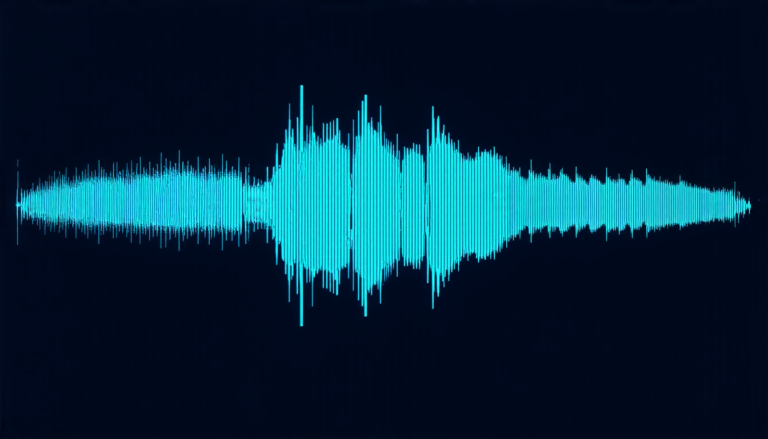
The technique has been tested on both simulated and real-world signals, including audio recordings of whale songs. In these examples, 3D-SRMD successfully separated the different frequency components and revealed patterns that were previously obscured by noise and overlap.
This new approach has significant implications for a range of fields where complex signal decomposition is crucial. For instance, in medicine, it could lead to more accurate diagnoses of diseases such as epilepsy or Parkinson’s, which are characterized by complex brain wave patterns. In climate science, 3D-SRMD could help researchers better understand and predict the behavior of chaotic systems like weather patterns.
The development of this method is a testament to the power of interdisciplinary collaboration, bringing together experts in signal processing, statistics, and machine learning to tackle one of the most challenging problems in modern science. As researchers continue to refine and apply 3D-SRMD, it’s likely that we’ll see significant breakthroughs in our understanding of complex systems and the development of innovative technologies to analyze them.
Cite this article: “Unraveling Complex Signals: A New Approach to Decomposition”, The Science Archive, 2025.
Signal Processing, Signal Decomposition, Frequency Components, Time-Frequency Analysis, Chirp Rate, Random Features, Machine Learning, Interdisciplinary Collaboration, Complex Systems, Pattern Recognition