

Friday 14 March 2025
The pursuit of creating autonomous service robots that can navigate complex environments, interact with humans, and learn from experience has been a long-standing challenge in robotics research. Researchers at the University of Bonn have made significant strides in this area by developing a cognitive architecture that enables robots to generalize and adapt to novel situations.
One of the key issues facing autonomous robots is their ability to learn from experience. Humans are able to quickly adapt to new tasks and environments through a combination of conscious and unconscious processing, whereas current robotic systems rely on structured data and pre-programmed rules. The researchers at the University of Bonn have designed a system that mimics human cognition by integrating causal models, working memory, planning, and metacognitive processing.
The system is based on two interconnected components: System 1, which handles routine tasks unconsciously, and System 2, which manages complex tasks consciously. This dual-system architecture allows the robot to learn from experience and adapt to new situations through a process of systematic generalization.
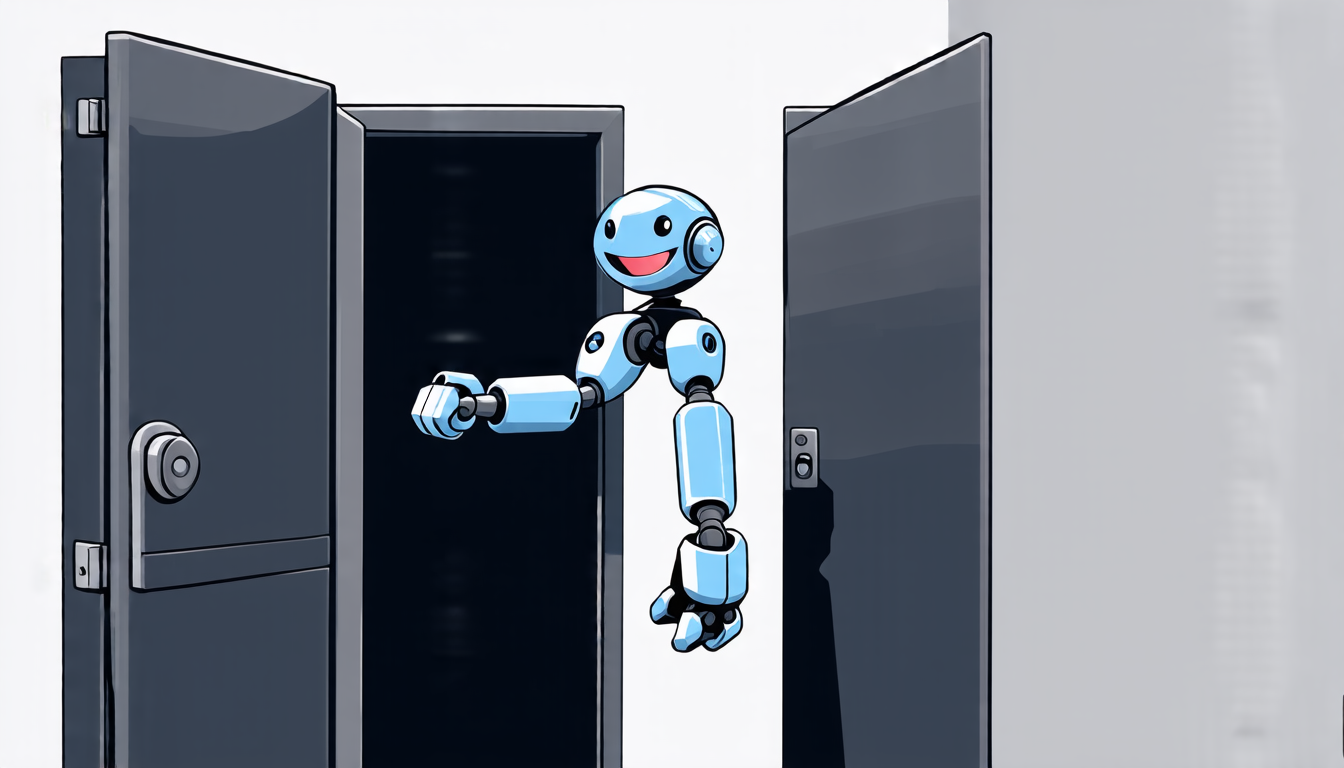
To demonstrate the effectiveness of their approach, the researchers created a service robot that can perform various tasks such as opening doors, picking up objects, and interacting with humans. The robot was able to learn from its experiences and generalize this knowledge to novel situations, allowing it to adapt to new environments and tasks.
The implications of this research are significant for the development of autonomous service robots. By enabling robots to learn from experience and adapt to novel situations, these systems can become more efficient and effective in a variety of applications, such as healthcare, education, and customer service.
The researchers’ approach is also relevant to the broader field of artificial intelligence, where the ability to generalize and adapt to new situations is a key challenge. The development of cognitive architectures that mimic human cognition could lead to significant advances in areas such as natural language processing, computer vision, and decision-making.
Overall, the University of Bonn’s research demonstrates a significant step forward in the development of autonomous service robots that can learn from experience and adapt to novel situations. As this technology continues to evolve, it has the potential to revolutionize a wide range of industries and applications.
Cite this article: “Cognitive Architecture Enables Autonomous Robots to Learn and Adapt”, The Science Archive, 2025.
Autonomous Robots, Service Robotics, Cognitive Architecture, Generalization, Adaptation, Artificial Intelligence, Natural Language Processing, Computer Vision, Decision-Making, Human Cognition.
Reference: Sven Behnke, “Towards Conscious Service Robots” (2025).





