

Friday 14 March 2025
A team of researchers has made a significant breakthrough in robotic manipulation, enabling machines to perform complex tasks without prior programming or expert knowledge. The innovation, known as LM-SymOpt, uses a combination of large language models and symbolic reasoning to plan and execute actions in various environments.
Traditionally, robots have relied on pre-programmed instructions or expert-defined rules to navigate complex tasks. However, this approach has limitations, particularly when it comes to adapting to new situations or unexpected events. In contrast, LM-SymOpt’s approach allows robots to learn from language descriptions of tasks and plan their actions accordingly.
The system works by first translating natural language instructions into symbolic representations, which are then used to generate plans for the robot to execute. This process is made possible through the use of large language models, which have been trained on vast amounts of text data and can understand complex language patterns.
One of the key advantages of LM-SymOpt is its ability to generalize to new tasks and environments without requiring extensive reprogramming or training. This is achieved by using symbolic reasoning to predict how changes in the environment may affect the robot’s actions, allowing it to adapt to unexpected situations.
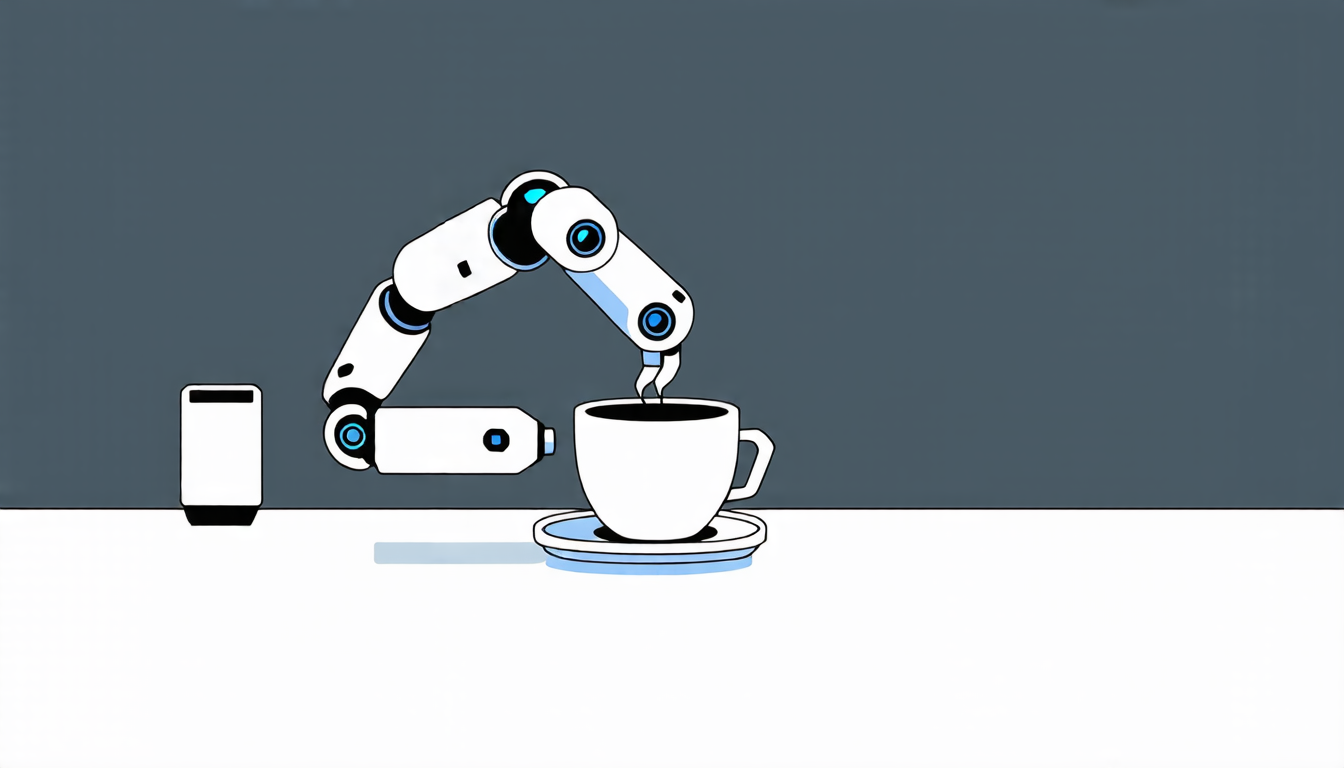
The system has been tested on a range of tasks, including placing cups on a cup holder, picking up rubbish and leaving it in a trash can, and even manipulating objects in a simulated environment. The results show that LM-SymOpt is able to successfully complete these tasks with high accuracy and efficiency.
This innovation has significant implications for the development of autonomous robots, which are increasingly being used in areas such as healthcare, manufacturing, and logistics. By allowing robots to learn from language descriptions and plan their actions accordingly, LM-SymOpt could enable them to perform complex tasks more effectively and efficiently, without requiring extensive reprogramming or expert knowledge.
In addition, the system’s ability to generalize to new tasks and environments makes it well-suited for applications where the task requirements may change frequently. For example, in a warehouse setting, robots equipped with LM-SymOpt could be used to perform tasks such as picking and packing items, without requiring extensive retraining or programming.
Overall, the development of LM-SymOpt represents an important step forward in robotic manipulation, enabling machines to learn from language descriptions and plan their actions accordingly. As the technology continues to evolve, it is likely to have significant implications for a wide range of industries and applications.
Cite this article: “Breakthrough in Robotic Manipulation Enables Machines to Learn from Language Descriptions”, The Science Archive, 2025.
Robotics, Manipulation, Language Models, Symbolic Reasoning, Autonomous Robots, Natural Language Processing, Task Planning, Generalization, Reinforcement Learning, Machine Learning





