

Friday 14 March 2025
The concept of authorship has long been tied to human creativity and agency, but what happens when artificial intelligence takes on a more significant role in artistic endeavors? A recent study published in a scientific journal explores this question by examining the relationship between AI agents and creative processes.
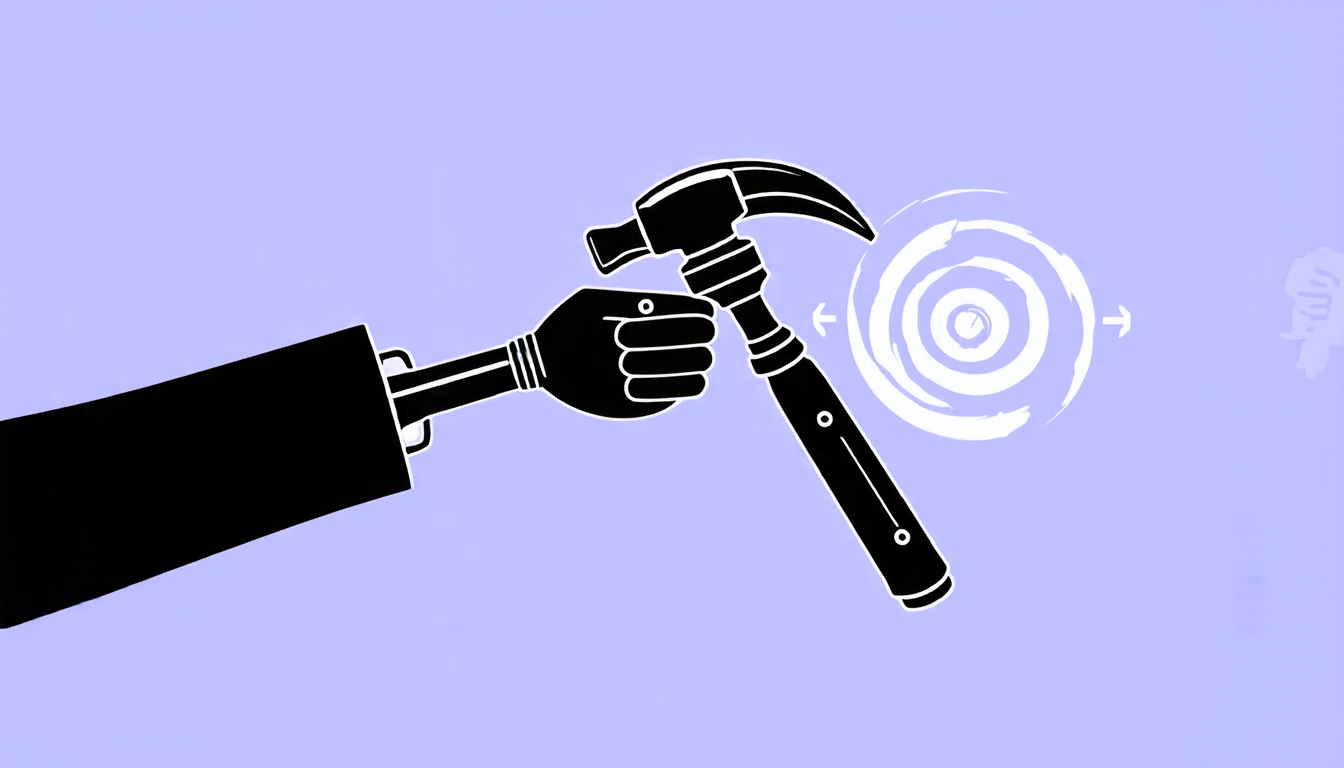
For decades, humans have used tools like paintbrushes, hammers, and even words to express themselves. These tools are often seen as extensions of our own capabilities, allowing us to create new works that reflect our thoughts, emotions, and experiences. However, with the rise of artificial intelligence, a new type of tool has emerged: AI agents capable of generating art, music, and even entire stories.
But what does it mean for an AI agent to be considered an author? Is it simply a matter of creating something original, or is there more to it? The study suggests that the relationship between humans and AI agents in creative processes is far more complex than previously thought. By analyzing various examples of human-AI collaboration, researchers have identified three distinct stages of technological development, each with its own level of autonomy.
The first stage involves simple tools, such as a hammer or an abacus, which are used to extend our native capabilities. These tools are intuitive and allow us to perform specific functions, but they do not possess any autonomous decision-making abilities. The second stage sees the introduction of machines that can operate independently, but still require human supervision and control.
The third and most advanced stage is where AI agents come into play. These semi-autonomous entities can exhibit creative agency, generating new content through complex algorithms and machine learning models. However, their autonomy is ultimately bound to human direction, as they cannot choose not to act unless instructed otherwise.
The study’s authors propose a framework that views AI agents as existing between the puppets of classical puppetry and the actors who bring scripts to life on stage. This dynamic range of autonomy allows for co-creation and collaboration between humans and AI agents, blurring the lines between authorship and creative agency.
One example discussed in the study is Generative Agents, a virtual environment where users can interact with 25 AI-powered characters that simulate human-like behavior. Another example is ChatDev, a fictional software company that operates through various intelligent agents holding different roles. These examples illustrate how AI agents can participate in creative processes, generating new content and exhibiting degrees of autonomy.
Cite this article: “Reimagining Authorship: The Evolution of Creative Collaboration Between Humans and Artificial Intelligence”, The Science Archive, 2025.
Artificial Intelligence, Authorship, Creativity, Agency, Human-Ai Collaboration, Automation, Machine Learning, Algorithms, Autonomy, Co-Creation, Puppets





