

Friday 14 March 2025
Recent research has shed new light on the world of mathematics, specifically in the field of algebraic combinatorics. A team of scientists has made a significant breakthrough in understanding the depth of powers of edge ideals, a complex mathematical concept that has puzzled experts for years.
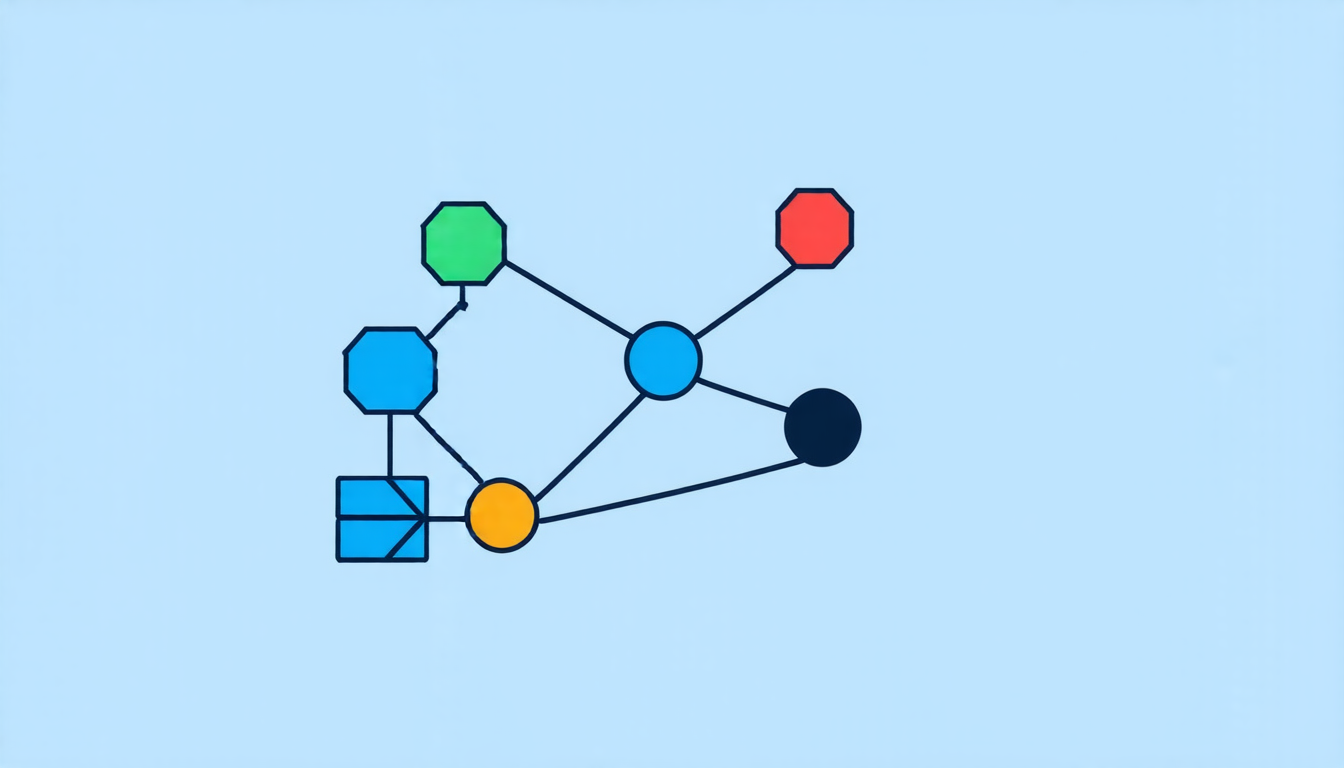
To put it simply, an edge ideal is a set of numbers that represents the edges of a graph, which is essentially a collection of points connected by lines. In this case, the researchers focused on edge-ideal powers, which are created by taking the product of multiple edge ideals. Think of it like multiplying the edges of a graph together to get a new set of edges.
The depth of an ideal refers to how many layers or levels deep it is within the mathematical structure. In the context of edge ideals, understanding the depth is crucial because it can reveal valuable information about the properties of the graph itself.
For decades, mathematicians have struggled to find a general formula for calculating the depth of powers of edge ideals. This was because the problem was too complex and required a deep understanding of algebraic combinatorics. However, the recent breakthrough has provided a new solution that can be applied to many different types of graphs.
The researchers used a combination of mathematical techniques and computational methods to develop their formula. They first identified specific patterns in the edge ideals that could be used to predict the depth. Then, they created algorithms to calculate the depth for various types of graphs.
One of the most significant aspects of this research is its potential applications in real-world problems. For example, graph theory has been used to model complex networks such as social media, transportation systems, and biological pathways. By understanding the depth of edge ideals, scientists can gain insights into the structure and behavior of these networks.
Moreover, the new formula could have implications for fields such as computer science, engineering, and physics. In computer science, it could be used to optimize algorithms for processing large data sets. In engineering, it could help designers create more efficient systems by understanding how different components interact with each other.
The research is still in its early stages, but the potential benefits are vast. As scientists continue to explore the depths of edge ideals, they may uncover even more surprising applications and insights that can revolutionize our understanding of complex systems.
In a nutshell, this breakthrough represents a major step forward in algebraic combinatorics. By cracking the code of edge ideal powers, mathematicians have opened up new avenues for research and problem-solving in various fields.
Cite this article: “Cracking the Code: A Breakthrough in Algebraic Combinatorics”, The Science Archive, 2025.
Algebraic Combinatorics, Edge Ideals, Graph Theory, Mathematical Structure, Depth Of Powers, Ideal Calculation, Computational Methods, Algorithm Development, Complex Networks, Data Processing.





