

Saturday 15 March 2025
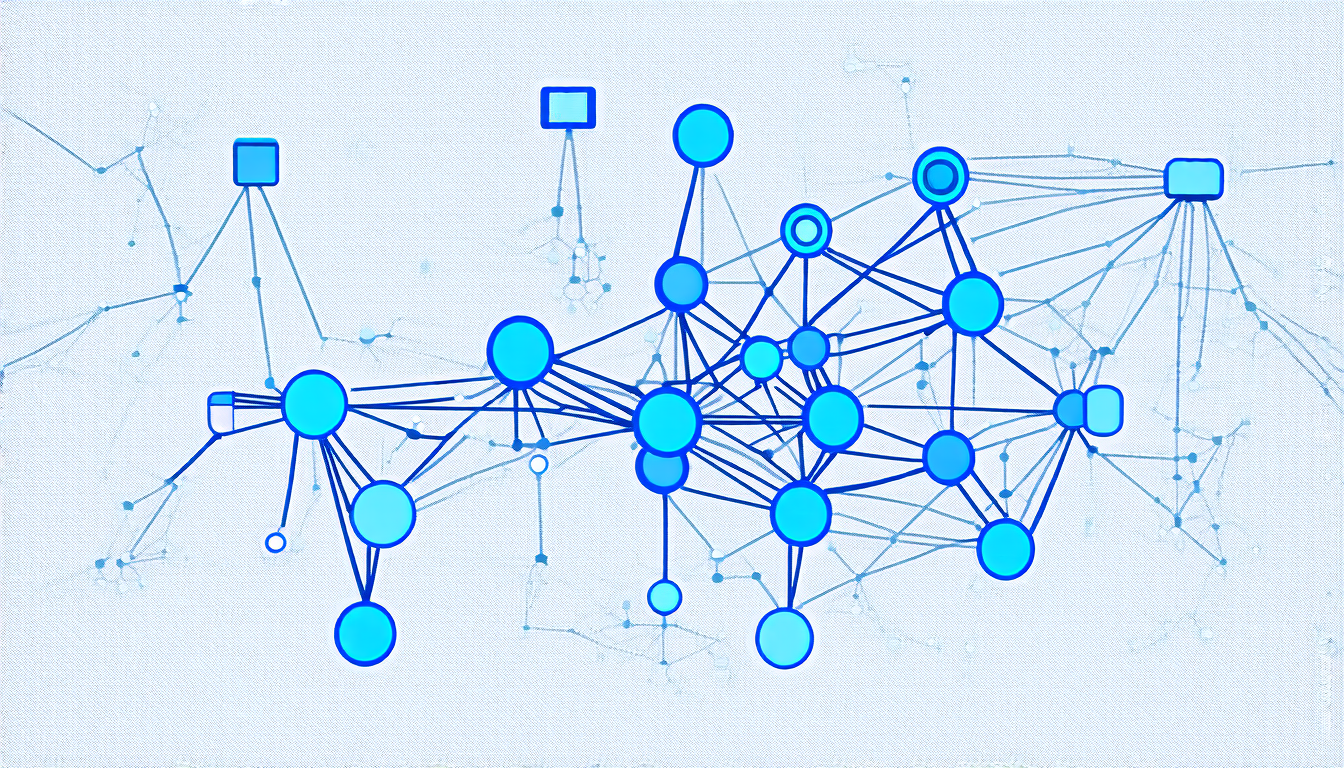
The researchers set out to tackle a fundamental problem in graph theory: realizing degree sequences by bipartite multigraphs. In other words, they wanted to determine whether it’s possible to construct a network where each node has a specific number of connections to other nodes.
To understand the significance of this problem, let’s start with some basics. A graph is simply a collection of nodes or vertices connected by edges. The degree of a node refers to the number of edges that connect it to other nodes. In real-world networks, such as social media platforms or transportation systems, understanding how nodes are connected is crucial for designing efficient and reliable systems.
The researchers focused on bipartite multigraphs, which are networks where two sets of nodes (say, A and B) are connected by edges in a specific way. This type of network arises naturally in many real-world situations, such as matching students with schools or assigning tasks to workers.
The main challenge is that not all degree sequences can be realized by bipartite multigraphs. In other words, there may not always be a way to construct a network where each node has the desired number of connections. The researchers wanted to identify which degree sequences are realizable and under what conditions.
To tackle this problem, they developed a new algorithm that can efficiently compute all possible partitions of a degree sequence into two sets of nodes (A and B). This allowed them to determine whether a given degree sequence is realizable by a bipartite multigraph.
One of the key insights from their research is that there are certain conditions under which a degree sequence can be realized. Specifically, they found that if the maximum degree of a node in one set (say, A) is bounded above by a certain value, then it’s possible to construct a bipartite multigraph with the desired degree sequence.
The researchers also showed that their algorithm can be used to compute the minimum number of edges required to realize a given degree sequence. This is important because it can help designers of real-world networks optimize their systems for efficiency and reliability.
Overall, this research has significant implications for our understanding of how complex networks are structured and how they can be designed to function effectively. By developing new algorithms and insights into the realization problem, researchers can better understand the fundamental properties of networks and design more efficient and reliable systems.
Cite this article: “Realizing Degree Sequences by Bipartite Multigraphs: A New Algorithmic Approach”, The Science Archive, 2025.
Graph Theory, Degree Sequences, Bipartite Multigraphs, Network Realization, Algorithm Development, Optimization, Minimum Edge Count, Complex Networks, System Design, Graph Partitioning





