

Saturday 15 March 2025
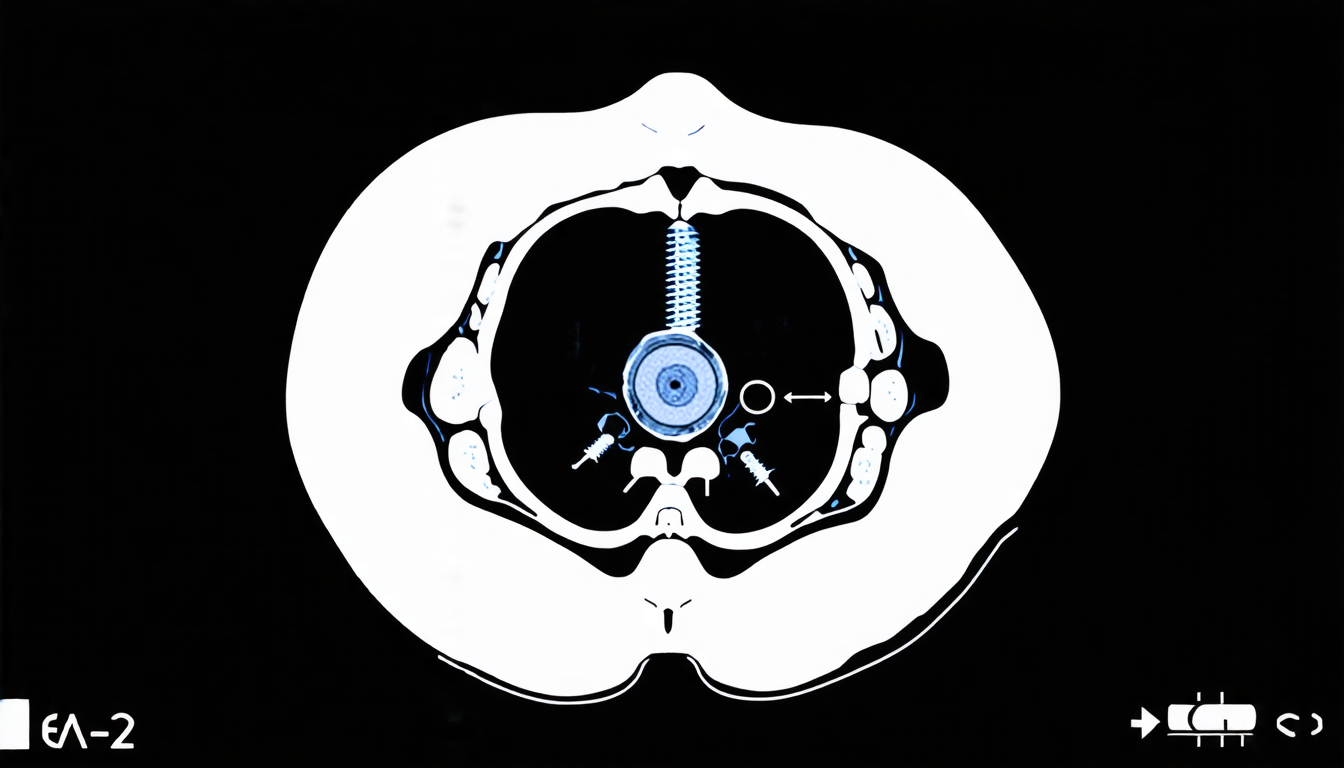
The quest for better medical imaging technology has been ongoing for decades, and researchers have made significant strides in recent years. One of the most pressing issues in this field is the problem of metal artifacts in computed tomography (CT) scans. Metal objects can distort the image, making it difficult to diagnose certain conditions.
To combat this issue, a team of scientists has developed a new approach that uses artificial intelligence to improve the quality of CT images. The method, called radiologist-in-the-loop self-training, involves training an AI model on a large dataset of CT scans with metal artifacts and then fine-tuning it using feedback from human radiologists.
The AI model is designed to identify metal objects in the image and remove them or reduce their impact on the diagnosis. This approach has several advantages over traditional methods, which often rely on manual editing by radiologists. The AI model can process large amounts of data quickly and accurately, making it an ideal solution for busy medical facilities.
The researchers tested their method on a dataset of 1,000 CT scans with metal artifacts and found that the AI model was able to significantly improve the quality of the images. They also compared their results to those obtained using traditional methods and found that their approach was more effective in reducing metal artifacts.
This technology has the potential to revolutionize medical imaging by providing doctors with better tools for diagnosing conditions. With this method, radiologists can focus on what they do best – interpreting images and making diagnoses – rather than spending hours editing and re-editing scans.
The development of this AI-powered CT scanner is a significant step forward in the field of medical imaging. It has the potential to improve patient care by providing more accurate diagnoses and reducing the time it takes for doctors to make them. This technology could also be used to develop new treatments and therapies that are tailored to individual patients.
In addition to its clinical applications, this technology could also have a significant impact on the field of medical research. By providing researchers with better tools for imaging and diagnosing conditions, it could lead to breakthroughs in our understanding of diseases and the development of new treatments.
Overall, this AI-powered CT scanner is an exciting development that has the potential to change the face of medical imaging. It’s a testament to the power of artificial intelligence and its ability to improve patient care and advance our understanding of disease.
Cite this article: “Revolutionizing Medical Imaging with AI-Powered CT Scanners”, The Science Archive, 2025.
Medical Imaging, Ai-Powered Ct Scanner, Metal Artifacts, Computed Tomography, Radiologists, Artificial Intelligence, Self-Training, Medical Research, Patient Care, Disease Diagnosis





