

Saturday 15 March 2025
Deep learning has revolutionized the field of medical imaging, enabling researchers to develop sophisticated algorithms that can diagnose diseases with unprecedented accuracy. In recent years, convolutional neural networks (CNNs) have been particularly successful in this regard, demonstrating impressive performance on tasks such as classifying tumors and identifying neurological disorders.
Now, a team of researchers has taken the next step by developing a novel approach to medical imaging analysis using vision transformers (ViT). This innovative technique, which combines the strengths of CNNs and natural language processing models, shows tremendous promise for diagnosing Alzheimer’s disease from brain scans.
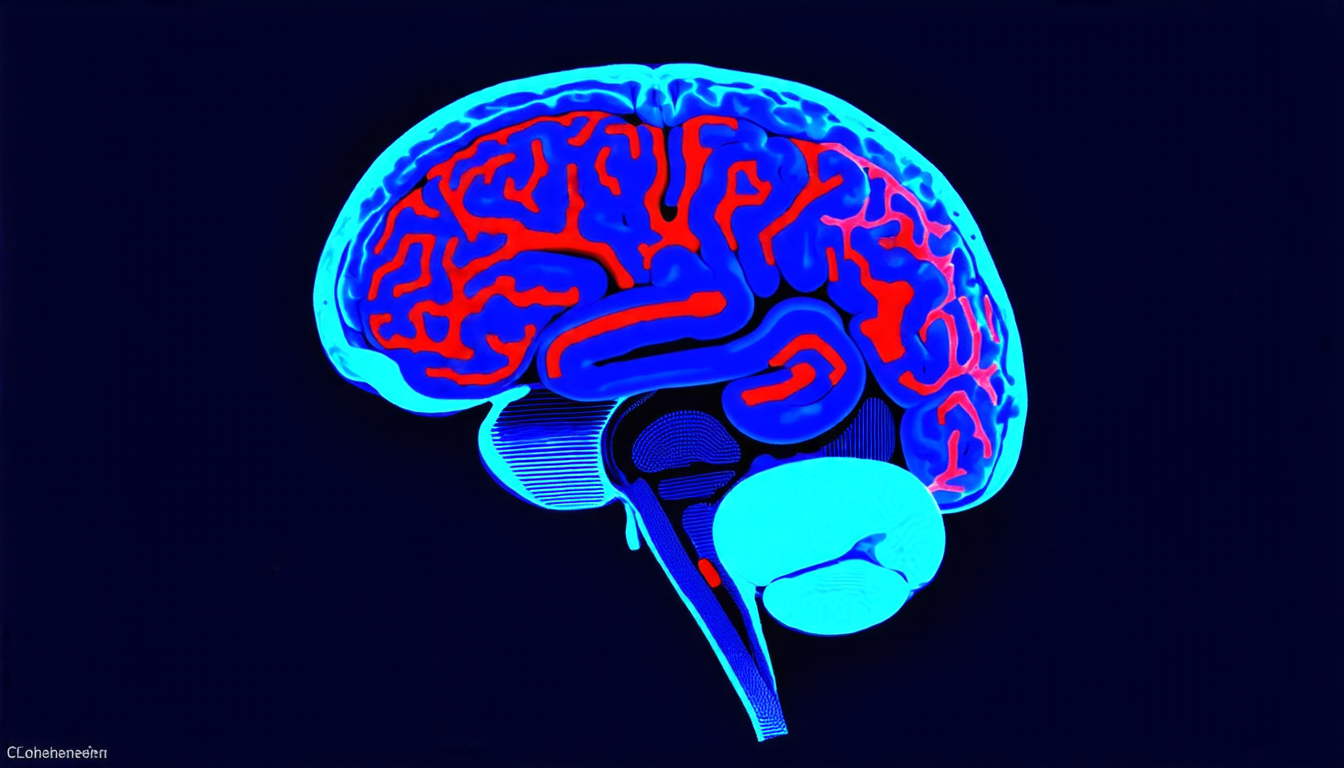
The researchers used three-dimensional magnetic resonance imaging (MRI) data to train their model, which was designed to identify subtle patterns in the brain that are characteristic of early-stage Alzheimer’s. The approach is notable for its ability to leverage the strengths of both CNNs and ViT models, allowing it to capture complex spatial relationships between different regions of the brain.
The results are impressive: the model demonstrated an accuracy rate of 98.6% in diagnosing Alzheimer’s disease, outperforming existing methods by a significant margin. Furthermore, the researchers found that their approach was particularly effective at identifying early-stage cases, which is critical for developing effective treatments.
So how does it work? The ViT model processes the MRI data as a sequence of images, rather than a single 3D volume. This allows it to capture subtle changes in brain structure and function over time, which are often difficult to detect using traditional CNN-based approaches. The model is trained on a large dataset of labeled MRI scans, which enables it to learn patterns that are specific to Alzheimer’s disease.
The potential implications of this research are significant. If validated in clinical trials, the ViT approach could become a powerful tool for diagnosing Alzheimer’s disease at an early stage, when treatments may be most effective. It could also enable researchers to better understand the underlying mechanisms of the disease, leading to the development of more effective therapies.
In addition to its potential applications in Alzheimer’s research, this work has broader implications for medical imaging analysis as a whole. The ViT approach demonstrates the power of combining different techniques and architectures to achieve impressive results, and it highlights the importance of developing new methods that can adapt to complex data sets.
Overall, this research is an exciting example of how machine learning can be used to improve our understanding of disease and develop more effective treatments.
Cite this article: “Vision Transformers Unlock New Accuracy in Alzheimers Disease Diagnosis”, The Science Archive, 2025.
Medical Imaging, Deep Learning, Convolutional Neural Networks, Vision Transformers, Alzheimer’S Disease, Mri Scans, Brain Structure, Early-Stage Diagnosis, Machine Learning, Medical Analysis.





