

Saturday 15 March 2025
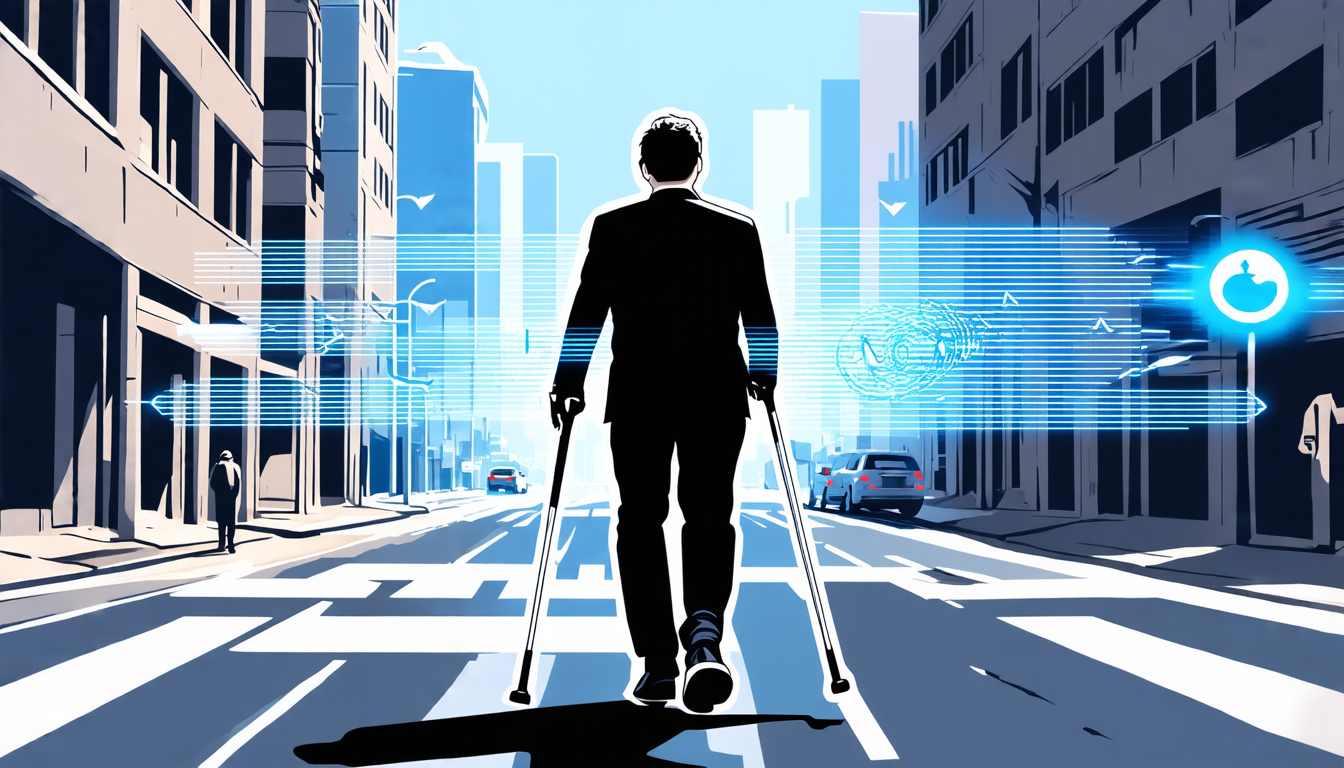
Navigating the world without sight can be a daunting task, but researchers have been working on developing innovative solutions to aid visually impaired individuals. One such approach is sensor fusion, which combines data from various sensors to provide a more accurate and comprehensive understanding of the environment.
The concept is simple: by combining data from different sources, such as GPS, accelerometers, and sonar sensors, researchers can create a more detailed picture of the surroundings. This information can then be used to guide visually impaired individuals through their daily lives, providing them with real-time feedback on obstacles, distances, and directions.
One of the key challenges in developing sensor fusion systems is ensuring that the data from different sources is accurate and reliable. To overcome this issue, researchers have turned to machine learning algorithms, which can learn to identify patterns in the data and make predictions about the environment.
In a recent study, scientists developed a sensor fusion system that combines GPS, accelerometers, and sonar sensors to provide visually impaired individuals with real-time navigation assistance. The system was tested on a group of participants who were blind or had low vision, and the results showed significant improvements in their ability to navigate independently.
The system worked by using GPS data to determine the participant’s location, accelerometers to detect changes in movement, and sonar sensors to detect obstacles in their path. By combining this information, the system was able to provide participants with real-time feedback on their surroundings, including distances to obstacles and directions to follow.
The study found that participants who used the sensor fusion system were able to navigate more quickly and accurately than those who did not use it. Additionally, the system was able to detect obstacles and alert participants of potential hazards, reducing the risk of accidents or injuries.
This technology has significant implications for visually impaired individuals, who often rely on canes or guide dogs to navigate their surroundings. By providing them with real-time navigation assistance, sensor fusion systems could greatly improve their independence and quality of life.
The development of sensor fusion systems is also having a broader impact on the field of assistive technology. Researchers are exploring new ways to integrate sensor data from multiple sources, which could lead to breakthroughs in areas such as autonomous vehicles and smart homes.
In addition to its practical applications, the study highlights the importance of interdisciplinary collaboration between researchers from different fields. By combining expertise from computer science, engineering, and psychology, scientists can develop innovative solutions that have a significant impact on people’s lives.
Cite this article: “Sensor Fusion Technology: Enabling Independent Navigation for Visually Impaired Individuals”, The Science Archive, 2025.
Visually Impaired, Sensor Fusion, Navigation, Assistive Technology, Machine Learning, Gps, Accelerometers, Sonar Sensors, Real-Time Feedback, Independent Living





