

Saturday 15 March 2025
A new study has shed light on the intricate world of graph theory, revealing a hidden pattern that governs how networks behave when subjected to iterative transformations.
Graph theory is the mathematical study of connections between objects, and it’s used to describe everything from social networks to computer chip designs. One particular type of transformation, known as the mincut operator, has been found to have a profound impact on the structure of these networks.
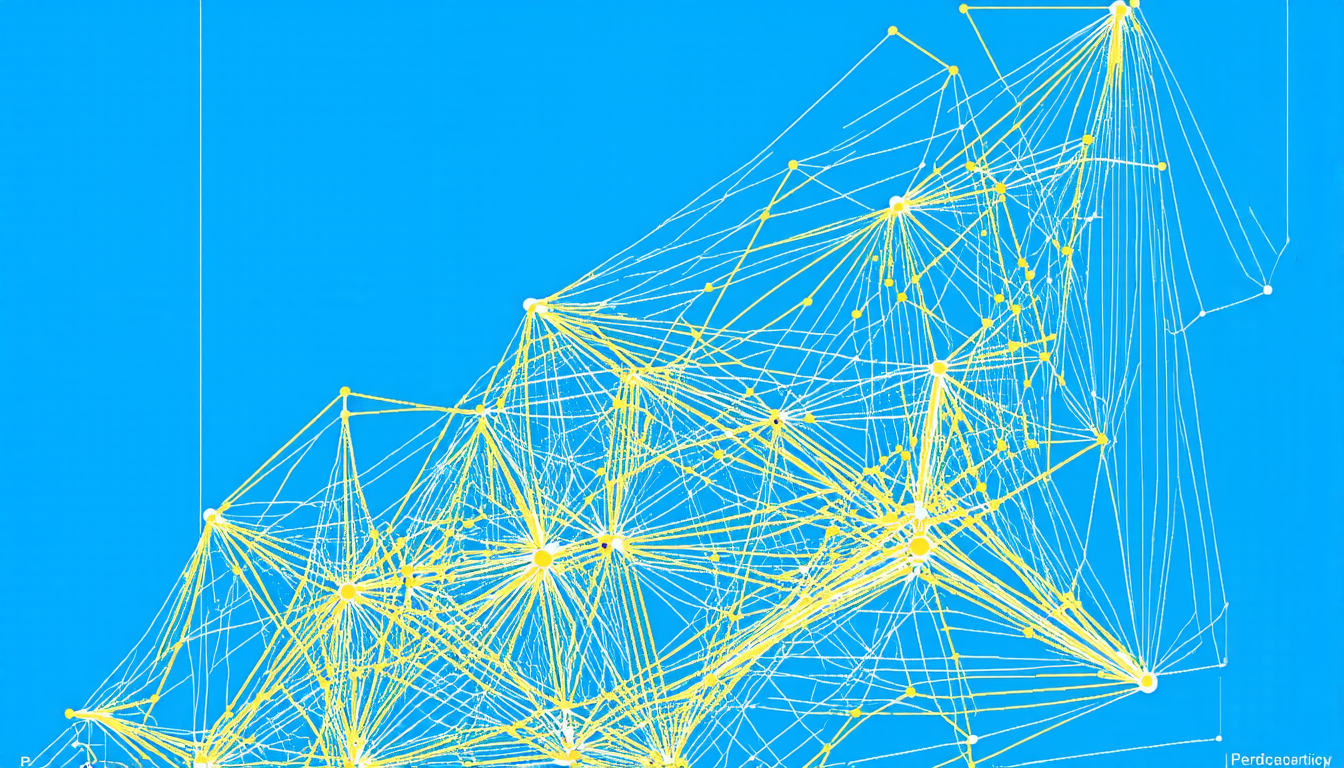
The mincut operator takes a graph and breaks it down into smaller subgraphs, called mincuts, which are then used to rebuild the network. But here’s the fascinating part: when this process is repeated multiple times, certain graphs start to exhibit periodic behavior. That means that they eventually return to their original state, like a mathematical echo.
Researchers have discovered that these periodic patterns are linked to the properties of the graph itself. For example, if a graph has a high edge density – meaning it’s densely connected – it’s more likely to be 1-periodic, or fixed under iteration. On the other hand, graphs with lower edge densities tend to exhibit higher periodicity.
The study also found that certain types of graphs are more prone to convergence towards the null graph, which is a graph with no vertices and no edges. This occurs when the mincuts start to disconnect from each other, effectively fragmenting the network.
One of the key findings is that graphs can be classified into different categories based on their behavior under iteration. Some graphs are fixed, while others exhibit periodicity or convergence towards the null graph. This has significant implications for our understanding of how networks adapt and evolve over time.
For instance, this knowledge could be used to design more resilient communication networks, where the nodes are arranged in a way that maximizes their ability to withstand disruptions. It could also inform strategies for optimizing the structure of complex systems, such as biological networks or social media platforms.
The study’s findings have far-reaching implications for our understanding of graph theory and its applications. By uncovering the hidden patterns that govern network behavior, researchers are one step closer to unlocking the secrets of these complex systems.
Cite this article: “Revealing the Hidden Patterns of Graph Theory”, The Science Archive, 2025.
Graph Theory, Network Analysis, Mincut Operator, Periodic Behavior, Edge Density, Convergence, Null Graph, Iteration, Resilience, Optimization.
Reference: Christo Kriel, Eunice Mphako-Banda, “Iteration of the mincut graph operator” (2025).





