

Saturday 15 March 2025
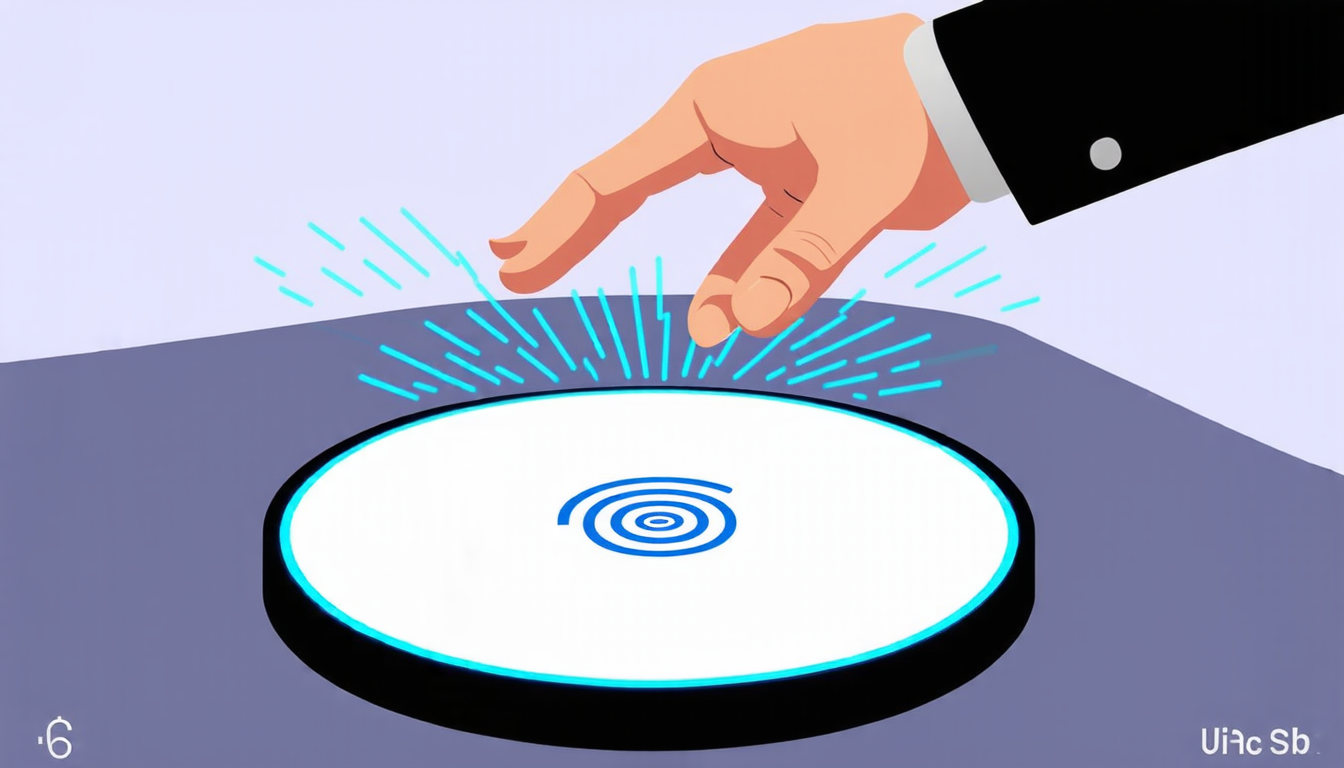
The humble wireless charging pad has come a long way since its inception, evolving from a mere novelty into a ubiquitous accessory found in homes and offices around the world. But despite its widespread adoption, these pads have largely remained one-trick ponies, limited to simply transferring power between devices. A team of researchers has now proposed a revolutionary new use for wireless charging pads: as a platform for human-machine interaction.
The concept is simple yet ingenious: by monitoring changes in coil currents and analyzing the resulting electromagnetic fields, researchers can recognize specific gestures made by users interacting with the pad. This information can then be used to control various devices or trigger specific actions, effectively turning the pad into a sophisticated input device.
To achieve this, the team developed a system that combines Bayesian networks and particle filtering to analyze the data collected from the coil currents. The Bayesian network is used to model the relationships between different variables, such as the position of the user’s hand and the strength of the electromagnetic field, while the particle filter helps to infer the motion trajectory of the user’s gestures.
The system was tested using a multi-coil wireless charging pad, with users performing various gestures such as swiping, tapping, and rotating their hands above the pad. The results were impressive: the system accurately recognized over 90% of the gestures made by users, even in noisy environments.
This technology has far-reaching implications for a wide range of applications. For instance, it could be used to control smart home devices, such as lights or thermostats, with simple hand gestures. It could also be applied in industrial settings to streamline manufacturing processes or improve worker safety. Even in public spaces, this technology could enable users to interact with digital displays or kiosks without the need for physical buttons or touchscreens.
One of the most significant advantages of this system is its low cost and simplicity. Unlike traditional gesture recognition systems that require complex sensors and software algorithms, this approach relies solely on off-the-shelf wireless charging pads and standard computing hardware. This makes it an attractive option for developers looking to integrate gesture recognition into their products without breaking the bank.
Of course, there are still some limitations to be addressed before this technology can reach its full potential. For example, the system’s accuracy is currently limited by the quality of the coil currents and the complexity of the gestures being recognized. However, these issues can likely be overcome with further refinement and testing.
Cite this article: “Wireless Charging Pads Get a New Lease on Life as Gesture Recognition Tools”, The Science Archive, 2025.
Wireless Charging, Human-Machine Interaction, Gesture Recognition, Bayesian Networks, Particle Filtering, Electromagnetic Fields, Coil Currents, Smart Home Devices, Industrial Applications, Public Spaces





