

Saturday 15 March 2025
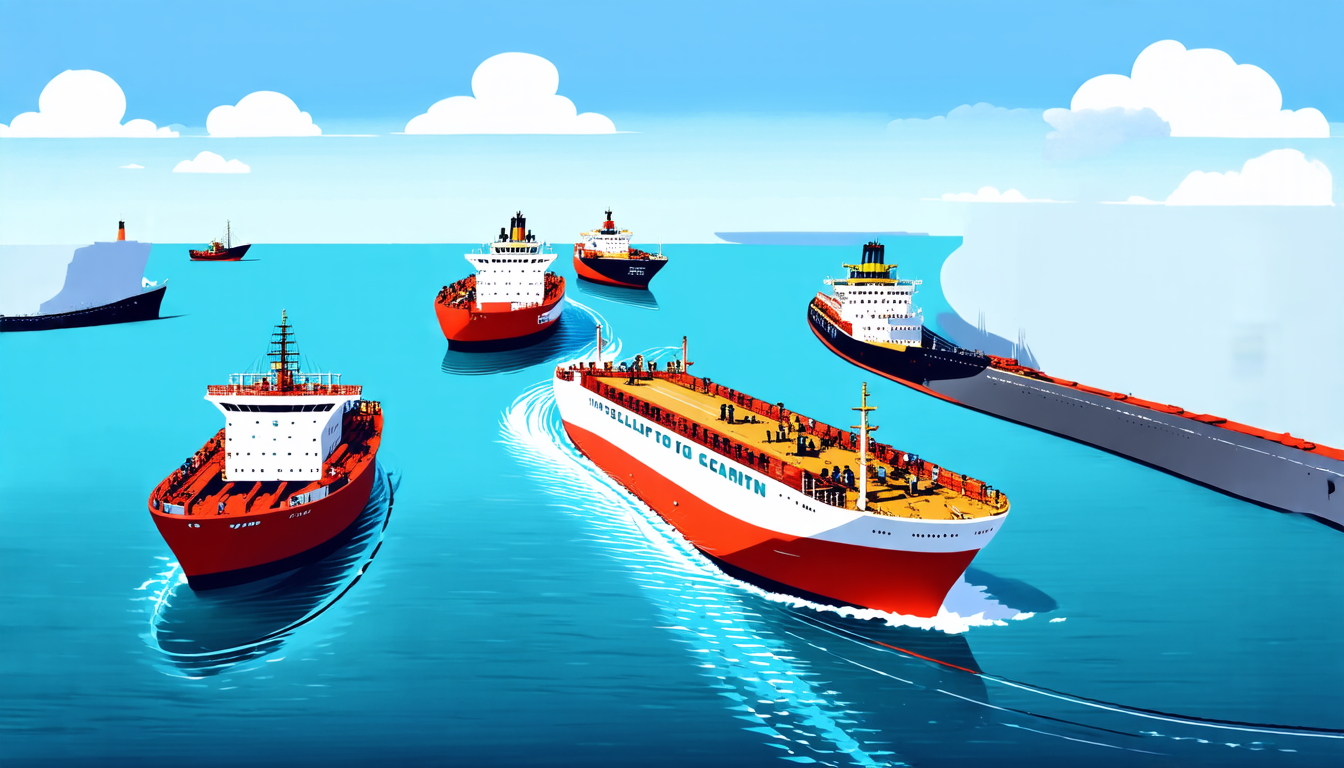
For centuries, navigating the world’s waterways has been a complex and challenging task for humans. From ancient mariners to modern-day sailors, the risk of collision at sea is ever-present. In recent years, advancements in technology have led to the development of autonomous ships that can navigate through treacherous waters with increased safety and efficiency.
However, even with these advancements, collisions between ships are still a major concern. To address this issue, researchers have been working on developing algorithms that enable ships to communicate and coordinate their movements more effectively. One such algorithm is the distributed model predictive control (MPC) method, which allows multiple ships to plan their routes and avoid collisions in real-time.
The distributed MPC method works by dividing the navigation process into smaller sub-problems, each handled by a single ship or group of ships. Each ship then receives information about its surroundings from other nearby vessels, allowing it to make informed decisions about its route. This approach enables ships to adjust their routes dynamically as conditions change, reducing the risk of collision.
But how does this algorithm actually work? To understand this, let’s take a closer look at the process. When a ship begins to navigate through a waterway, it first receives information from other nearby vessels about their positions and movements. This data is then used to determine the best route for the ship to follow, taking into account any potential obstacles or hazards.
Once the optimal route has been determined, the ship’s navigation system uses this information to adjust its course in real-time. This process is repeated continuously as new data becomes available, allowing the ship to adapt to changing conditions and avoid any potential dangers.
The distributed MPC method has several advantages over traditional navigation methods. For one, it enables ships to respond more quickly to changes in their surroundings, reducing the risk of collision. It also allows for more efficient use of resources, such as fuel and time, by optimizing routes in real-time.
But perhaps the most significant advantage of this algorithm is its ability to reduce the risk of human error. By automating the navigation process, ships are less likely to make mistakes that can lead to collisions or other accidents.
In recent years, researchers have been testing the distributed MPC method on inland waterways, with promising results. In one study, a team of scientists simulated the movement of multiple ships through a busy shipping channel, using the algorithm to plan their routes and avoid collisions. The results showed a significant reduction in the risk of collision compared to traditional navigation methods.
Cite this article: “Autonomous Shipping: A Safer Future at Sea?”, The Science Archive, 2025.
Ship Navigation, Autonomous Ships, Distributed Model Predictive Control, Mpc Method, Ship Collision, Navigation Algorithm, Real-Time Routing, Ship Communication, Waterway Safety, Maritime Technology





