

Saturday 15 March 2025
The quest for a more accurate understanding of how radio waves behave in complex environments has led researchers to develop a cutting-edge technology that can simulate real-world wireless communication scenarios with unprecedented precision.
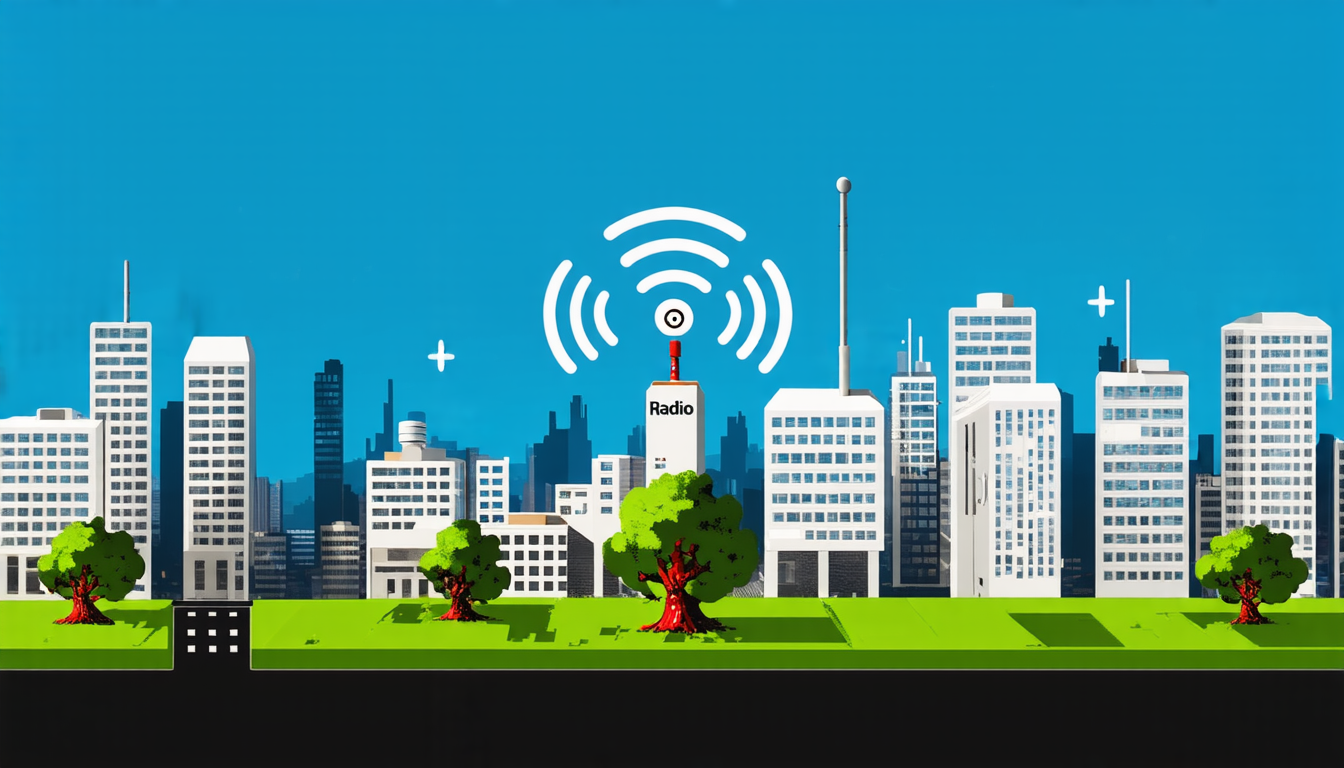
In recent years, scientists have been working on creating digital twins, virtual replicas of physical systems that mimic their behavior. In the case of wireless communications, this means developing a model that accurately predicts how radio waves interact with buildings, trees, and other obstacles in their path.
One major challenge has been incorporating the complexities of real-world environments into these models. Traditional methods have relied on simplified assumptions or rough estimates, which can lead to inaccurate predictions. To overcome this hurdle, researchers turned to ray tracing, a technique that simulates how light behaves when it encounters different materials and surfaces.
Ray tracing has been used in computer graphics for decades, but its application to wireless communications is still relatively new. By using advanced algorithms and powerful computers, scientists can generate highly detailed and realistic simulations of radio wave propagation. This allows them to predict with greater accuracy how signals will behave in complex environments, such as urban landscapes or rural areas with dense foliage.
To further refine their model, researchers used a technique called artificial intelligence (AI) to fine-tune the simulation. AI algorithms were trained on real-world data and then used to adjust the parameters of the ray tracing model until it matched the actual behavior of radio waves in different scenarios. This approach enabled them to create a highly accurate digital twin of wireless communication systems.
The implications of this technology are significant. By accurately predicting how radio waves behave, scientists can design more efficient wireless networks, reduce interference, and improve overall performance. For consumers, this means faster data transfer rates, better coverage, and more reliable connections.
Furthermore, the digital twin technology has the potential to revolutionize fields beyond wireless communications. In medicine, for example, researchers are using similar techniques to model the behavior of medical devices and simulate surgical procedures. In architecture, the technology can be used to optimize building designs and predict how they will interact with their surroundings.
As research continues to advance, it’s likely that we’ll see even more innovative applications of digital twins in various fields. For now, however, scientists are thrilled by the prospect of being able to accurately simulate complex wireless communication scenarios – a major step forward in our understanding of radio waves and their behavior.
Cite this article: “Accurate Wireless Communication Simulations with Digital Twins”, The Science Archive, 2025.
Digital Twins, Wireless Communications, Ray Tracing, Artificial Intelligence, Radio Waves, Simulation, Complex Environments, Network Design, Data Transfer Rates, Communication Systems





