

Saturday 15 March 2025
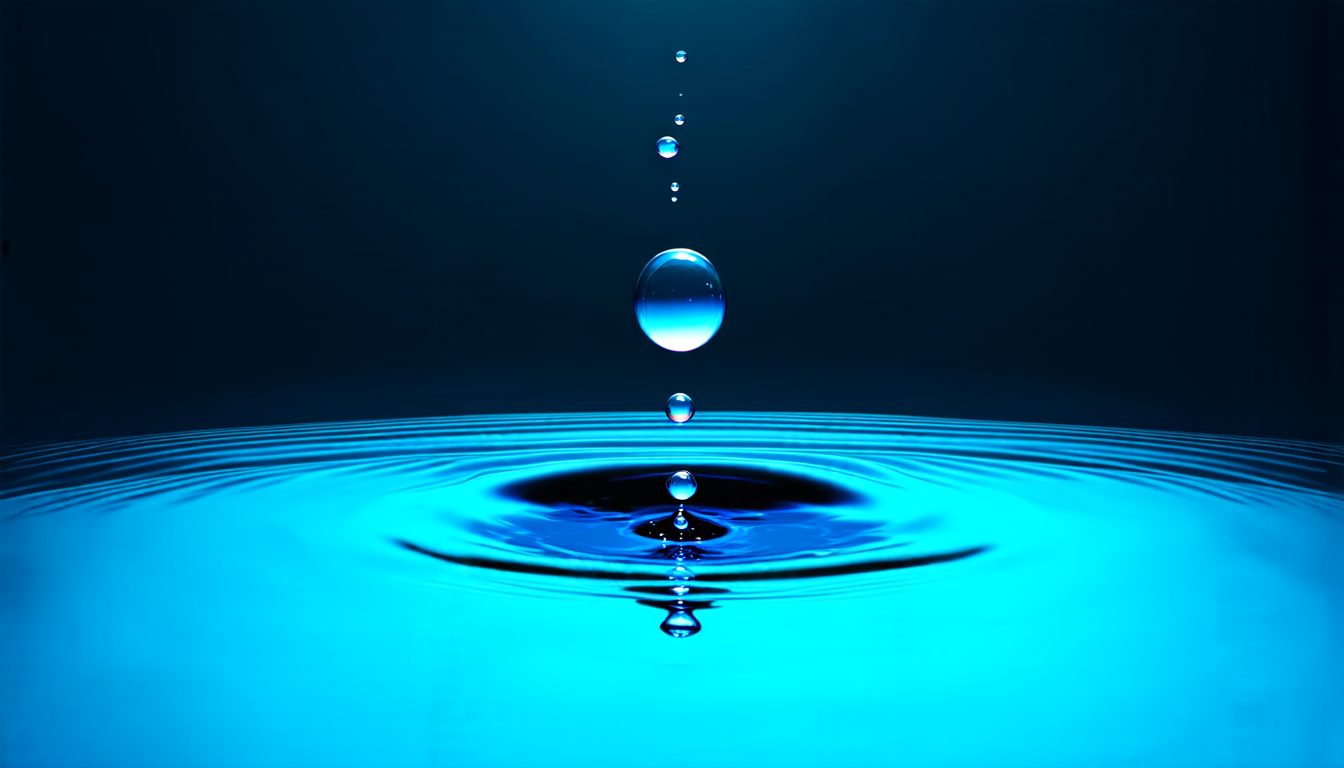
Scientists have been studying the way that bubbles burst at the surface of water for a long time, and it’s a fascinating process. When a bubble pops, it releases a jet of fluid into the air, which can create small droplets or even just a single large drop. This phenomenon is called the Worthington jet.
Recently, researchers have been looking at how the properties of the liquid surrounding the bubble affect the Worthington jet. They’ve discovered that if the liquid is viscoelastic – meaning it has both viscous and elastic properties – then the jet can behave in some unexpected ways.
Viscoelastic liquids are found in many natural environments, such as seawater and soil. They also have important industrial applications, like in the production of cosmetics and pharmaceuticals. When a bubble bursts at the surface of a viscoelastic liquid, the jet that forms is influenced by the liquid’s elastic properties.
The researchers studied the Worthington jet using high-speed cameras and computer simulations. They created a series of experiments with different viscoelastic liquids, ranging from simple polymer solutions to complex biological fluids like seawater. In each case, they measured the size and shape of the jet that formed when the bubble burst.
What they found was surprising. When the liquid is highly elastic, the jet that forms is more slender and faster-moving than usual. This means that it can produce smaller droplets or even just a single large drop, rather than the typical spray of tiny droplets. The researchers think this is because the elastic properties of the liquid help to stretch out the jet as it forms, creating a longer and thinner shape.
On the other hand, when the liquid is less elastic, the jet that forms is shorter and wider. This can produce more droplets or even just a single large drop, depending on the conditions. The researchers think this is because the viscous properties of the liquid dominate the formation of the jet, creating a shorter and fatter shape.
These findings have important implications for our understanding of natural processes like ocean waves and soil erosion. They also suggest new possibilities for industrial applications, such as more efficient methods for producing cosmetics or pharmaceuticals.
The study of the Worthington jet is an interesting example of how scientific research can uncover surprising phenomena in everyday processes. By studying the properties of viscoelastic liquids, researchers are gaining a deeper understanding of the complex interactions between different materials and environments.
Cite this article: “Bursting Bubbles: The Surprising Effects of Viscoelastic Liquids on the Worthington Jet”, The Science Archive, 2025.
Bubbles, Water, Fluid Dynamics, Viscoelasticity, Elasticity, Viscosity, Jets, Droplets, Surfactants, Oceanography





