
Saturday 15 March 2025
Deep learning algorithms have been making waves in the field of transportation, and a recent study demonstrates their potential for accurately estimating vehicle occupancy in automated guideway transit systems. By leveraging Wi-Fi probe requests, researchers were able to develop a comprehensive framework for evaluating various approaches to occupancy estimation, ultimately revealing that deep learning models significantly outperform machine learning methods.
Automated guideway transit (AGT) systems, such as bus rapid transit or tram systems, rely on accurate passenger counts to optimize operations and improve service quality. Traditionally, this has been achieved through manual counting methods, which are time-consuming and prone to errors. More recently, automated fare collection systems have emerged as a viable solution, but these often lack the necessary data granularity for precise occupancy estimation.
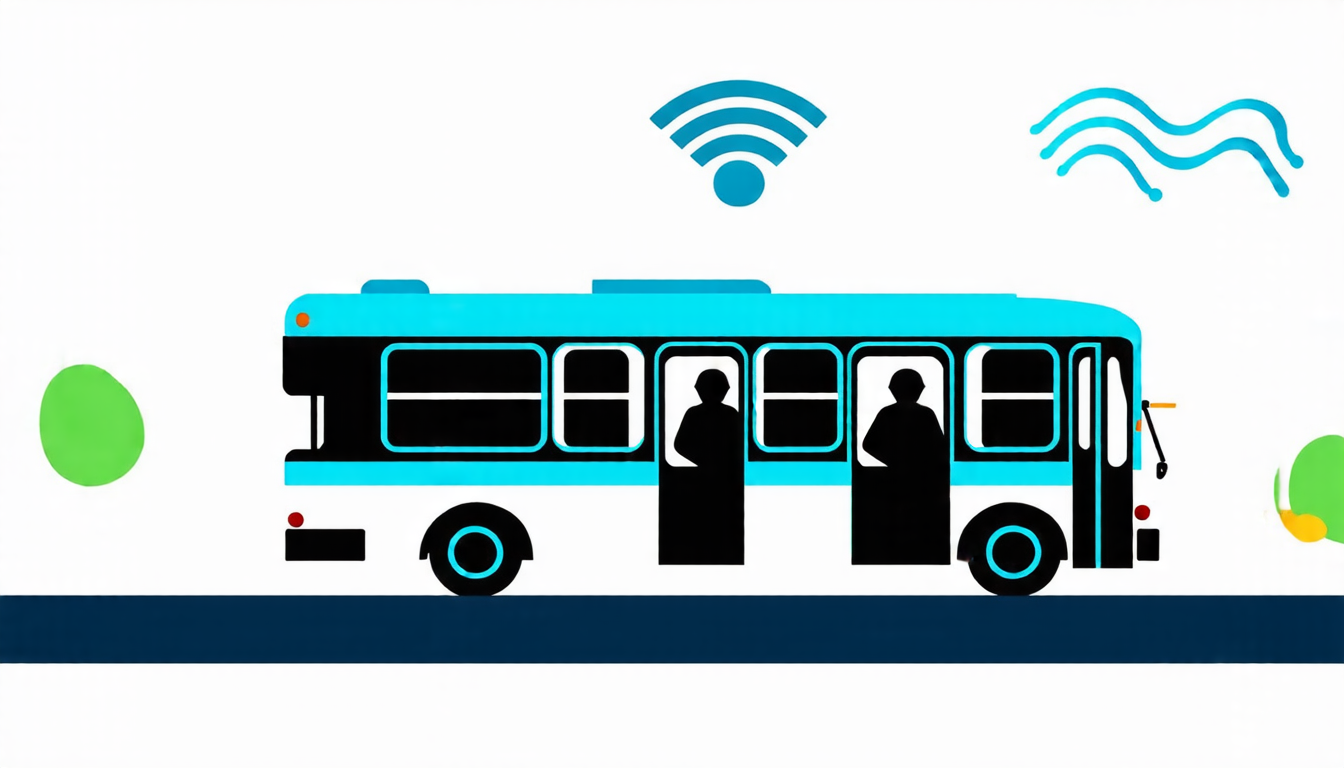
Enter Wi-Fi probe requests, a type of wireless communication that allows devices to broadcast their presence on a network. By analyzing these requests, researchers can infer the location and movement patterns of individuals within an area. In the context of AGT systems, this information can be used to estimate vehicle occupancy in real-time, providing valuable insights for transit agencies.
The study in question employed a combination of data collection techniques, including Wi-Fi sniffing and machine learning algorithms, to develop a comprehensive framework for evaluating various approaches to occupancy estimation. The researchers tested their approach on the Miami-Dade Metromover system, an automated guideway transit system characterized by frequent stops, significant occupancy fluctuations, and the absence of fare collection devices.
The results were impressive: deep learning models significantly outperformed machine learning methods in terms of accuracy, with a normalized mean absolute error (NMAE) of 5.55% compared to 13.87% for machine learning algorithms. The researchers also found that incorporating historical data into the model improved performance, highlighting the potential for real-time occupancy estimation using Wi-Fi probe requests.
The implications of this study are far-reaching. By providing accurate and timely occupancy estimates, transit agencies can optimize their operations, reduce congestion, and enhance passenger experience. Moreover, the use of deep learning algorithms in transportation applications has the potential to revolutionize the field, enabling more efficient and effective management of public transit systems.
While there are still challenges to be addressed, such as dealing with MAC address randomization and distinguishing between passenger and non-passenger data, the potential benefits of this technology are undeniable.
Cite this article: “Deep Learning Models Accurately Estimate Vehicle Occupancy in Automated Guideway Transit Systems”, The Science Archive, 2025.
Automated Guideway Transit, Deep Learning, Machine Learning, Occupancy Estimation, Wi-Fi Probe Requests, Transportation, Public Transit, Passenger Counting, Automated Fare Collection, Real-Time Data Analysis