

Sunday 16 March 2025
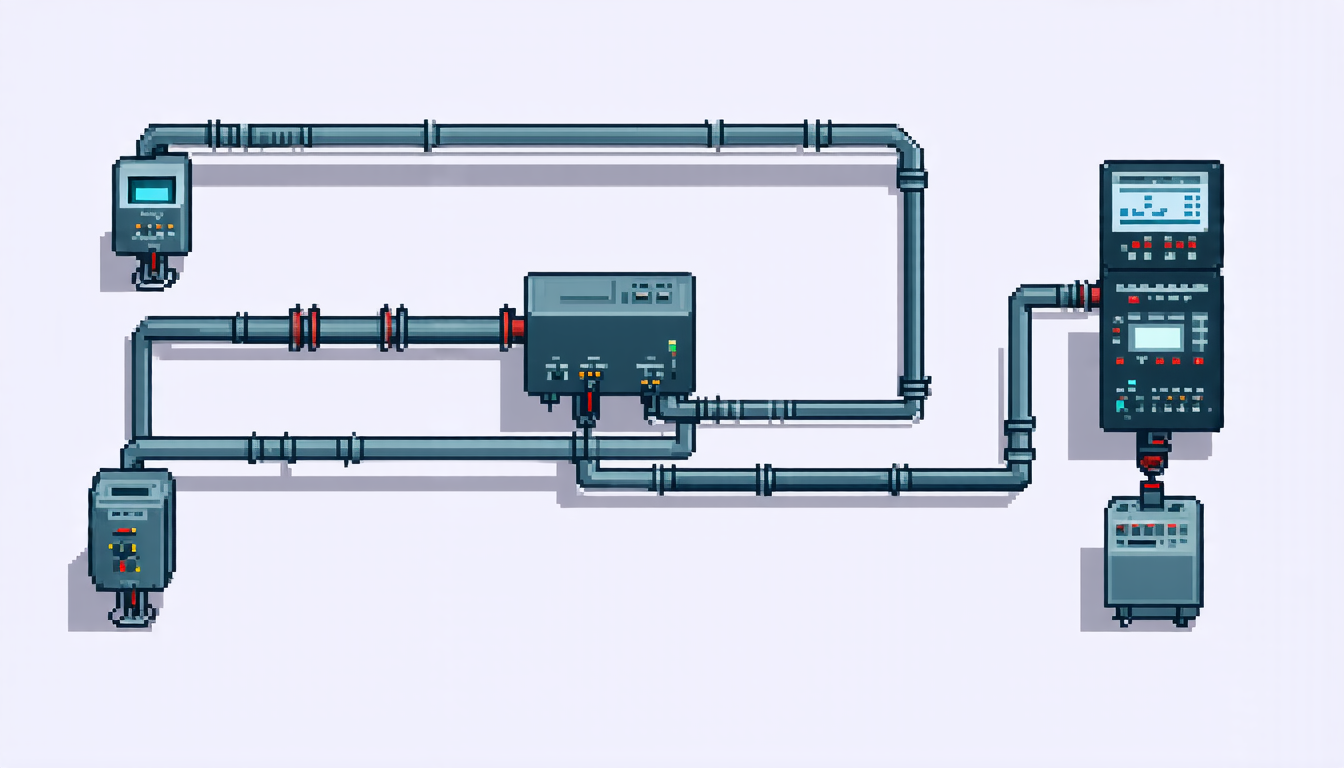
The quest for more reliable and efficient condition monitoring in industrial cyber-physical systems (CPS) has led researchers to develop a novel approach that combines machine learning, federated learning, and adaptive checkpointing. The outcome is a system that can accurately detect anomalies, localize faulty components, and maintain high performance even when faced with node failures.
The traditional approach to anomaly detection involves collecting data from various sensors and using machine learning algorithms to identify patterns. However, this method has its limitations. For instance, it assumes that all nodes in the network are reliable and functioning properly. In reality, CPS systems are prone to node failures, which can lead to data loss and compromise the overall performance of the system.
To address these challenges, researchers have developed a federated learning framework that enables multiple nodes to learn from each other’s experiences while preserving their individual data privacy. This approach allows for more accurate anomaly detection and localization by leveraging the collective knowledge of all nodes in the network.
Another key innovation is the use of adaptive checkpointing, which involves predicting potential node failures based on historical failure patterns. By saving training states at regular intervals, the system can quickly recover from node failures and minimize disruptions to the overall performance of the system.
The researchers tested their approach using two datasets: NASA Bearing and Hydraulic System Datasets. The results showed that the federated learning framework achieved an accuracy rate of 99.5% in detecting anomalies, outperforming traditional approaches such as FedAvg, ACFL, and FedL2P. Moreover, the adaptive checkpointing mechanism enabled the system to maintain high performance even when faced with node failures.
The implications of this research are significant for industrial CPS systems, where downtime can be costly and lead to financial losses. By developing a more reliable and efficient condition monitoring system, industries can reduce downtime, optimize resource allocation, and improve overall efficiency.
One potential limitation of the approach is its reliance on historical failure patterns. In cases where node failures occur infrequently or are unpredictable, the adaptive checkpointing mechanism may not be effective. However, the researchers believe that this limitation can be addressed by incorporating additional data sources and improving the predictive models used in the system.
Overall, the development of a federated learning framework with adaptive checkpointing has significant potential for improving condition monitoring in industrial CPS systems. By leveraging collective knowledge and predicting potential node failures, industries can develop more reliable and efficient systems that minimize downtime and maximize performance.
Cite this article: “Enhancing Condition Monitoring in Industrial Cyber-Physical Systems with Federated Learning and Adaptive Checkpointing”, The Science Archive, 2025.
Machine Learning, Federated Learning, Adaptive Checkpointing, Condition Monitoring, Industrial Cyber-Physical Systems, Anomaly Detection, Node Failures, Data Privacy, Predictive Modeling, Reliability.





