

Sunday 16 March 2025
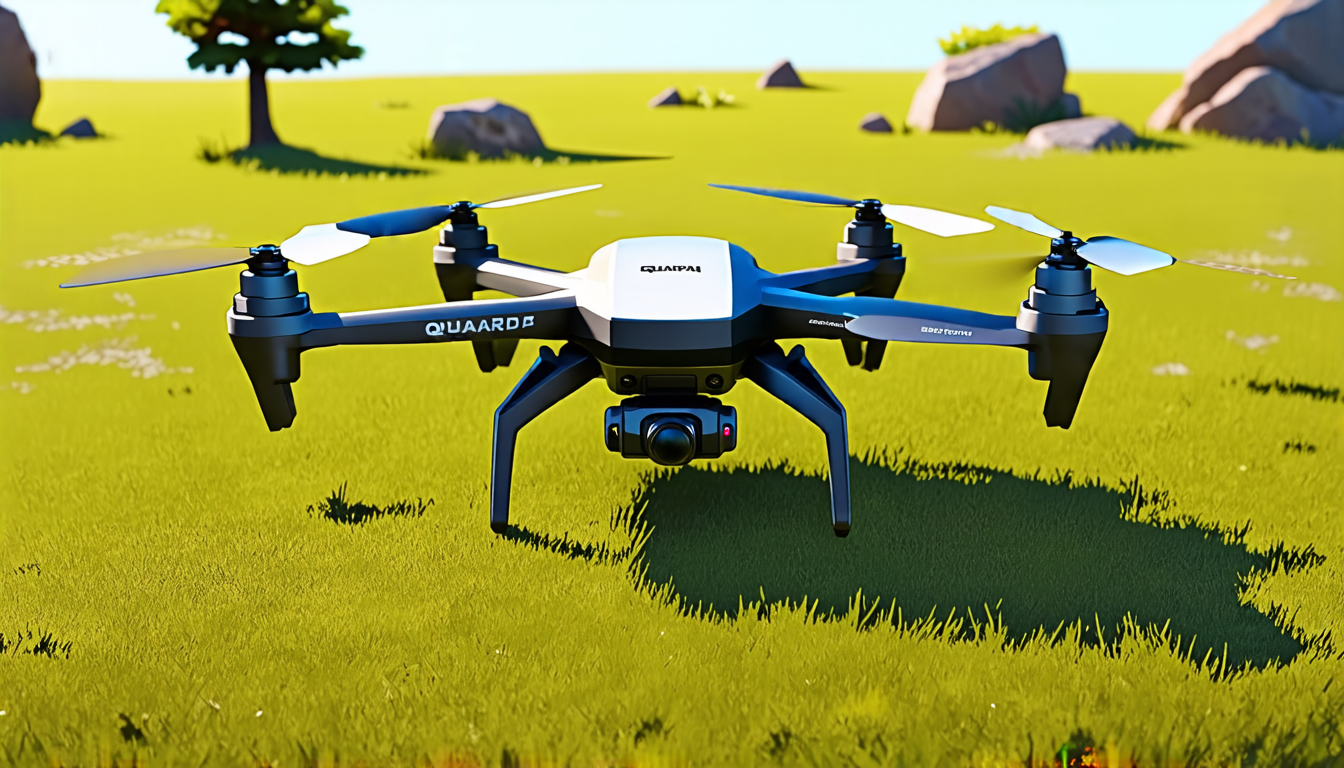
A team of researchers has developed a new approach to autonomous landing for quadrotors, using a combination of computer vision and machine learning to navigate complex environments. The system, which relies on a single monocular camera to track optic flow, is capable of adapting to unexpected changes in the environment and making precise landings.
The traditional method of autonomous landing involves using multiple cameras or sensors to track the drone’s position and velocity. However, this approach can be expensive and power-hungry, making it difficult for small drones like quadrotors to use. The new system, on the other hand, uses a single camera to track optic flow, which is the rate of change of the visual scene as the drone moves.
The researchers used machine learning to train a model that can predict the drone’s motion based on the optic flow data. This allows the drone to make precise adjustments to its trajectory in real-time, even in the presence of obstacles or changing wind conditions.
One of the key advantages of this approach is that it allows the drone to adapt to unexpected changes in the environment. For example, if a strong gust of wind blows the drone off course, the system can quickly adjust its trajectory to compensate for the change.
The researchers also developed an event-triggered control scheme, which allows the drone to make adjustments to its motion only when necessary. This approach reduces the amount of computation required by the drone’s onboard computer, making it more efficient and reducing the risk of overheating or battery drain.
To test the system, the researchers conducted a series of simulations using a quadrotor drone equipped with a single monocular camera. They found that the system was able to make precise landings in a variety of environments, including those with obstacles or changing wind conditions.
The results suggest that this approach could be used for a wide range of applications, from search and rescue missions to precision agriculture. The ability to make precise landings in complex environments could also enable new types of drone-based services, such as aerial surveying or environmental monitoring.
Overall, the development of this new system represents an important step forward in the field of autonomous landing for quadrotors. By combining computer vision and machine learning with a single monocular camera, the researchers have created a powerful tool that could be used to improve the efficiency and effectiveness of drone-based operations.
Cite this article: “Autonomous Landing System for Quadrotors Uses Computer Vision and Machine Learning”, The Science Archive, 2025.
Quadrotors, Autonomous Landing, Computer Vision, Machine Learning, Optic Flow, Monocular Camera, Navigation, Obstacle Avoidance, Wind Resistance, Precision Agriculture.





