

Sunday 16 March 2025
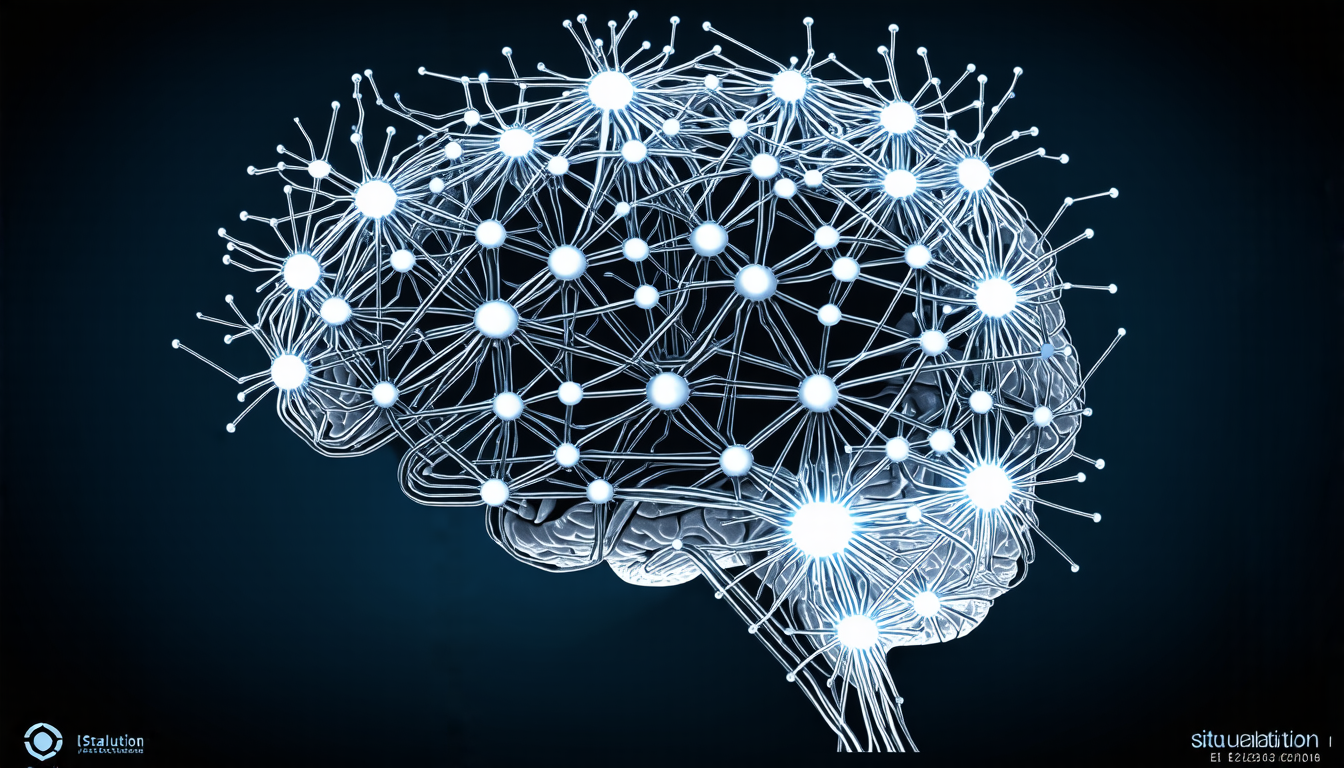
Scientists have made a significant breakthrough in the field of neuroscience, using silver nanowire networks to mimic the behavior of brain cells. These tiny structures, called artificial neural networks, are capable of learning and adapting to new information, much like our own brains do.
The team used a technique called electro-fusing to create these networks, which involves applying an electric current to the nanowires to disrupt their conductivity. This process allows them to tailor the properties of the network, creating a unique combination of resistance and capacitance that mimics the behavior of real neurons.
One of the most exciting aspects of this research is its potential application in artificial intelligence. By using these networks to mimic the behavior of brain cells, scientists may be able to create more advanced AI systems that are capable of learning and adapting to new information.
The team also discovered a unique property of these nanowire networks – they can exhibit a threshold switching effect, similar to the way our own brains react to stimuli. This means that the network will only respond to certain levels of electrical stimulation, making it even more similar to real neurons.
This research has significant implications for the field of neuroscience and artificial intelligence. By understanding how these nanowire networks function, scientists may be able to create more advanced AI systems that are capable of mimicking the behavior of human brains.
The team’s findings were published in a recent paper, where they described their technique for creating these artificial neural networks using electro-fusing. The research is still in its early stages, but it has already shown great promise for advancing our understanding of neuroscience and artificial intelligence.
In the future, scientists hope to use this technology to create more advanced AI systems that are capable of learning and adapting to new information. They also plan to explore other applications of these nanowire networks, such as using them in medical devices or sensors.
Overall, this research is an exciting step forward in our understanding of neuroscience and artificial intelligence. By mimicking the behavior of brain cells, scientists may be able to create more advanced AI systems that are capable of learning and adapting to new information.
Cite this article: “Mimicking Brain Cells with Silver Nanowire Networks”, The Science Archive, 2025.
Neuroscience, Artificial Intelligence, Silver Nanowire Networks, Brain Cells, Neural Networks, Electro-Fusing, Threshold Switching Effect, Ai Systems, Neuroscience Research, Advanced Technology





