

Sunday 16 March 2025
The Aharonov-Bohm Effect, a fundamental phenomenon in quantum mechanics, has been a topic of fascination for decades. It’s a strange and counterintuitive concept that challenges our understanding of space and time. In a recent paper, researchers have delved deeper into the intricacies of this effect, revealing new insights that shed light on its behavior.
For those unfamiliar with the Aharonov-Bohm Effect, it’s a phenomenon where a magnetic field can influence the motion of charged particles, even when there is no physical presence of the magnetic field. This seems absurd, as we’re used to thinking of magnetic fields as being tied to physical objects like magnets or coils. However, in quantum mechanics, this effect arises from the way that particles respond to changes in their environment.
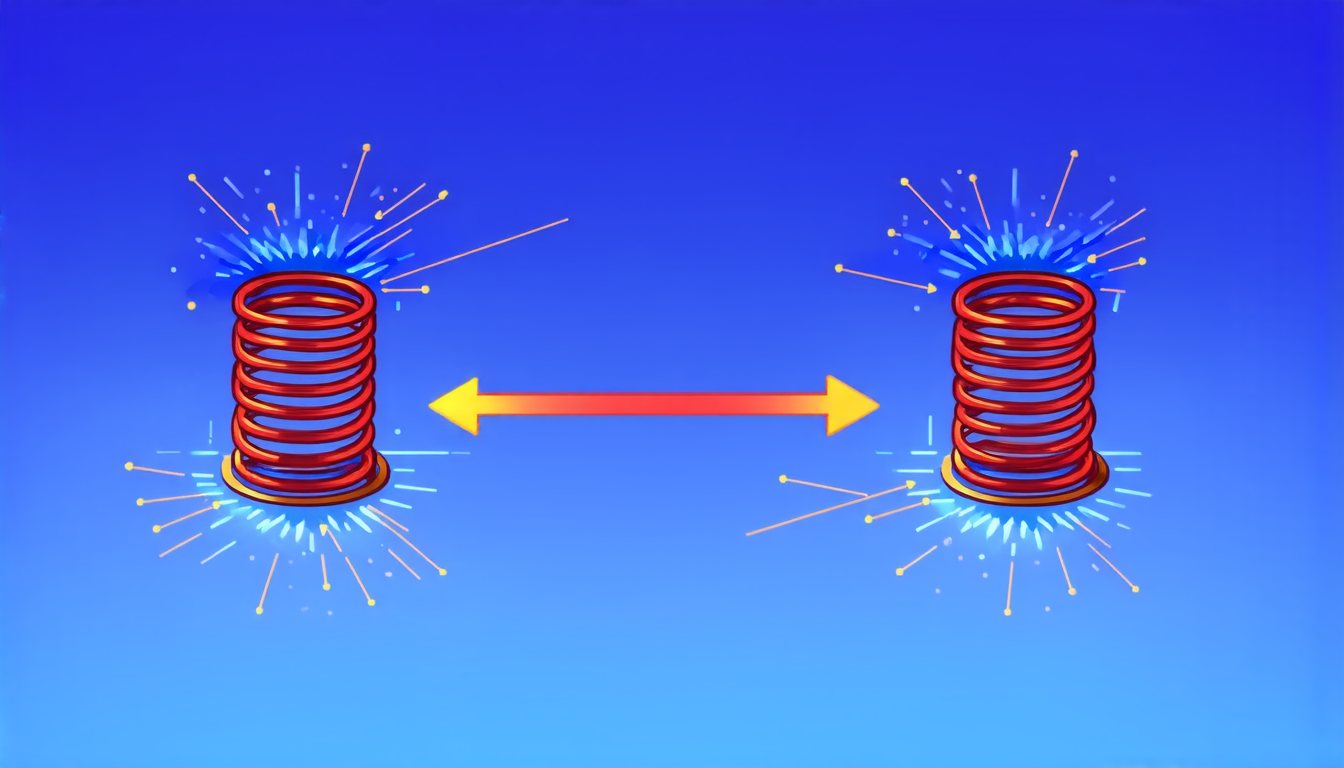
The researchers behind this paper focused on a specific aspect of the Aharonov-Bohm Effect: how it behaves when multiple magnetic fields are involved. In their study, they considered a scenario where two solenoids (coils of wire) are placed near each other, creating two separate magnetic fields. The question is, what happens to the particles in this setup?
The team used advanced mathematical techniques to model the behavior of these particles and found that the Aharonov-Bohm Effect becomes even more complex when multiple magnetic fields are present. They discovered that the effect can be either enhanced or diminished depending on the orientation and strength of the magnetic fields.
One of the most interesting findings is that the researchers were able to predict the exact points where the Aharonov-Bohm Effect would become strongest or weakest. This was achieved by analyzing the mathematical equations governing the behavior of the particles and the magnetic fields.
These results have significant implications for our understanding of quantum mechanics and its applications in technology. For instance, they could inform the development of more efficient methods for manipulating charged particles, such as those used in particle accelerators.
The study also highlights the importance of considering multiple magnetic fields when exploring the Aharonov-Bohm Effect. This is crucial, as real-world scenarios often involve complex configurations of magnetic fields, which can have a significant impact on the behavior of charged particles.
Overall, this paper provides a deeper understanding of the Aharonov-Bohm Effect and its complexities. By shedding light on the intricacies of this phenomenon, researchers are one step closer to harnessing its potential and unlocking new applications in quantum technology.
Cite this article: “Deciphering the Aharonov-Bohm Effect: New Insights into Quantum Mechanics”, The Science Archive, 2025.
Aharonov-Bohm Effect, Quantum Mechanics, Magnetic Fields, Particle Motion, Solenoids, Coil Orientation, Field Strength, Mathematical Modeling, Particle Accelerators, Quantum Technology





