

Wednesday 19 March 2025
Time series data, a staple of modern science and industry, is often plagued by uncertainty. Predicting future events or outcomes becomes increasingly difficult as data streams in from multiple sources, each carrying its own unique rhythms and patterns. Conformal inference, a statistical framework developed to tackle this problem, has long been touted as a solution. But now, researchers have taken it a step further with the introduction of error-quantified conformal inference (ECI).
The challenge lies in finding a method that not only produces accurate predictions but also provides a sense of uncertainty around those predictions. This is particularly crucial when making high-stakes decisions or identifying potential anomalies. Conformal inference has shown promise in addressing this issue, as it generates prediction sets – intervals that contain the true outcome with a specified probability.
However, existing conformal methods have limitations. They often rely on simple binary feedback, ignoring the nuanced dynamics of miscoverage error. This can lead to suboptimal performance and reduced confidence in predictions. ECI seeks to address this by introducing a continuous and adaptive feedback scale, allowing for more accurate quantification of uncertainty.
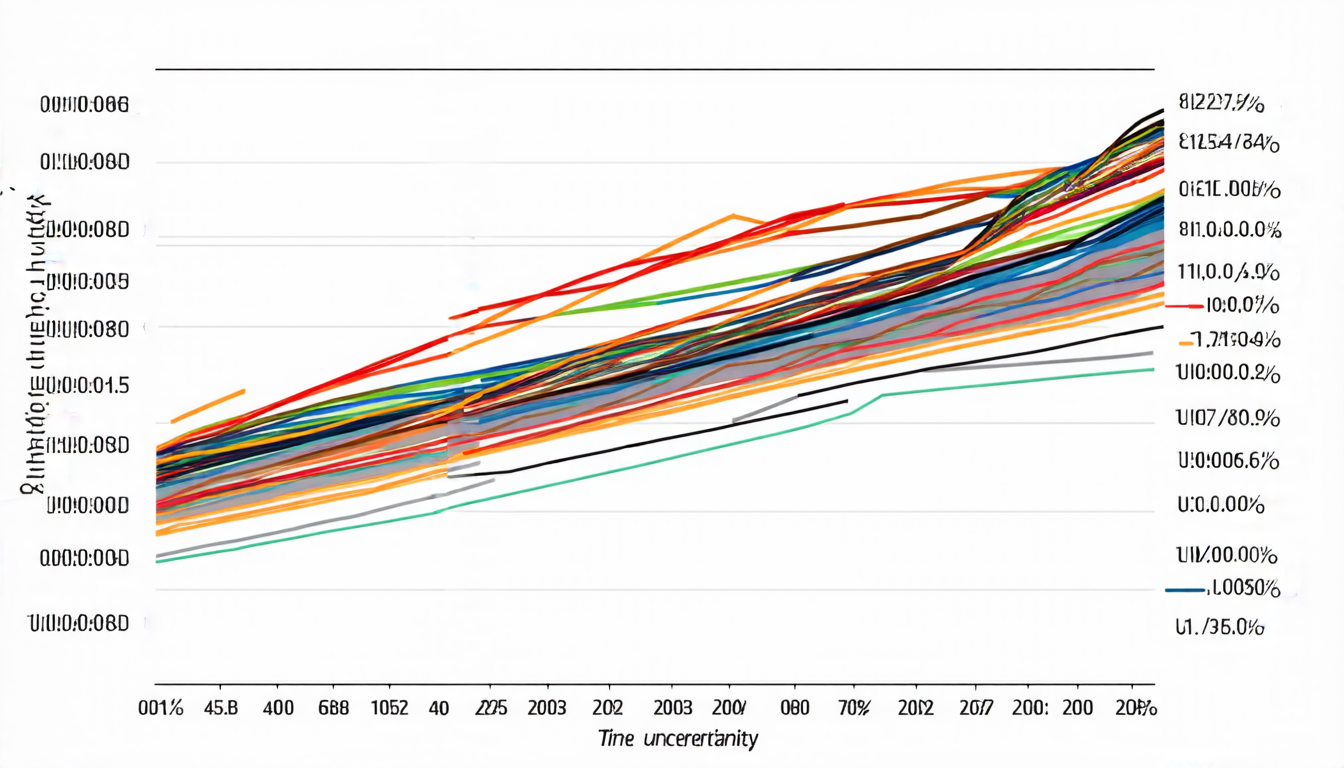
The approach is tested on various datasets, including financial markets, electricity demand, and temperature records. Results show that ECI outperforms existing conformal methods, producing tighter prediction sets and maintaining coverage guarantees even under distribution shifts. This means that the method can adapt to changing patterns in data streams, providing a more robust foundation for decision-making.
One of the key benefits of ECI is its ability to handle complex machine learning models, which are increasingly prevalent in modern applications. By incorporating error quantification into the prediction process, researchers can better understand the limitations and strengths of these models. This, in turn, enables more informed decisions about when to trust predictions and when to seek additional data or retrain the model.
The implications of ECI are far-reaching, with potential applications in finance, healthcare, energy management, and beyond. As data continues to grow in complexity and volume, methods like ECI will play a crucial role in extracting valuable insights while minimizing uncertainty. With its ability to adapt to changing patterns and quantify error, ECI represents a significant step forward in the quest for reliable time series prediction.
The development of ECI also highlights the importance of statistical rigor in data analysis. As researchers increasingly rely on machine learning techniques, it is essential to develop methods that can provide confidence intervals and uncertainty estimates alongside predictions.
Cite this article: “Error-Quantified Conformal Inference: A Breakthrough in Time Series Prediction Uncertainty”, The Science Archive, 2025.
Time Series Data, Conformal Inference, Error-Quantified Conformal Inference, Prediction Sets, Miscoverage Error, Adaptive Feedback Scale, Uncertainty Quantification, Machine Learning Models, Statistical Rigor, Data Analysis.





