

Wednesday 19 March 2025
In a breakthrough that could revolutionize our understanding of complex networks, researchers have developed a new framework for analyzing dynamic random graphs. These graphs are used to model real-world systems, such as social media networks and transportation infrastructure, where connections between nodes change over time.
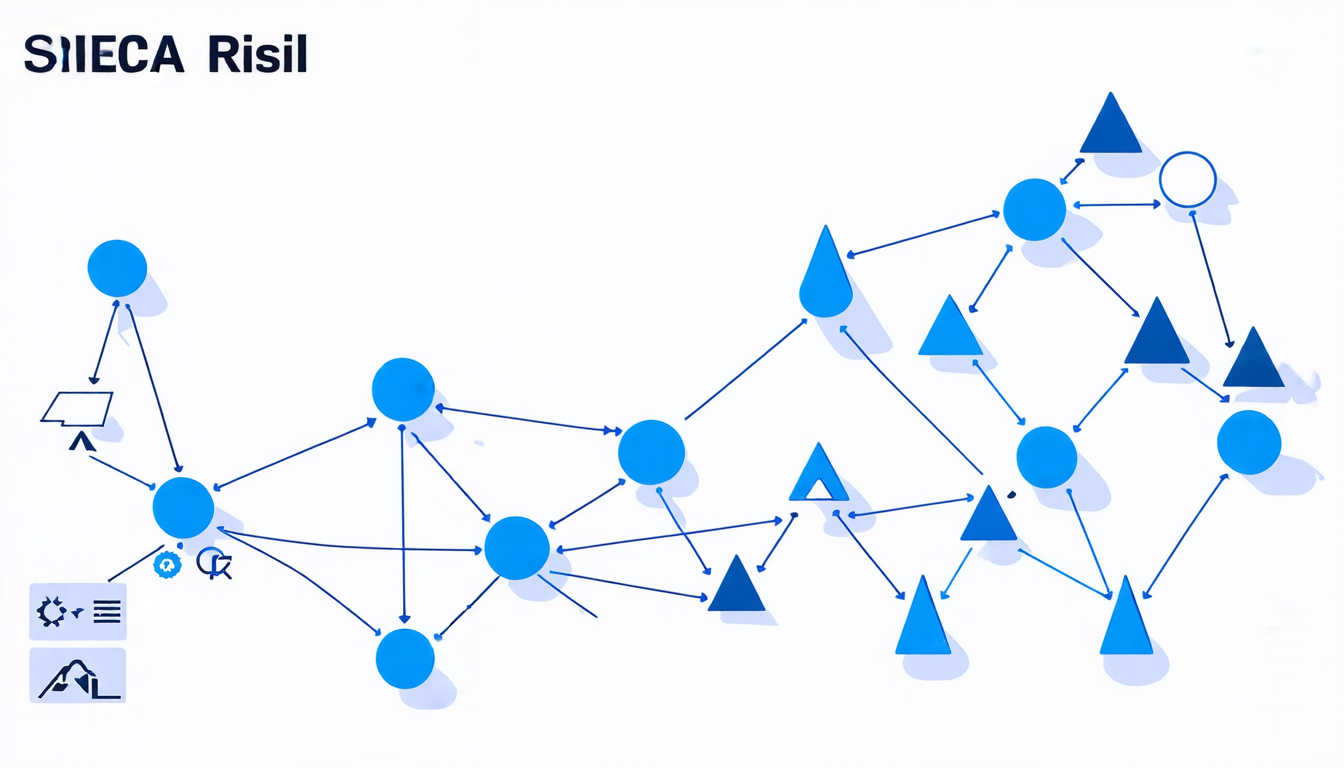
The new approach, published in a recent paper, allows scientists to study the behavior of small subgraphs within these networks. Subgraphs are groups of nodes that are connected to each other in a specific way – for example, a triangle-shaped group or a circle of friends on social media.
Traditionally, researchers have struggled to analyze subgraphs in dynamic random graphs because they are difficult to define and count. The new framework provides a set of mathematical tools that enable scientists to identify and study these small groups with unprecedented precision.
One of the key advantages of the new approach is its ability to capture the complex relationships between nodes in the network. Unlike previous methods, which treated each node as an isolated entity, this framework takes into account the interactions between nodes and their neighbors.
This is particularly important for understanding how information spreads through a network, such as rumors or viruses on social media. By analyzing the behavior of small subgraphs, researchers can gain insights into how these processes unfold over time.
The new approach also has practical applications in fields such as epidemiology and sociology. For example, public health officials could use it to track the spread of diseases through a population, identifying key individuals or groups that play a crucial role in transmission.
The researchers behind the study used simulations to test their framework on a range of dynamic random graphs. Their results showed that the approach was able to accurately identify and analyze subgraphs, even in complex networks with millions of nodes.
The potential implications of this research are significant. By gaining a deeper understanding of how small subgraphs behave within dynamic random graphs, scientists can develop more effective strategies for controlling the spread of information or disease, improving network design, and optimizing system performance.
As our world becomes increasingly interconnected, the ability to analyze and understand complex networks is becoming increasingly important. This breakthrough has the potential to open up new avenues of research in fields ranging from computer science to social sciences, and could have far-reaching consequences for a wide range of applications.
Cite this article: “Unlocking Secrets of Complex Networks: New Framework for Analyzing Dynamic Random Graphs”, The Science Archive, 2025.
Complex Networks, Dynamic Random Graphs, Subgraphs, Network Analysis, Information Spread, Epidemiology, Sociology, Graph Theory, Simulation, Optimization





