

Wednesday 19 March 2025
A team of researchers has made a significant breakthrough in developing a new method for analyzing brain networks, allowing them to better understand how our brains function and potentially paving the way for more accurate diagnoses and treatments for neurological disorders.
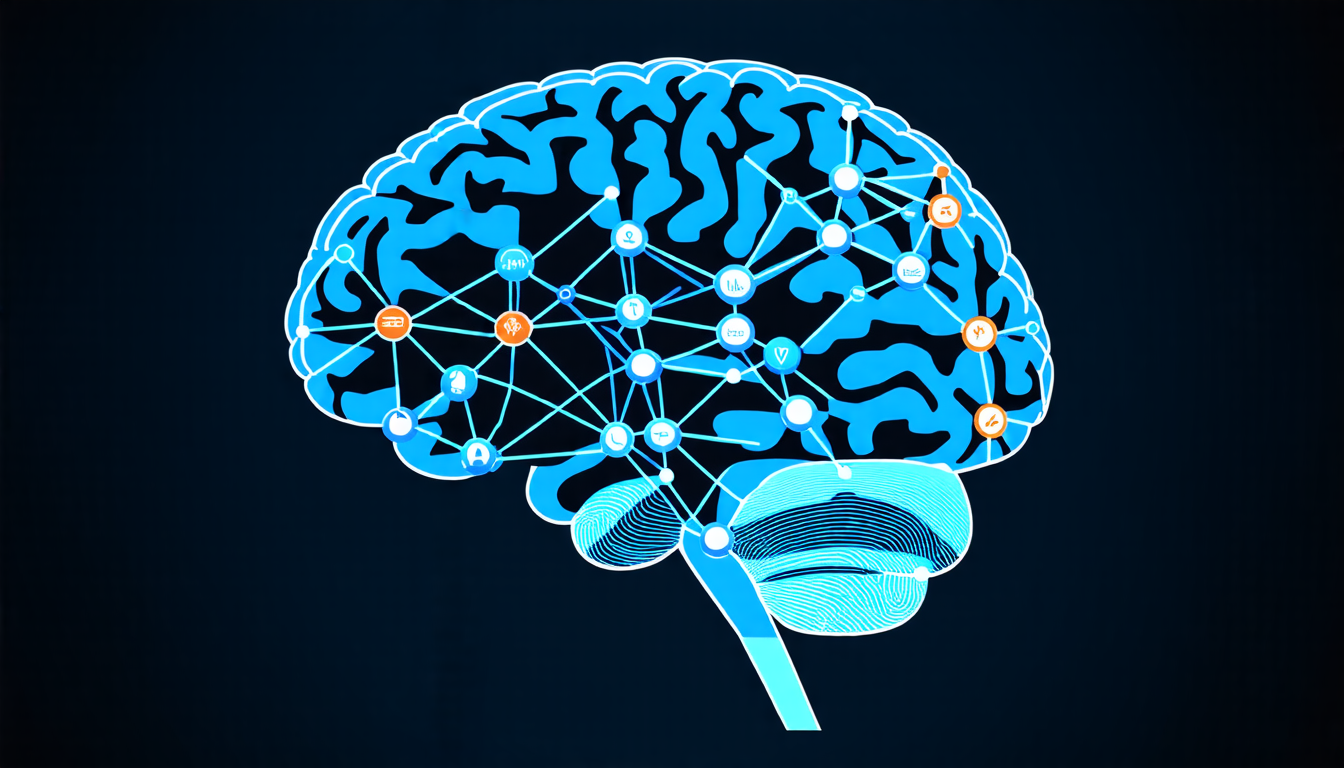
The study focused on a type of neural network called a graph neural network (GNN), which is designed to analyze complex relationships between different parts of the brain. In this case, the researchers used GNNs to examine brain networks obtained from functional magnetic resonance imaging (fMRI) scans.
The key innovation in this research was the development of a new algorithm that can adapt to unseen data and improve its performance over time. This is known as an out-of-distribution (OOD) generalization capability, which is essential for making accurate predictions when dealing with new or unfamiliar data.
To achieve OOD generalization, the researchers introduced a feature selector and a structure extractor into their GNN framework. The feature selector helps to identify the most important features in the brain network data, while the structure extractor uses these features to extract meaningful patterns and relationships.
The results of this study were impressive. When tested on two large datasets of fMRI scans from individuals with Alzheimer’s disease and healthy controls, the algorithm was able to accurately classify new subjects into either group even when they had not been seen before during training. This is a significant achievement, as it demonstrates that the algorithm can generalize well to unseen data.
The implications of this research are far-reaching. For example, it could lead to more accurate diagnoses for neurological disorders such as Alzheimer’s disease, which can be difficult to diagnose in its early stages. Additionally, it may enable researchers to better understand how brain networks function and interact in healthy individuals, which could potentially inform the development of new treatments.
The study also highlights the importance of developing algorithms that can adapt to unseen data. This is a critical consideration in many fields, including medicine, where the ability to generalize well to new data can be the difference between an accurate diagnosis or treatment and a misdiagnosis or ineffective treatment.
Overall, this research has significant potential for advancing our understanding of brain networks and improving the diagnosis and treatment of neurological disorders.
Cite this article: “Breakthrough in Brain Network Analysis Paves Way for More Accurate Diagnoses and Treatments”, The Science Archive, 2025.
Brain Networks, Graph Neural Network, Functional Magnetic Resonance Imaging, Fmri, Out-Of-Distribution Generalization, Feature Selector, Structure Extractor, Alzheimer’S Disease, Neurological Disorders, Machine Learning Algorithms.





