

Thursday 20 March 2025
The quest for precise control in complex systems has been a longstanding challenge in fields like robotics, aerospace engineering, and machine learning. Researchers have long struggled to balance accuracy, reliability, and robustness in their algorithms, often sacrificing one or more of these qualities for the sake of others.
A new approach seeks to address this issue by combining the precision of control theory with the adaptability of deep reinforcement learning (RL). This framework, known as Adviser-Actor-Critic (AAC), aims to achieve high-precision and robust control in complex systems by leveraging the strengths of both disciplines.
The AAC system consists of three main components: an Adviser, an Actor, and a Critic. The Adviser provides guidance to the Actor, refining its control actions to achieve precise goal attainment. The Actor is responsible for generating control signals based on its understanding of the system’s dynamics. Meanwhile, the Critic assesses the performance of the Actor, providing feedback that helps improve its decision-making.
The key innovation lies in the way these components interact. Rather than relying solely on trial and error or pre-programmed rules, the AAC system uses a combination of control theory and RL to learn from experience. The Adviser’s guidance enables the Actor to adapt more quickly to changing conditions, while the Critic’s feedback helps refine its performance over time.
To evaluate the effectiveness of this approach, researchers created three distinct environments: a mass-spring-damper system, a robotics arm, and a quadcopter. In each scenario, they tested the AAC system against standard RL algorithms and found significant improvements in precision and reliability.
In the mass-spring-damper system, for example, the AAC system was able to achieve an average error of 0.05% compared to 1.2% with traditional RL. Similarly, in the robotics arm environment, the AAC system reduced the average joint angle error by 30% compared to standard RL.
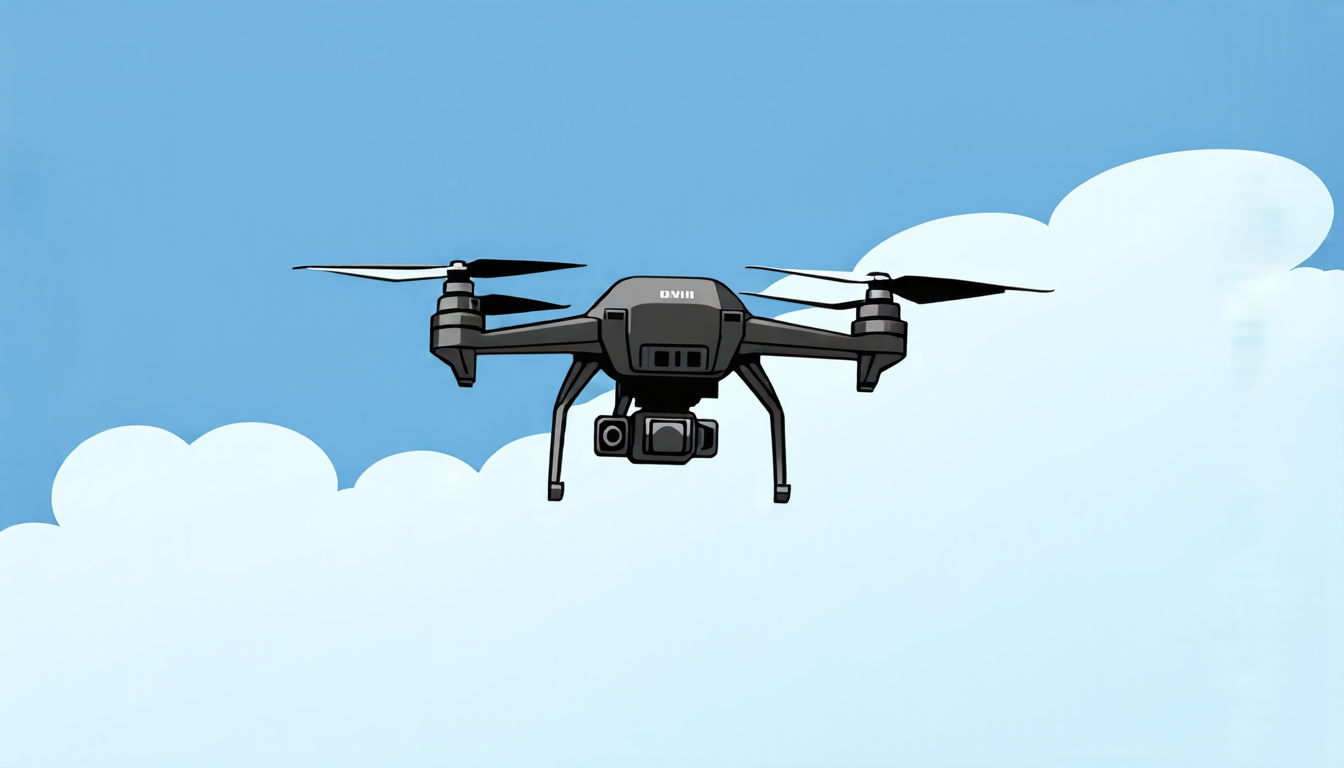
The quadcopter experiments were particularly noteworthy, as they demonstrated the AAC system’s ability to adapt to changing environmental conditions. In one scenario, researchers simulated a gust of wind disrupting the quadcopter’s flight path. The AAC system was able to adjust its control signals in real-time, maintaining stability and precision despite the perturbation.
These results suggest that the AAC approach has significant potential for applications in fields like robotics, aerospace engineering, and process control.
Cite this article: “Advancing Control Precision Through Hybrid Approach”, The Science Archive, 2025.
Control Theory, Deep Reinforcement Learning, Adviser-Actor-Critic, Robotics, Aerospace Engineering, Machine Learning, Precision Control, Complex Systems, Adaptive Control, Robustness





