

Thursday 20 March 2025
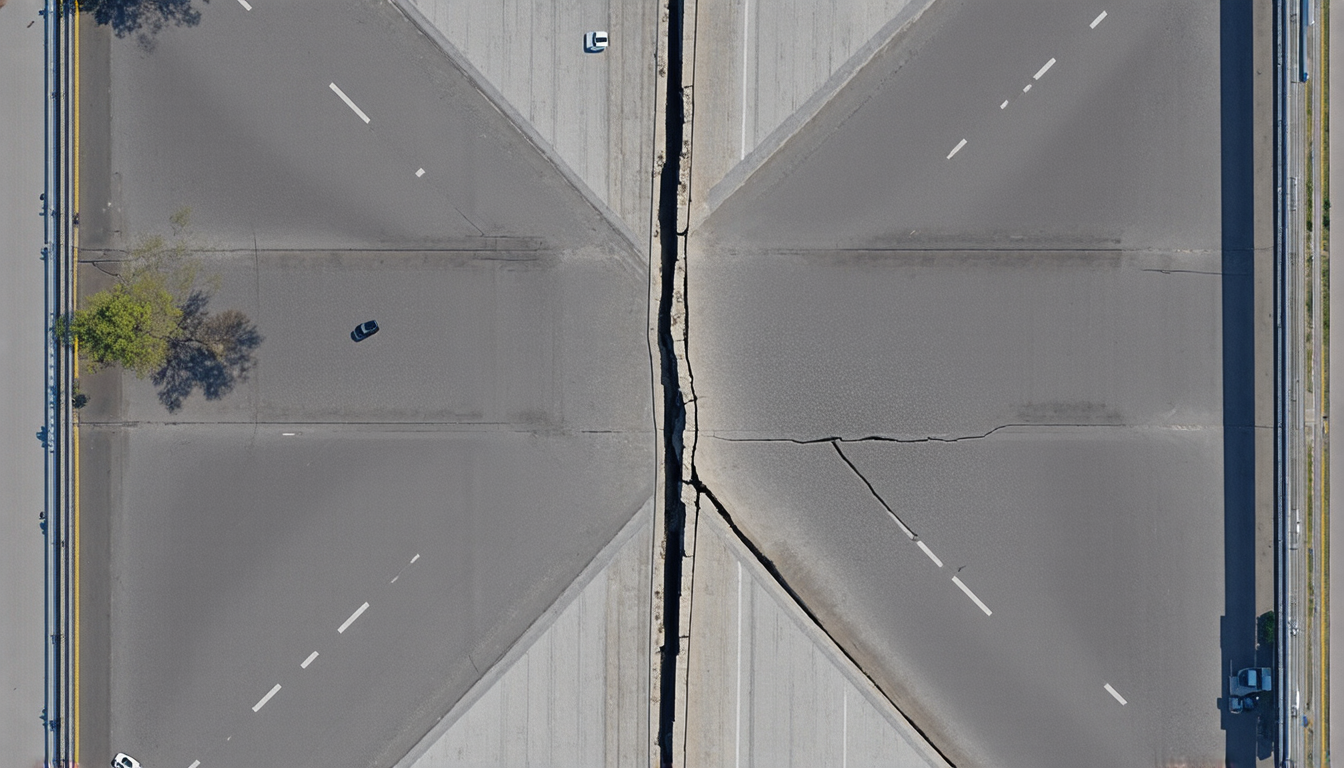
Scientists have made a significant breakthrough in the field of computer vision, allowing for tiny machines to detect cracks on concrete structures with unprecedented accuracy. This achievement has far-reaching implications for industries such as construction, infrastructure maintenance, and environmental monitoring.
The research team used a combination of lightweight convolutional neural networks (CNNs) and quantization techniques to develop an autonomous inspection system that can identify cracks on concrete surfaces using images captured by unmanned aerial vehicles (UAVs). The CNNs were designed specifically for resource-constrained devices, allowing the system to run efficiently on small machines.
The team evaluated two CNN models, MobileNetV1x0.25 and MobileNetV2x0.5, across three platforms – TensorFlow, PyTorch, and Open Neural Network Exchange (ONNX) – using three quantization techniques: dynamic quantization, post-training quantization (PTQ), and quantization-aware training (QAT). The results showed that QAT consistently achieved near-floating-point accuracy while maintaining efficient resource usage.
The PTQ technique significantly reduced memory and energy consumption but suffered from accuracy loss, particularly in TensorFlow. Dynamic quantization preserved accuracy but faced deployment challenges on PyTorch. By leveraging QAT, the team enabled real-time, low-power crack detection on UAVs, enhancing safety, scalability, and cost-effectiveness in structural health monitoring (SHM) applications.
The system’s ability to detect cracks with high accuracy is critical for SHM, as it allows for early damage detection and prevention of catastrophic failures. The research also highlights the importance of quantization techniques in deploying machine learning models on resource-constrained devices, such as UAVs or smart sensors.
In practical terms, this technology can be used to monitor bridges, buildings, and other infrastructure structures more effectively and efficiently. For instance, UAVs equipped with tiny machines could fly over concrete surfaces, capturing images that are then analyzed for cracks in real-time. This would enable early detection of damage, reducing maintenance costs and ensuring public safety.
The implications of this research extend beyond SHM to other fields where accurate image analysis is crucial. The development of autonomous inspection systems using computer vision and machine learning could revolutionize industries such as agriculture, environmental monitoring, and healthcare, among others.
Overall, this breakthrough demonstrates the potential for tiny machines to make a significant impact on various industries and applications, enabling more efficient, cost-effective, and accurate inspections and assessments.
Cite this article: “Tiny Machines Boost Concrete Crack Detection Accuracy”, The Science Archive, 2025.
Computer Vision, Concrete Structures, Crack Detection, Autonomous Inspection, Machine Learning, Lightweight Neural Networks, Quantization Techniques, Uavs, Infrastructure Maintenance, Environmental Monitoring





