

Thursday 20 March 2025
Researchers have made a significant breakthrough in understanding how complex networks, such as social media and transportation systems, evolve over time. A new study has shed light on the processes that govern the growth of hypergraphs, which are networks that consist of multiple edges or connections between nodes.
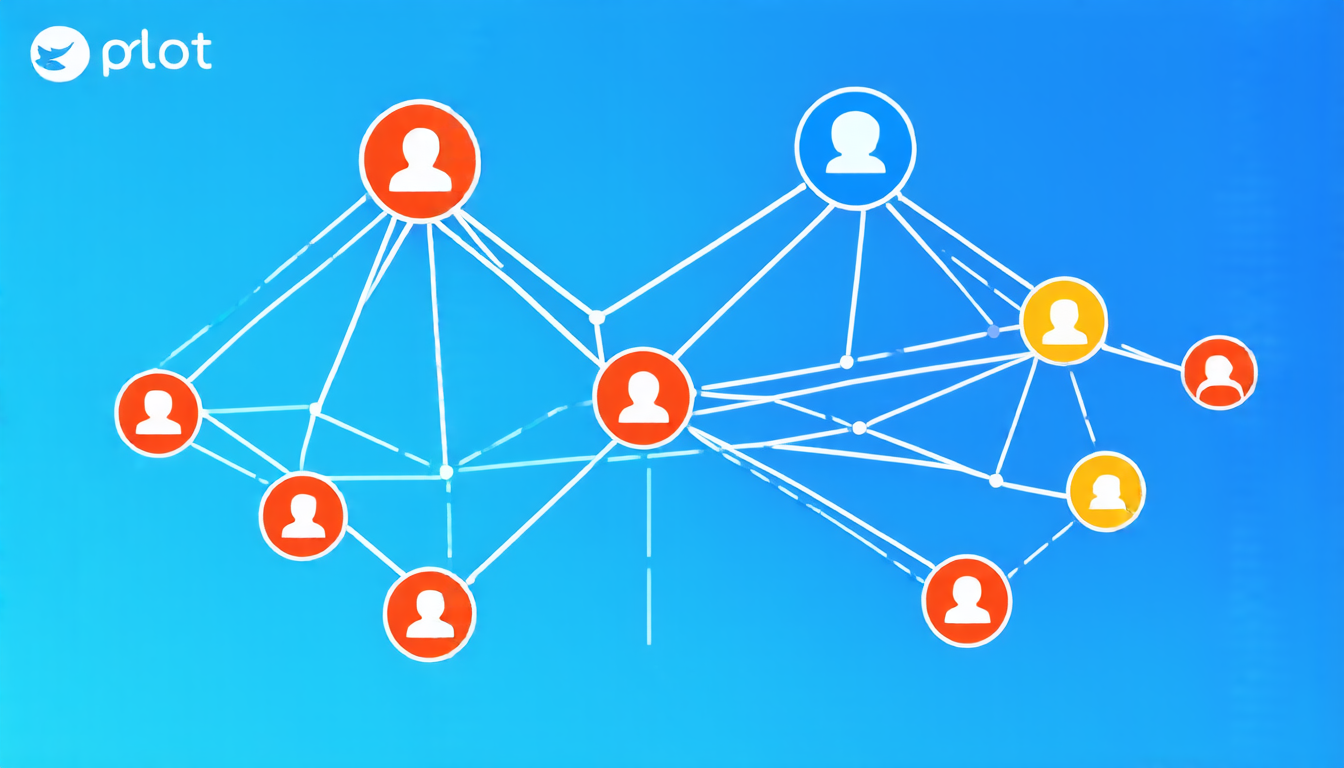
Hypergraphs are increasingly important in modern society, as they can be used to model a wide range of complex systems. For example, social media platforms like Facebook and Twitter can be viewed as hypergraphs, where each user is a node and their relationships with other users are the edges. Similarly, transportation systems like roads and public transit networks can also be represented as hypergraphs.
The study focused on understanding how these networks grow and evolve over time. The researchers used a combination of mathematical models and computational simulations to investigate the processes that govern the growth of hypergraphs.
One key finding was that the growth of hypergraphs is influenced by two main factors: the number of new nodes added to the network, and the probability that existing edges will be copied or duplicated. The researchers found that when these factors are balanced, the hypergraph grows in a way that is similar to real-world networks.
The study also showed that the structure of the hypergraph changes over time, with newer edges being more likely to connect to older nodes than to each other. This suggests that the network is evolving in a way that favors connections between old and new nodes rather than between new nodes alone.
Another key finding was that the growth of hypergraphs is influenced by the degree distribution of the network, which refers to the number of edges connected to each node. The researchers found that when the degree distribution is skewed towards higher degrees, the hypergraph grows faster and becomes more complex over time.
The study has important implications for our understanding of complex networks and how they evolve over time. It suggests that the growth of these networks is influenced by a combination of factors, including the number of new nodes added, the probability of edge duplication, and the degree distribution of the network.
The findings could also have practical applications in fields such as social media analysis, transportation planning, and epidemiology. For example, understanding how hypergraphs grow and evolve over time could help us better predict the spread of diseases or the adoption of new technologies.
Overall, the study provides a valuable insight into the complex processes that govern the growth of hypergraphs. It highlights the importance of considering multiple factors when studying these networks, and suggests that further research is needed to fully understand their evolution over time.
Cite this article: “Unlocking the Secrets of Hypergraph Growth: A Breakthrough in Understanding Complex Networks”, The Science Archive, 2025.
Networks, Hypergraphs, Complex Systems, Social Media, Transportation Systems, Mathematical Models, Computational Simulations, Network Growth, Degree Distribution, Evolution





