

Thursday 20 March 2025
Researchers have made a significant breakthrough in medical imaging, developing a new technique that can reconstruct detailed images of the body using deep learning algorithms and rotational symmetry principles.
Medical imaging is a crucial tool for diagnosing and treating diseases, but current methods often rely on limited data and can produce low-quality images. This can make it difficult for doctors to accurately diagnose conditions, leading to delays in treatment and potentially serious consequences.
The new technique uses a type of neural network called a cyclic group equivariant convolutional network (CREC) to reconstruct images from incomplete or noisy data. By incorporating rotational symmetry principles into the algorithm, the researchers were able to improve the accuracy and detail of the reconstructed images.
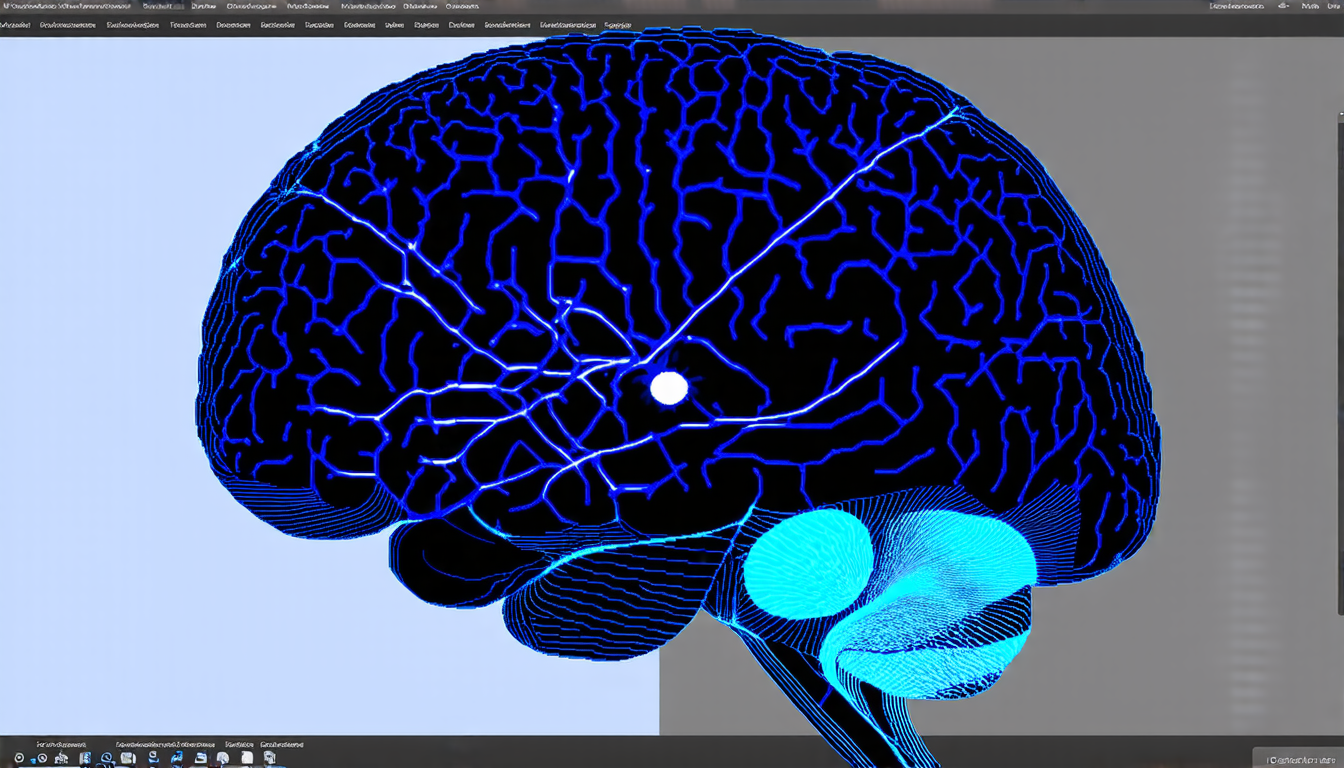
The CREC network is trained on a dataset of digital brain phantoms, which are computer-generated models of the human brain. The algorithm learns to recognize patterns in the data that correspond to different structures and features within the brain, such as gray matter and white matter.
When applied to real-world medical imaging data, the CREC network was able to produce high-quality images with improved detail and accuracy compared to traditional methods. This could have significant implications for diagnosing conditions such as stroke, Alzheimer’s disease, and cancer.
The researchers also tested their algorithm on different types of brain phantoms, including those with varying levels of noise and incomplete data. The results showed that the CREC network was able to adapt to these different scenarios and produce high-quality images even in challenging conditions.
One of the key advantages of this new technique is its ability to handle incomplete or noisy data. This is particularly important for medical imaging applications, where data may be limited or corrupted due to factors such as patient movement or equipment malfunction.
The researchers believe that their algorithm could have far-reaching implications for medical imaging and disease diagnosis. By improving the accuracy and detail of reconstructed images, doctors may be able to more accurately diagnose conditions and develop targeted treatments.
This new technique is not without its challenges, however. The CREC network requires a significant amount of computational power and memory to train and run, which could limit its adoption in some medical settings.
Despite these limitations, the researchers are optimistic about the potential of their algorithm. They believe that it could be used to improve medical imaging in a variety of applications, from diagnostic radiology to neuroimaging and beyond.
In the future, the researchers plan to continue refining their algorithm and testing it on different types of data.
Cite this article: “Breakthrough in Medical Imaging: New Technique Reconstructs Detailed Images Using Deep Learning Algorithms”, The Science Archive, 2025.
Medical Imaging, Deep Learning, Neural Network, Rotational Symmetry, Cyclic Group Equivariant Convolutional Network, Brain Phantoms, Image Reconstruction, Diagnosis, Disease Treatment, Computer Vision





