

Thursday 20 March 2025
Scientists have made a significant breakthrough in understanding the intricacies of chemical reactions at the solid-liquid interface, a crucial area of research with far-reaching implications for fields such as energy storage and catalysis.
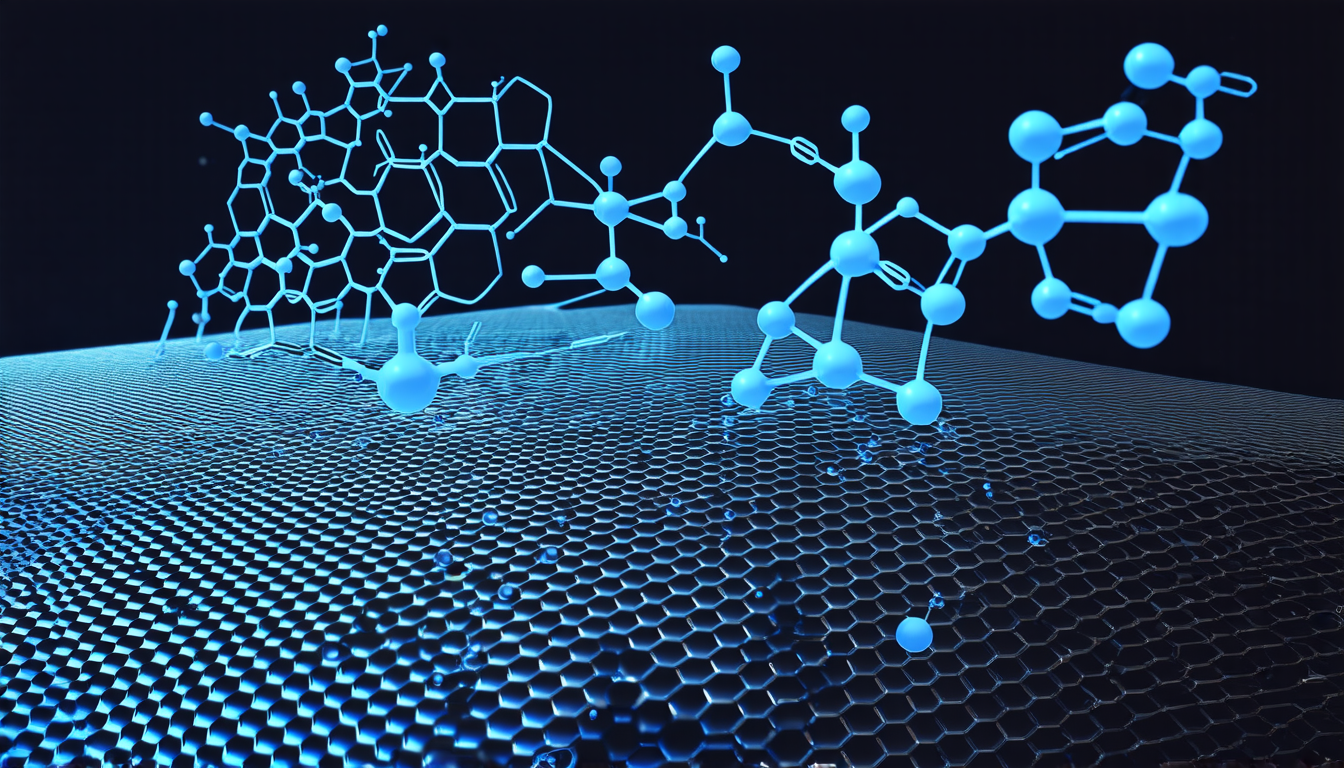
The study, published recently, employs advanced computational methods to simulate the oxygen reduction reaction (ORR) on nitrogen-doped graphene, a promising material for fuel cells. The researchers used a novel approach called extended Lagrangian Born-Oppenheimer molecular dynamics (XL-BOMD), which allows them to accurately model the complex interactions between atoms and molecules at the interface.
The ORR is a critical step in many energy-related applications, including fuel cells, electrolyzers, and batteries. However, it remains one of the most challenging reactions to understand and optimize due to its complexity and the presence of multiple pathways. The researchers’ goal was to gain insights into the reaction mechanism by simulating the ORR on nitrogen-doped graphene (NG), a material that has shown promise as a catalyst.
The simulations revealed that the ORR occurs through an outer-sphere mechanism, where water molecules play a crucial role in facilitating the transfer of electrons between the catalyst surface and molecular oxygen. This finding is significant because it suggests that NG can be used to improve the efficiency of fuel cells and other energy-related devices.
One of the key challenges in simulating chemical reactions is dealing with the complexity of the interactions between atoms and molecules. The XL-BOMD method used by the researchers allows them to accurately model these interactions, which is essential for understanding the reaction mechanism.
The study also highlights the importance of considering the electronic structure of the material when designing catalysts. The researchers found that the nitrogen doping in NG affects the electronic properties of the material, which in turn influences the ORR mechanism.
The findings of this study have significant implications for the development of new energy-related technologies. By understanding the reaction mechanisms and optimizing the design of catalysts, scientists can improve the efficiency and sustainability of these devices.
In addition to its applications in energy storage and catalysis, this research also has broader implications for our understanding of chemical reactions at interfaces. The XL-BOMD method used by the researchers is a powerful tool that can be applied to a wide range of systems, from biological membranes to electronic devices.
Overall, this study represents an important step forward in our understanding of chemical reactions at solid-liquid interfaces.
Cite this article: “Unlocking the Secrets of Solid-Liquid Interfaces: A Breakthrough in Chemical Reaction Understanding”, The Science Archive, 2025.
Chemical Reactions, Solid-Liquid Interface, Energy Storage, Catalysis, Fuel Cells, Oxygen Reduction Reaction, Nitrogen-Doped Graphene, Extended Lagrangian Born-Oppenheimer Molecular Dynamics, Xl-Bomd, Electronic Structure





