

Thursday 20 March 2025
A new study has shed light on the mysterious quenching of star formation in dwarf galaxies, a phenomenon that has long puzzled astronomers. By analyzing data from deep- wide surveys, researchers have been able to identify the key factors that contribute to this process.
Dwarf galaxies are the most common type of galaxy in the universe, making up around 85% of all galaxies. They are small and faint, with masses ranging from a few million to a few billion times that of the sun. Despite their relatively small size, dwarf galaxies play a crucial role in our understanding of galaxy evolution.
One of the biggest mysteries surrounding dwarf galaxies is why they stop forming stars. Unlike larger galaxies, which continue to form stars throughout their lives, dwarf galaxies seem to shut down their star-forming machinery after a certain point. This phenomenon is known as quenching, and it’s not unique to dwarf galaxies – many large galaxies also experience quenching.
The new study, published in the Monthly Notices of the Royal Astronomical Society, used data from the COSMOS field, a deep- wide survey that has imaged millions of galaxies. By analyzing the light coming from these galaxies, researchers were able to estimate their mass and star formation rates.
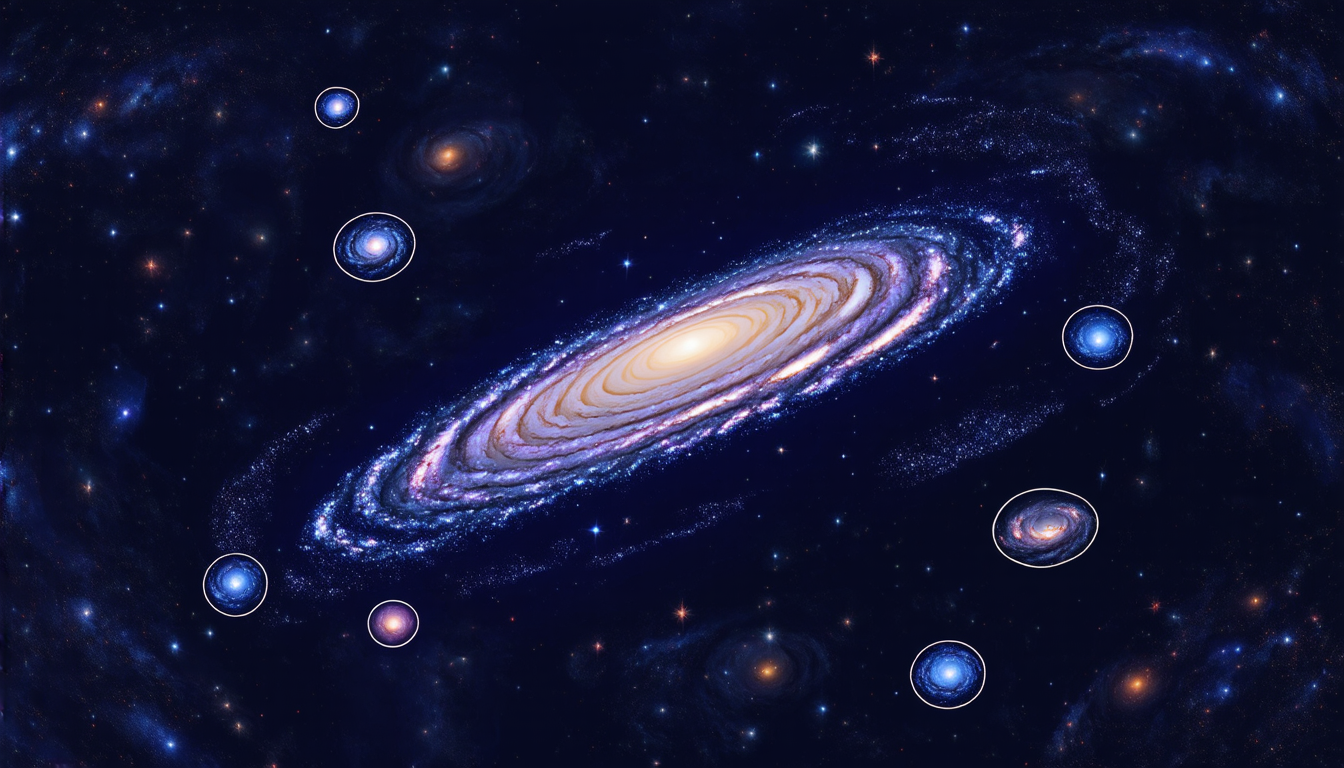
One of the key findings of the study is that proximity to a massive galaxy is a major factor in quenching. Galaxies that are close to larger galaxies tend to have lower star formation rates, suggesting that some kind of interaction or feedback mechanism is at play. This makes sense – large galaxies can exert a significant gravitational pull on smaller ones, which could slow down their star-forming activity.
Another important factor is the density of the local environment. Galaxies in denser regions tend to have higher star formation rates, while those in less dense areas tend to be quiescent. This suggests that the surrounding galaxy distribution plays a role in regulating star formation.
The study also found that half of all red dwarfs – galaxies with low star formation rates – exist outside the virial radius of massive galaxies. This is surprising, as one might expect these galaxies to be closer to their larger neighbors. Instead, they seem to be isolated from their surroundings, suggesting that some internal process is driving quenching.
The findings of this study have significant implications for our understanding of galaxy evolution. By identifying the key factors that contribute to quenching, researchers can better understand how galaxies grow and evolve over time.
Cite this article: “Unraveling the Mystery of Quenched Star Formation in Dwarf Galaxies”, The Science Archive, 2025.
Galaxy Evolution, Star Formation, Quenching, Dwarf Galaxies, Cosmos Field, Massive Galaxies, Gravitational Pull, Local Environment, Galaxy Distribution, Red Dwarfs





