

Thursday 20 March 2025
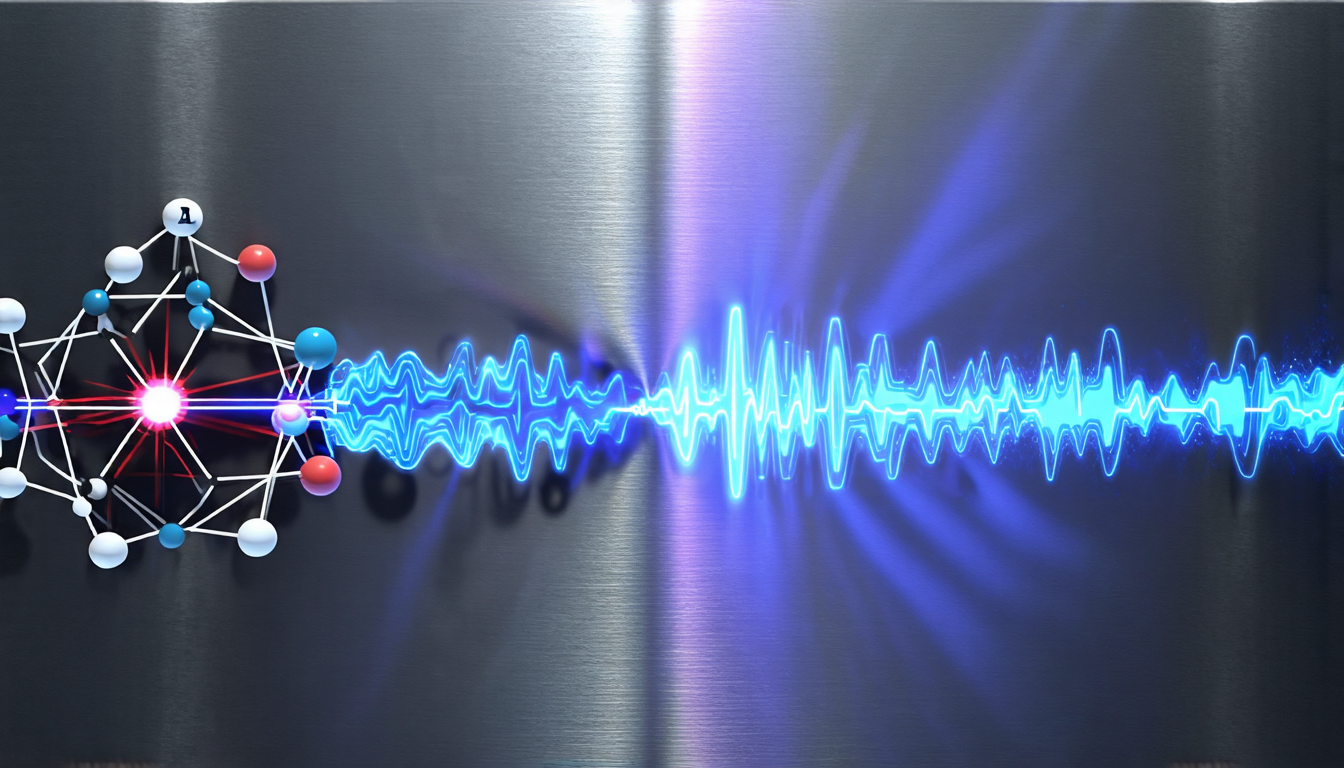
Scientists have long sought to understand the intricate dance between laser pulses and metal surfaces, a crucial phenomenon that underlies many modern technologies. Recently, researchers at the University of Tokyo made significant strides in this area by developing a new approach to modeling the interaction between ultrashort intense laser pulses and bulk aluminum.
The team’s work builds upon earlier research into the subject, which has often relied on simplified assumptions and approximations to simulate the complex processes involved. However, these simplifications have limited the accuracy of the results, making it difficult to fully understand the underlying physics.
To overcome this limitation, the researchers employed a novel combination of theoretical and computational methods. They used the Vlasov equation, a fundamental tool in plasma physics, to describe the dynamics of the electrons in the metal. This allowed them to capture the intricate details of the electron motion, including the effects of electron-electron scattering.
The team also developed a sophisticated numerical method to solve the Maxwell-Vlasov equations, which describe both the electromagnetic fields and the electron dynamics. This approach enabled them to simulate the laser pulse interaction with the aluminum surface in unprecedented detail.
One of the key findings of the study is that the energy absorption by the metal is significantly affected by the polarization of the laser pulse. The researchers discovered that the absorbed energy increases more rapidly under p-polarization (where the electric field vector is perpendicular to the surface) than under s-polarization (where the electric field vector is parallel to the surface).
This result has important implications for a wide range of applications, from material processing and machining to high-harmonic generation and X-ray sources. It suggests that carefully controlling the polarization of the laser pulse could be used to optimize these processes and achieve more efficient results.
The study also sheds new light on the role of electron-electron scattering in the energy absorption process. The researchers found that this type of scattering plays a crucial role in determining the absorbed energy, particularly at high intensities. This understanding is critical for developing accurate models of laser-matter interaction, which will be essential for the continued advancement of these technologies.
The University of Tokyo’s research has opened up new avenues of investigation into the complex phenomena involved in laser-metal interactions. As scientists continue to push the boundaries of what is possible with ultrashort intense laser pulses, this work will provide a solid foundation for their efforts.
Cite this article: “Unlocking the Secrets of Laser-Metal Interactions”, The Science Archive, 2025.
Laser-Matter Interaction, Ultrashort Intense Laser Pulses, Aluminum, Vlasov Equation, Maxwell-Vlasov Equations, Electron Dynamics, Plasma Physics, Polarization, Material Processing, High-Harmonic Generation





