

Thursday 20 March 2025
Scientists have made a significant breakthrough in developing a new type of electronics that can accurately measure time and energy simultaneously, with potential applications in medical imaging, particle physics, and other fields.
The new development involves a special kind of sensor called a silicon photomultiplier (SiPM), which is designed to detect very small amounts of light. When an SiPM detects light, it produces a signal that contains information about the time and energy of the photon that triggered it. However, this signal can be noisy and difficult to analyze.
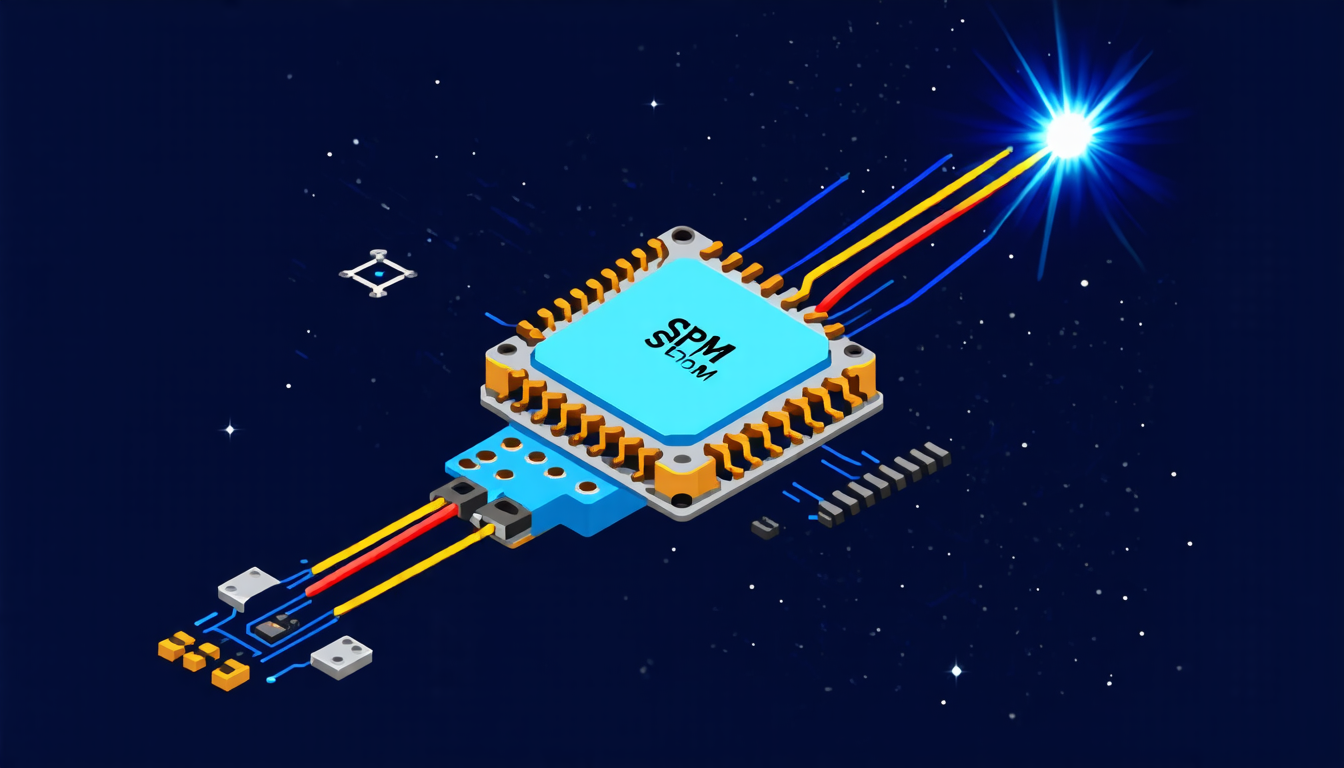
To solve this problem, researchers have created a new type of electronic circuit called a readout integrated circuit (ROIC). The ROIC is designed specifically for use with SiPMs and is able to accurately measure both the time and energy of the signals produced by the sensor.
The new ROIC has several key advantages over previous designs. For one, it is much more accurate than earlier versions, allowing scientists to get a more precise measurement of the time and energy of the photons they are detecting. This is important because in many applications, such as medical imaging, even small errors can have significant consequences.
Another advantage of the new ROIC is its ability to process signals quickly and efficiently. This is important because in many applications, scientists need to be able to analyze large amounts of data quickly in order to make accurate measurements.
The ROIC has already been tested with a number of different SiPMs and has shown promising results. In tests, it was able to accurately measure the time and energy of signals produced by the sensors, even when they were very small or noisy.
The potential applications of this technology are wide-ranging. For example, in medical imaging, it could be used to improve the accuracy of positron emission tomography (PET) scans, which use SiPMs to detect gamma rays emitted by the body. It could also be used in particle physics experiments, where accurate timing and energy measurements are crucial for understanding the behavior of subatomic particles.
In addition, this technology has the potential to revolutionize our ability to study the universe. By allowing scientists to make more precise measurements of the time and energy of cosmic events, it could help us better understand the nature of space and time itself.
Overall, the development of this new ROIC represents a significant step forward in the field of sensor technology and has the potential to have a major impact on a wide range of scientific disciplines.
Cite this article: “Accurate Time and Energy Measurement with Silicon Photomultipliers”, The Science Archive, 2025.
Silicon Photomultiplier, Readout Integrated Circuit, Roic, Sensor Technology, Time Measurement, Energy Measurement, Medical Imaging, Particle Physics, Positron Emission Tomography, Pet Scans





