
Thursday 20 March 2025
Researchers have been grappling with a complex problem in clinical trials: how to handle intercurrent events, or ICEs, that occur after treatment initiation but before the outcome is measured. These events can be anything from adverse reactions to changes in medication, and they can significantly impact the results of a study.
To tackle this issue, scientists have developed various strategies for dealing with ICEs, including hypothetical and treatment policy approaches. The hypothetical approach involves simulating what would have happened if an ICE had not occurred, while the treatment policy approach involves adjusting the analysis to account for the fact that an ICE did occur.
However, these approaches often rely on untestable assumptions about the relationship between the ICE and the outcome of interest. For example, the hypothetical approach assumes that the outcome would have been different if the ICE had not occurred, but this assumption may not always hold true.
In a new study, researchers have proposed an alternative approach to handling ICEs: using single-world intervention graphs (SWIGs) to define the estimand of interest. An estimand is a specific value or quantity that is being estimated in a study, such as the effect of a treatment on an outcome.
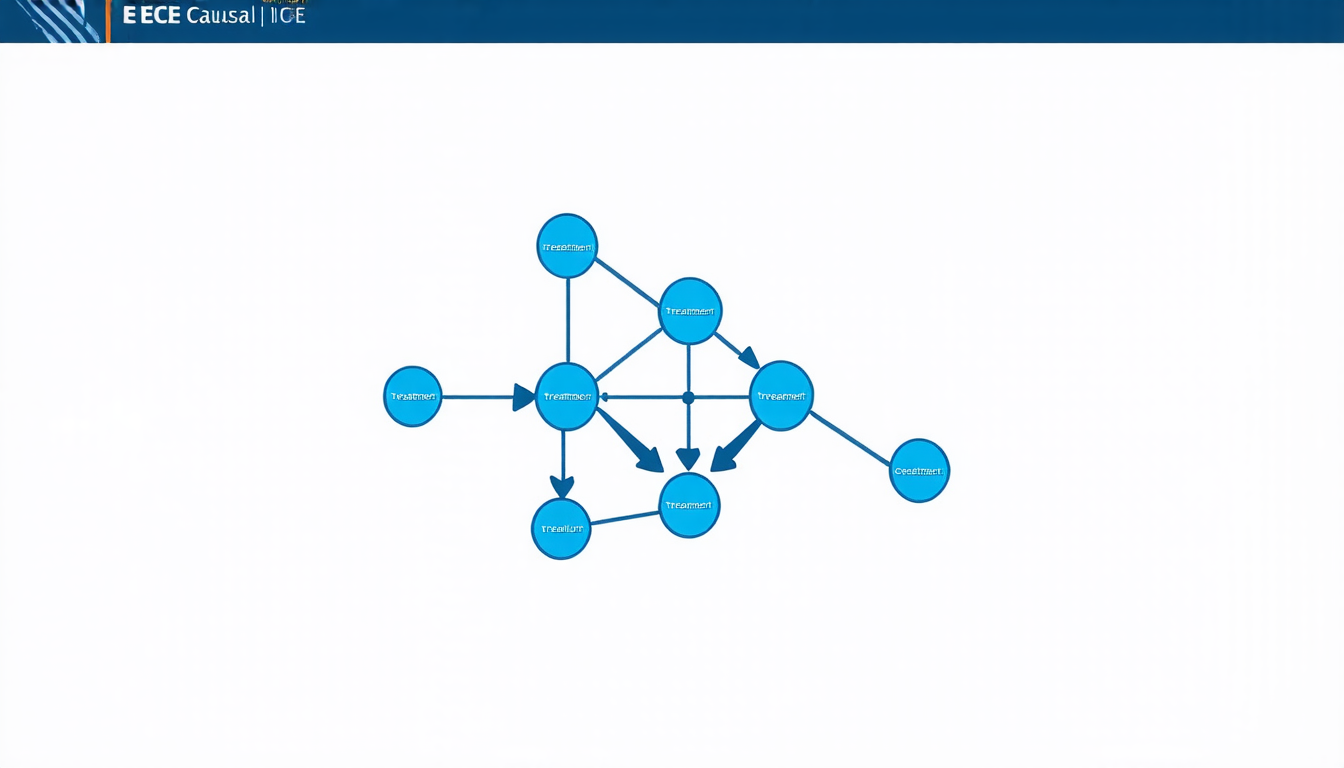
The SWIG approach involves creating a graphical representation of the causal relationships between the ICE and the outcome of interest, as well as the other variables involved in the study. This graph can be used to identify the assumptions required for identification of the estimand, which is then estimated using standard statistical methods.
One of the key benefits of the SWIG approach is that it allows researchers to explicitly model the relationships between the ICE and the outcome of interest, rather than relying on untestable assumptions. This can help to improve the accuracy and reliability of the results, particularly in studies where the relationship between the ICE and the outcome is complex.
The study also proposed a new type of estimator for handling ICEs, which involves imputing missing data using a model that takes into account the relationships between the ICE and the outcome. This approach can help to reduce bias and improve the precision of the estimates.
Overall, the SWIG approach offers a powerful tool for researchers seeking to handle ICEs in clinical trials. By explicitly modeling the relationships between the ICE and the outcome of interest, this approach can help to improve the accuracy and reliability of the results, and provide a more comprehensive understanding of the treatment effect.
Cite this article: “A New Approach to Handling Intercurrent Events in Clinical Trials”, The Science Archive, 2025.
Clinical Trials, Intercurrent Events, Ices, Hypothetical Approach, Treatment Policy Approach, Single-World Intervention Graphs, Swigs, Estimand, Causal Relationships, Statistical Methods