

Thursday 20 March 2025
Federated learning, a technique that enables multiple devices or organizations to collaborate on training artificial intelligence models while keeping their local data private, has been gaining traction in recent years. However, one major challenge that researchers have been grappling with is how to handle the inherent heterogeneity in the data distributed across these devices.
In traditional machine learning, data is typically centralized and homogeneous, making it easier for algorithms to learn from it. But in federated learning, data is decentralized and often comes from diverse sources, leading to differences in quality, format, and distribution. This can result in poor model performance, especially when trying to generalize across different devices or environments.
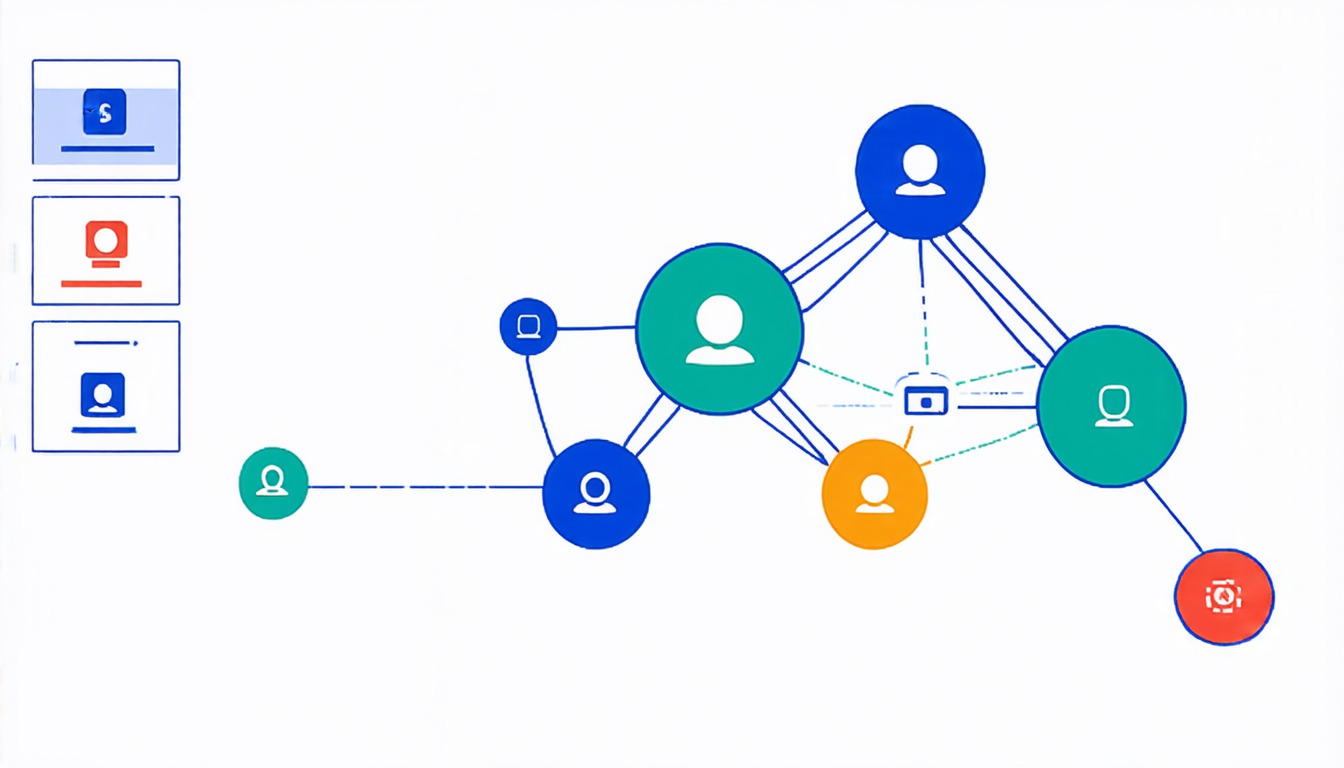
To address this issue, researchers have been exploring clustering techniques that can group similar clients together based on their local data distributions. By doing so, they can create more homogeneous clusters and improve the overall performance of the AI models.
One such approach is called FedGWC, which stands for Federated Gaussian Weighted Clustering. Developed by a team of researchers from Italy, FedGWC uses a novel clustering algorithm that combines Gaussian mixture models with spectral clustering to identify client groups with similar data distributions.
The algorithm works as follows: first, it computes the interaction matrix between clients based on their local data distributions. This matrix captures the relationships between clients and helps identify clusters with similar characteristics. Next, it applies a Gaussian mixture model to each cluster to learn its underlying distribution. Finally, it uses spectral clustering to group clients into clusters based on the similarity of their distributions.
In experiments conducted on various datasets, FedGWC outperformed existing clustering algorithms in terms of accuracy and robustness. For instance, on the Cifar100 dataset, which consists of images from 100 different classes, FedGWC achieved an average balanced accuracy of 76%, compared to 65% for a baseline algorithm.
Another notable result was seen on the Femnist dataset, which simulates a real-world scenario where clients have varying levels of data quality and distribution. In this case, FedGWC was able to identify clusters with similar characteristics and improve model performance by 12% compared to a baseline algorithm.
The researchers’ approach has several potential applications in areas such as healthcare, finance, and education, where decentralized data collection is common. By enabling more accurate and robust AI models, FedGWC can help organizations make better decisions and improve their services.
Cite this article: “Federated Learnings Data Heterogeneity Challenge: A Novel Approach with FedGWC”, The Science Archive, 2025.
Federated Learning, Data Heterogeneity, Clustering, Gaussian Mixture Models, Spectral Clustering, Client Grouping, Decentralized Data Collection, Machine Learning, Artificial Intelligence, Model Performance.





