

Thursday 20 March 2025
Scientists have long been fascinated by the mysteries of quantum mechanics, and one of its most intriguing aspects is contextuality – the idea that certain measurements can influence the outcome of others, even when they’re performed at a distance.
Recently, researchers have made significant progress in understanding this phenomenon, particularly when it comes to Pauli operators – mathematical tools used to describe quantum systems. In a new study, scientists have revealed that these operators are capable of producing contextuality in certain scenarios, but only under very specific conditions.
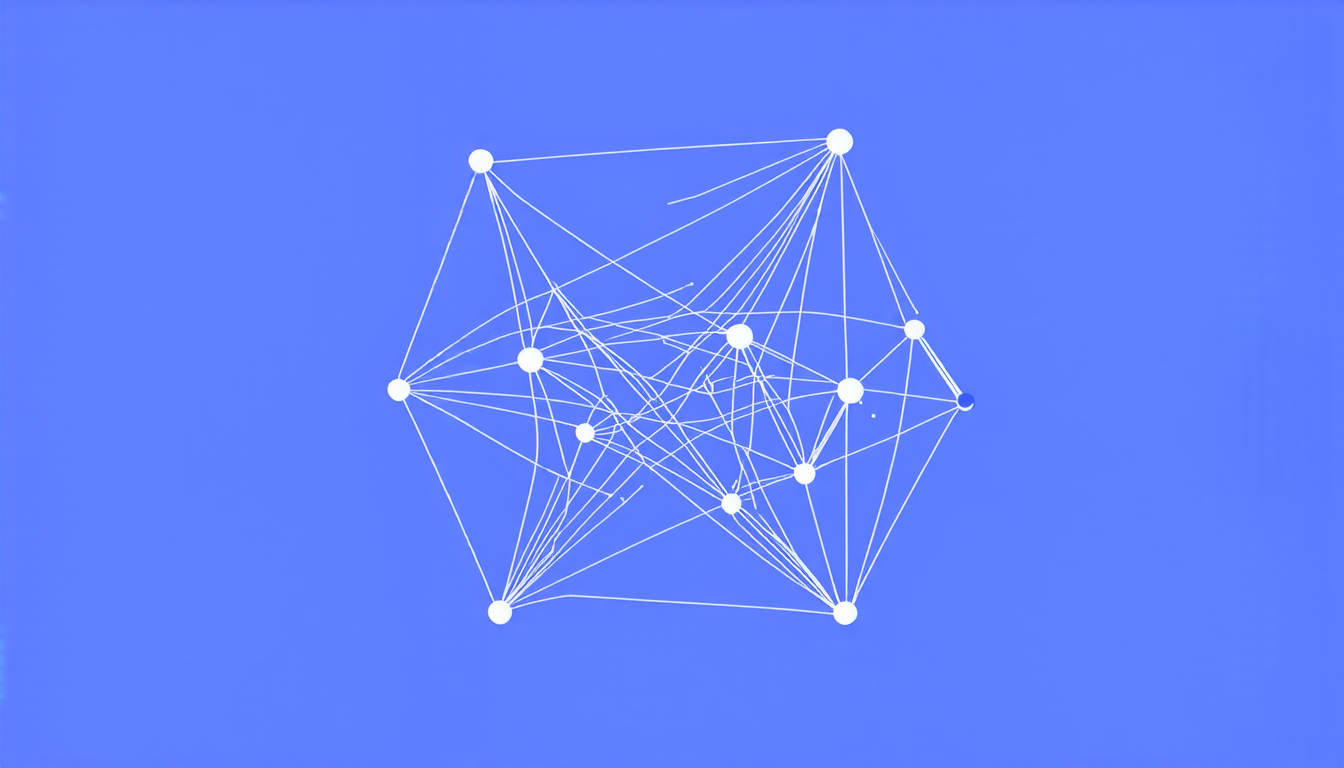
The study focused on compatibility graphs, which are diagrams that show how different measurements relate to each other. By analyzing these graphs, researchers were able to identify patterns and structures that can lead to contextual behavior. In particular, they found that certain combinations of Pauli operators can create cycles – loops where the measurements influence one another in a way that’s not possible classically.
But here’s the interesting part: while these cycles do produce contextuality, they’re not always sufficient to do so. The researchers discovered that the specific arrangement of the Pauli operators within the cycle is crucial. For example, if two 5-cycles are joined together at a single node, the resulting graph can’t produce contextual behavior.
On the other hand, if two 5-cycles share two edges – a more complex configuration – the graph can indeed exhibit contextuality. This suggests that the quantum world is full of subtle patterns and relationships that we’re still working to understand.
The implications of this research are significant, as it opens up new avenues for exploring the properties of quantum systems. For instance, understanding how contextuality arises in certain scenarios could lead to more efficient and accurate methods for simulating complex quantum phenomena.
Moreover, this study highlights the importance of considering the geometric structure of compatibility graphs in order to fully grasp the behavior of Pauli operators. By doing so, researchers can gain a deeper understanding of the intricate relationships between measurements, which is essential for advancing our knowledge of quantum mechanics.
In short, this research demonstrates that the world of quantum mechanics is full of surprises and complexities, and that there’s still much to be learned about the fascinating phenomenon of contextuality.
Cite this article: “Quantum Contextuality: Unraveling the Secrets of Pauli Operators”, The Science Archive, 2025.
Quantum Mechanics, Contextuality, Pauli Operators, Compatibility Graphs, Cycles, Loops, Quantum Systems, Simulations, Geometric Structure, Relationships





