

Thursday 20 March 2025
A team of researchers has made a significant breakthrough in the field of network science, developing new methods for selecting representatives from complex networks. These methods aim to balance two competing goals: identifying influential nodes and ensuring that the selection reflects the diversity within the network.
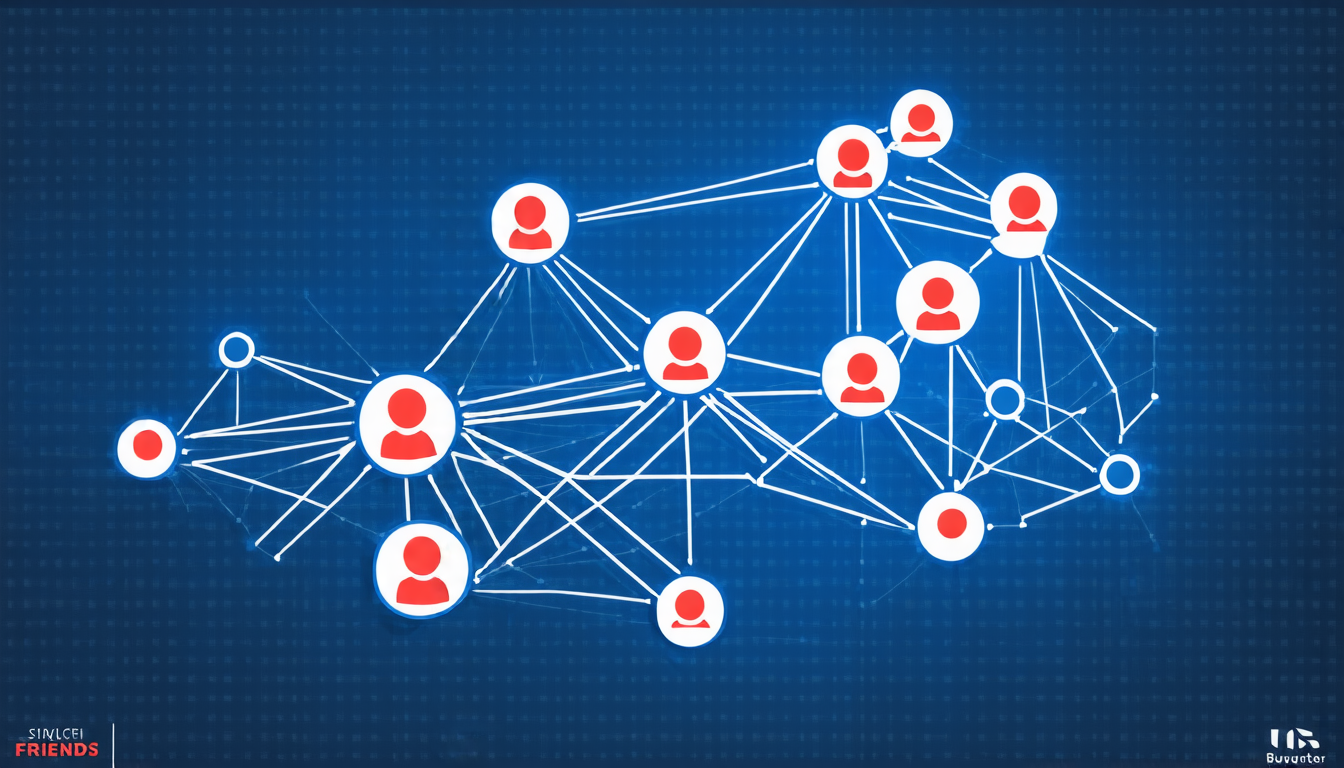
The study focuses on social networks, where individuals can be connected through various relationships, such as friendships or online interactions. In these networks, some nodes are more central than others, meaning they have a greater impact on the overall structure of the network. Selecting representatives from these networks is crucial for many applications, including election forecasting and opinion polling.
The researchers developed two new methods, called AbsorbRank and AbsorbKatz, which differ in their approach to selecting representatives. Both methods take into account the centrality of nodes within the network, but they also consider the relationships between them. This allows them to identify not only the most influential nodes but also those that are part of diverse groups.
One of the key findings is that traditional methods for selecting representatives can lead to biased results. For example, a method called TopRank may choose nodes with high centrality scores, even if they belong to the same group within the network. This can result in an unrepresentative selection, where some groups are overrepresented and others are underrepresented.
In contrast, AbsorbRank and AbsorbKatz aim to achieve proportional representation by selecting nodes from different groups within the network. The methods use mathematical formulas to calculate the centrality of each node and then rank them accordingly. By doing so, they can identify nodes that are both influential and representative of their respective groups.
The researchers tested their methods on various networks, including a social network with thousands of users and an online forum where people discuss different topics. The results showed that AbsorbRank and AbsorbKatz outperformed traditional methods in selecting representative nodes.
These findings have important implications for many fields, including sociology, politics, and computer science. For instance, election forecasting can benefit from these methods by identifying more representative candidates. Similarly, opinion polling can become more accurate by selecting respondents who are more diverse and representative of the population.
The development of AbsorbRank and AbsorbKatz highlights the importance of considering both centrality and diversity when selecting representatives from complex networks. By doing so, researchers can gain a better understanding of these networks and develop more effective methods for analyzing and manipulating them.
Cite this article: “Balancing Centrality and Diversity in Network Representation”, The Science Archive, 2025.
Network Science, Complex Networks, Representative Selection, Social Networks, Centrality, Diversity, Absorbrank, Absorbkatz, Toprank, Proportional Representation





