

Thursday 20 March 2025
Researchers have made a significant breakthrough in the field of super-resolution microscopy, a technique that allows scientists to see tiny details on a microscopic level. The new method, called Speckle Flow SIM, uses a single fixed pattern of light to illuminate a sample and then relies on the motion of the sample to encode additional information.
Traditionally, super-resolution microscopy requires multiple patterns of light to be applied to the sample in quick succession. This can make the process more complicated and time-consuming. The new approach simplifies things by using just one pattern, but still achieves the same level of detail as before.
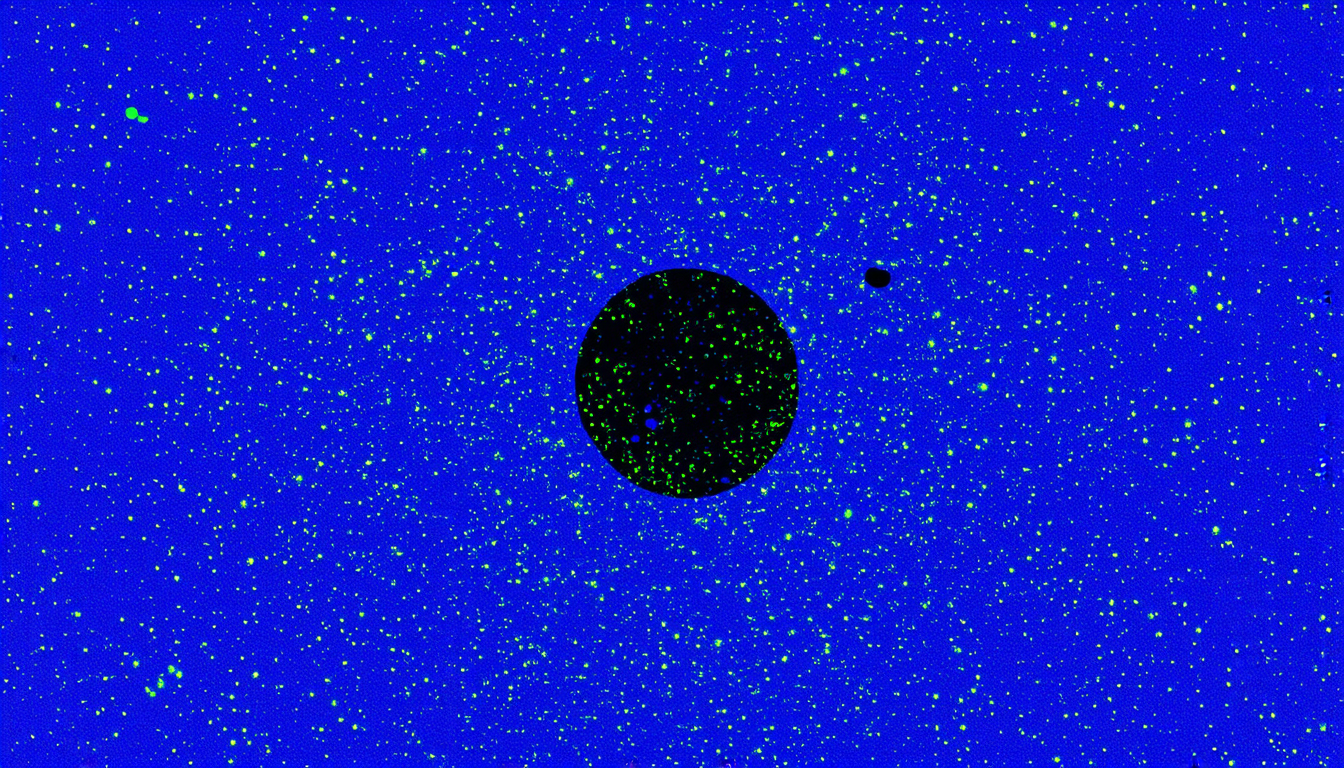
The technique works by using a type of light called speckle, which is created when a laser beam passes through a random medium such as a piece of transparent plastic. This creates a unique pattern of bright and dark spots on the sample, which can then be used to encode information about its structure and composition.
When the sample is moved between images, the speckle pattern changes slightly, allowing scientists to capture multiple images with different patterns. By analyzing these images, researchers can reconstruct a super-resolved image of the sample, revealing details that would otherwise be invisible.
One of the key advantages of Speckle Flow SIM is its ability to simplify the process of capturing high-resolution images. Traditional methods require complex optical systems and precise control over the movement of the sample and the light source. In contrast, Speckle Flow SIM uses a simple laser beam and a random medium to create the speckle pattern.
This could make it easier for scientists to use super-resolution microscopy in their research, particularly in fields such as biology and medicine where high-resolution images are crucial for understanding complex biological processes.
The researchers behind Speckle Flow SIM used a combination of computer simulations and experiments to test the technique. They found that it was able to produce high-quality images with resolutions up to 2x higher than traditional methods.
The team is now working on refining the technique and exploring its potential applications in fields such as neuroscience, where super-resolution imaging could help scientists understand the workings of the human brain at a microscopic level.
Overall, Speckle Flow SIM represents an exciting development in the field of super-resolution microscopy. Its simplicity and ease of use make it an attractive option for researchers looking to capture high-resolution images without the complexity and expense of traditional methods.
Cite this article: “Breakthrough in Super-Resolution Microscopy Simplifies High-Quality Imaging”, The Science Archive, 2025.
Microscopy, Super-Resolution, Speckle Flow Sim, Imaging, Resolution, Laser, Light, Biology, Medicine, Neuroscience





