

Friday 21 March 2025
A team of researchers has made a significant breakthrough in the field of artificial intelligence, developing a new method for teaching machines how to work together effectively. The innovation, known as LLM- Guided Credit Assignment (LCA), enables individual agents within a multi-agent system to learn from each other and adapt their behavior accordingly.
The concept of multi-agent systems is not new; it has been studied extensively in the field of artificial intelligence for decades. However, one major challenge in this area is how to assign credit to individual agents when they work together to achieve a common goal. In traditional reinforcement learning, rewards are often given to the entire team rather than individual members, which can lead to suboptimal behavior.
LCA addresses this issue by using large language models (LLMs) to generate dense, agent-specific rewards based on natural language descriptions of the task and overall team goals. These rewards are then used to train individual agents within the multi-agent system.
The researchers tested LCA in several environments, including grid worlds and a game called Pistonball. In these tests, they found that agents trained with LCA were able to learn faster and more effectively than those using traditional reinforcement learning methods.
One of the key benefits of LCA is its ability to encourage cooperation between agents. By assigning rewards based on individual actions within the context of collaboration, LCA incentivizes agents to work together towards a common goal rather than competing against each other.
This innovation has significant implications for a wide range of applications, from autonomous vehicles to robotic teams. In these scenarios, effective communication and coordination between multiple agents is crucial for success. By enabling individual agents to learn from each other and adapt their behavior accordingly, LCA could greatly improve the performance of these systems.
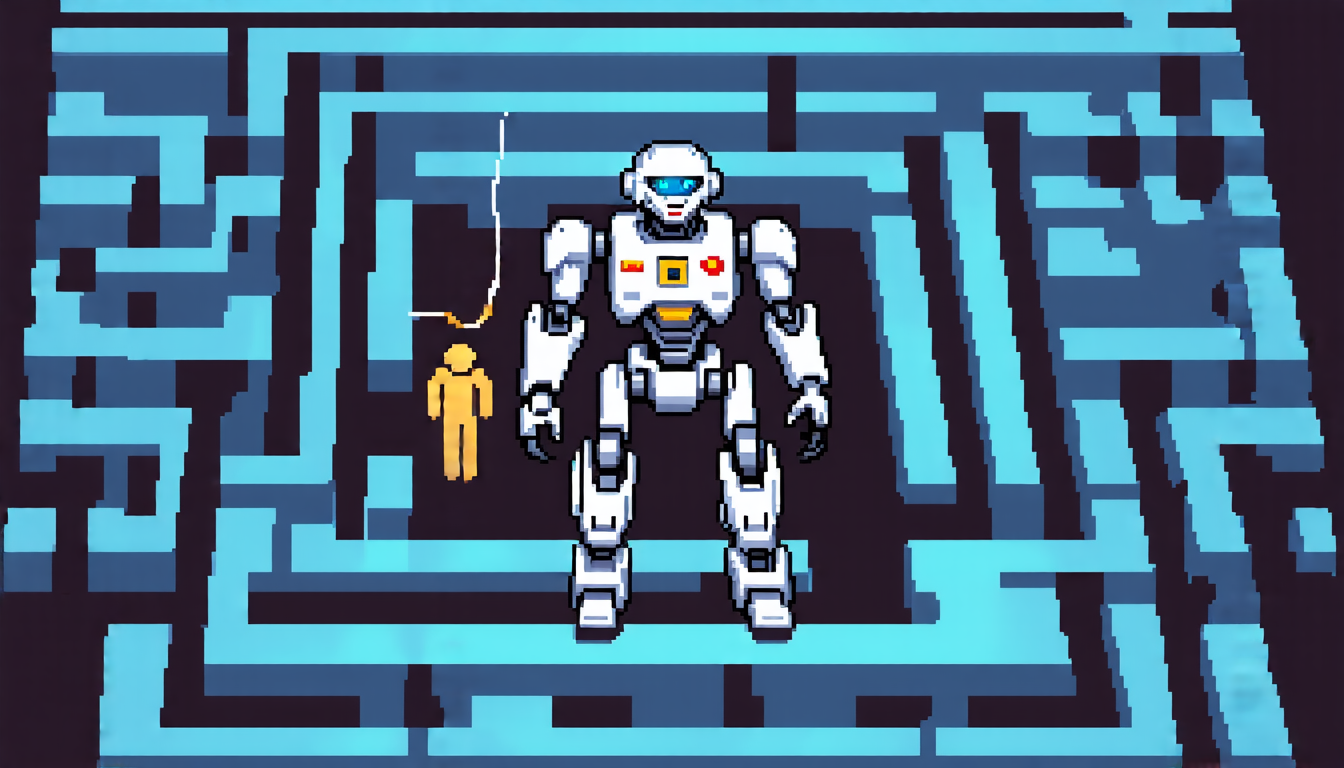
The researchers also tested LCA in a more complex environment called Victim-Rubble, where an agent had to navigate through a maze to rescue victims while avoiding obstacles. In this scenario, they found that LCA was able to generate individual rewards that evaluated actions within the context of collaboration, such as rewarding an agent for making a critical turn or movement towards the correct target.
These results demonstrate the potential of LCA to improve the performance of multi-agent systems in complex environments. By providing individual agents with dense, agent-specific rewards based on natural language descriptions, LCA could greatly enhance the ability of these systems to learn and adapt to new situations.
In the future, the researchers plan to continue developing LCA and exploring its applications in various fields.
Cite this article: “Teaching Machines to Work Together: A Breakthrough in Artificial Intelligence”, The Science Archive, 2025.
Artificial Intelligence, Multi-Agent Systems, Reinforcement Learning, Large Language Models, Credit Assignment, Natural Language Processing, Collaboration, Autonomous Vehicles, Robotics, Machine Learning





