

Friday 21 March 2025
The quest for precise chemical analysis has long been a challenge in the field of planetary science. The Martian surface, rich in geological secrets, is particularly demanding due to its harsh environment and limited availability of spectroscopic data. To overcome these obstacles, researchers have turned to machine learning algorithms, specifically convolutional neural networks (CNNs), which have shown impressive results in analyzing complex patterns.
Recently, a team of scientists has proposed an innovative regularization method based on f-divergence, a mathematical concept that measures the distance between two probability distributions. By incorporating this technique into CNN training, they aim to improve the accuracy of oxide-weight predictions from spectroscopic data collected under Martian conditions.
The challenge lies in balancing the data-hungry nature of CNNs with the limited availability of spectroscopic data. F-divergence regularization helps mitigate overfitting by constraining the distributional discrepancy between predictions and noisy targets, effectively acting as an auxiliary loss function.
In experiments using spectra collected from Mars-like environments by the remote-sensing instruments aboard the Curiosity and Perseverance rovers, the proposed method demonstrated significant benefits compared to standard regularization techniques like L1, L2, and dropout. Moreover, combining f-divergence regularization with these standard methods led to further enhancements in performance.
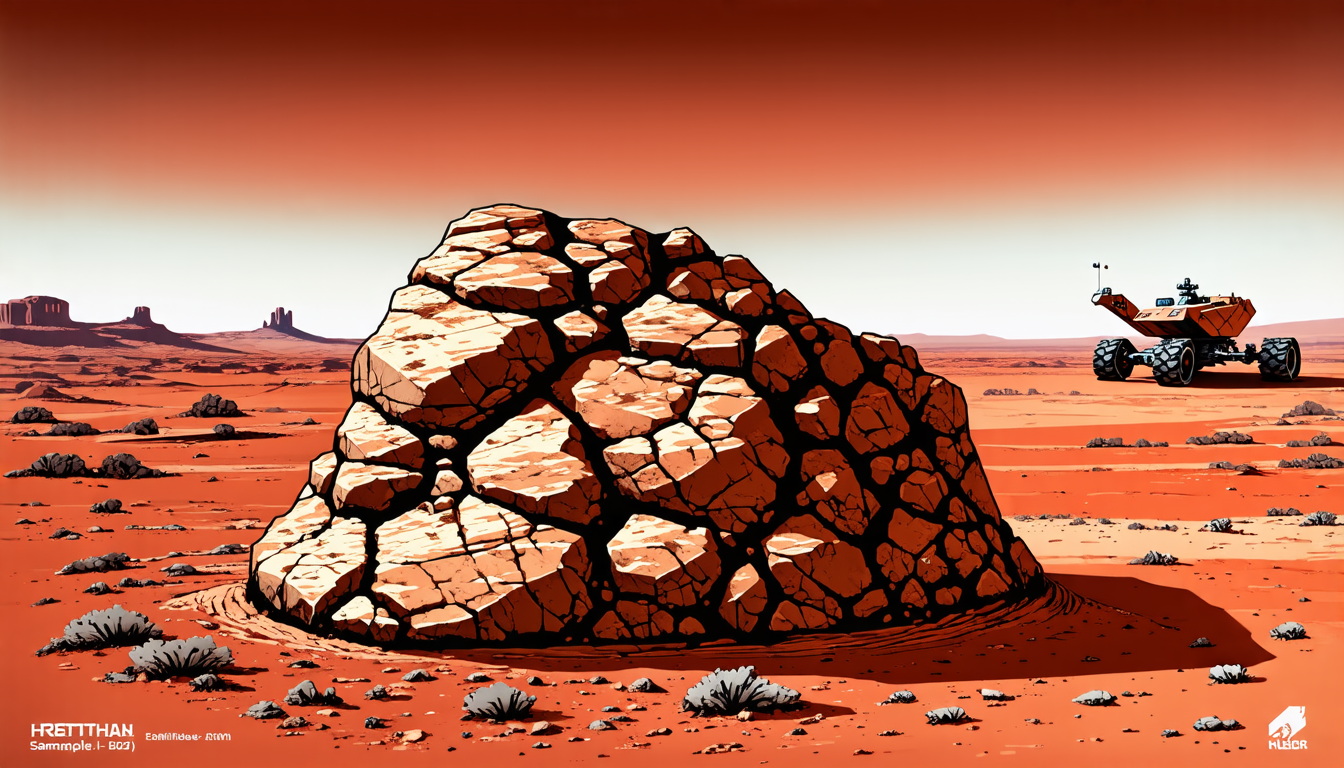
The implications of this research are substantial. Precise chemical characterization of Martian rock samples is crucial for unraveling the planet’s geological history and searching for signs of past or present life. By improving the accuracy of oxide-weight predictions, scientists can better understand the mineralogical composition of these samples, which may hold secrets to understanding the evolution of our solar system.
The f-divergence regularization method has also shown promise in other domains, such as medical imaging analysis and speech recognition. As machine learning continues to transform various fields, this innovative approach may find applications beyond planetary science, offering new avenues for improving model robustness and accuracy.
As researchers continue to push the boundaries of data-driven scientific inquiry, it is clear that f-divergence regularization will play a significant role in shaping the future of machine learning. By combining mathematical innovation with computational power, scientists are poised to unlock new insights into the mysteries of our universe.
Cite this article: “Unlocking Martian Secrets: F-Divergence Regularization in Planetary Science”, The Science Archive, 2025.
Machine Learning, Convolutional Neural Networks, Planetary Science, Martian Surface, Spectroscopic Data, F-Divergence Regularization, Oxide-Weight Predictions, Mars-Like Environments, Robustness And Accuracy, Geologic History





