

Friday 21 March 2025
The quest for safer AI systems has taken a significant leap forward, thanks to a novel approach that combines neural networks and control theory. Researchers have developed a new framework that allows them to design artificial intelligence (AI) systems that are not only intelligent but also safe and reliable.
At the heart of this innovation is the concept of barrier functions, which are mathematical constructs that define the boundaries within which an AI system can operate safely. In traditional AI systems, these barriers are often set by humans, who must carefully craft rules and regulations to ensure the system behaves as intended. However, this approach has its limitations – it’s time-consuming, error-prone, and may not be effective in all situations.
The new framework uses a type of neural network called piecewise affine (PWA) dynamics to learn the boundaries of safe operation from data. PWA networks are particularly well-suited for modeling complex systems, such as those that involve multiple variables or non-linear relationships. By training these networks on large datasets, researchers can identify patterns and relationships that would be difficult or impossible to capture with traditional methods.
The beauty of this approach lies in its ability to automatically generate barrier functions from the learned PWA dynamics. This eliminates the need for human intervention, reducing the risk of errors and increasing the efficiency of the design process. Moreover, the generated barrier functions can be easily adapted to different scenarios and environments, making them highly flexible and versatile.
One of the key challenges in designing AI systems is ensuring that they remain safe and reliable even when faced with unexpected situations or uncertainties. The new framework addresses this challenge by incorporating a novel type of neural network called leaky ReLU (Rectified Linear Unit). Leaky ReLU allows the network to learn from both successful and failed attempts, which helps to improve its overall robustness.
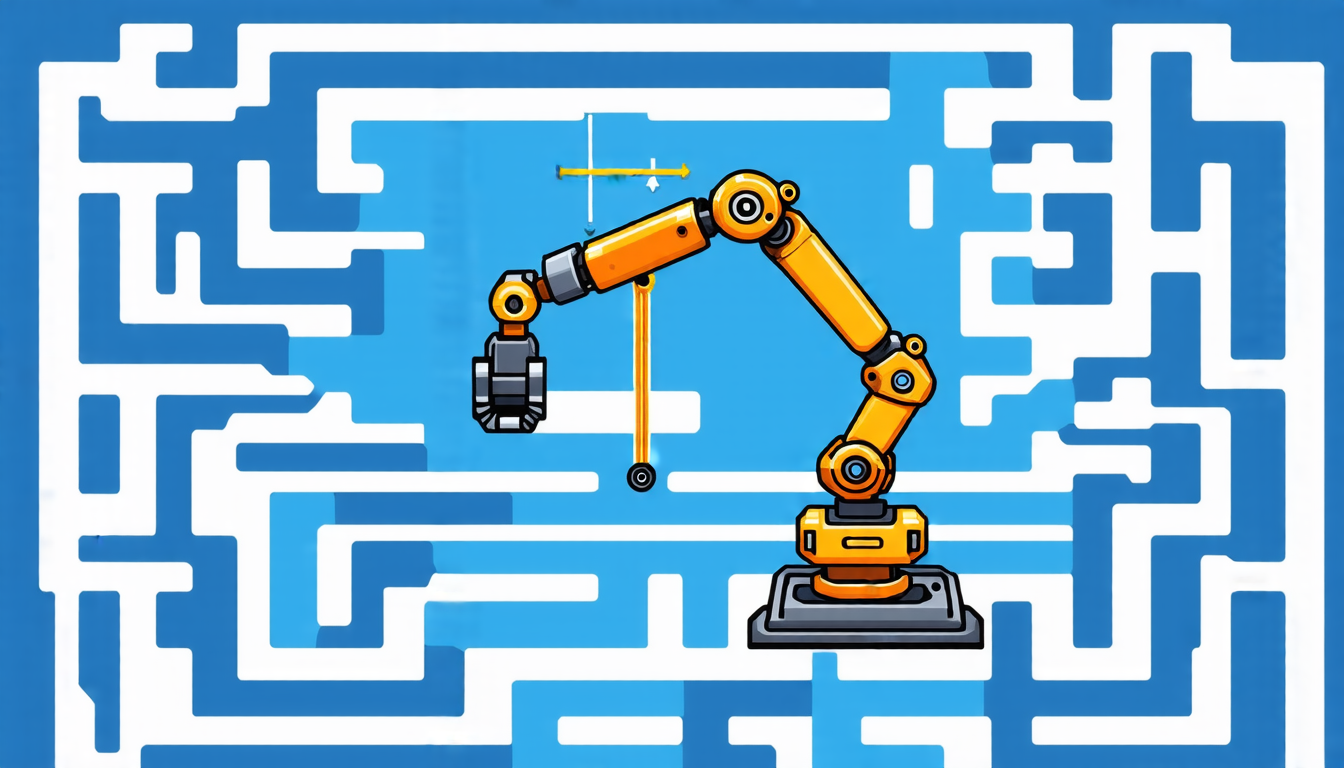
The researchers have demonstrated their approach using several case studies, including an inverted pendulum system and a robotic arm. In each case, they were able to generate safe and reliable AI systems that could adapt to changing conditions and uncertainties. The results are promising, suggesting that this new framework has the potential to significantly improve the safety and reliability of AI systems.
The implications of this research go beyond just improving AI safety – it also has far-reaching consequences for many areas of science and engineering. For example, the ability to automatically generate barrier functions could revolutionize the design of autonomous vehicles, robotic systems, and other complex machines that require precise control and navigation.
Cite this article: “AI Safety Breakthrough: Automatic Generation of Barrier Functions”, The Science Archive, 2025.
Artificial Intelligence, Neural Networks, Control Theory, Barrier Functions, Safe Ai Systems, Pwa Dynamics, Leaky Relu, Robustness, Autonomous Vehicles, Machine Learning





