

Friday 21 March 2025
Scientists have made a significant breakthrough in understanding how populations of different species interact and evolve over time. A new study has shed light on the complex dynamics of branching processes, which describe the growth or decline of populations in response to various factors such as resource availability and environmental changes.
The research focuses on a specific type of branching process known as the bisexual Galton-Watson process, where individuals from two different species interact and produce offspring. This process is particularly relevant in the context of human populations, where the interaction between different sub-populations can have significant implications for their growth or decline.
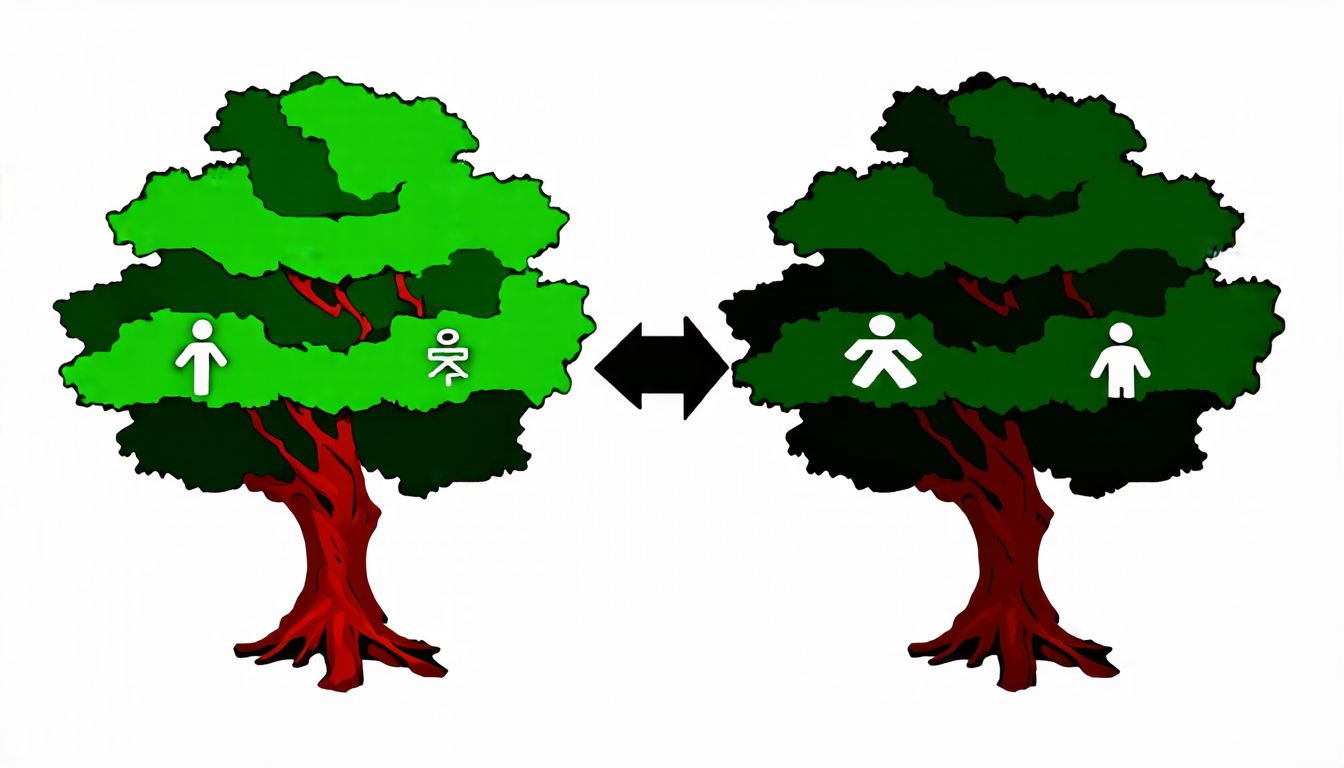
According to the study, when two sub-populations with different resource requirements coexist, they may reach an equilibrium state where the rate of growth of one population is balanced by the rate of decline of the other. However, this equilibrium is not always stable and can be disrupted by changes in environmental conditions or demographic factors.
The researchers used mathematical models to simulate the behavior of these branching processes and found that the interaction between different sub-populations can lead to complex and non-linear dynamics. For example, they discovered that a small change in one population’s resource requirements can have a significant impact on the growth rate of another population.
These findings have important implications for our understanding of how populations evolve and adapt to changing environments. They also highlight the need for a more nuanced approach to managing natural resources and mitigating the impacts of environmental changes on human populations.
One potential application of this research is in the context of conservation biology, where it can inform strategies for preserving endangered species or managing ecosystems. For example, by understanding how different sub-populations interact and respond to environmental changes, conservationists may be able to develop more effective management plans that take into account the complex dynamics of these systems.
The study also has implications for our understanding of human demographics and population growth. By studying how different populations interact and evolve over time, researchers can gain insights into the factors that drive population growth or decline, which can inform policies aimed at managing population size and promoting sustainable development.
Overall, this research provides new insights into the complex dynamics of branching processes and has important implications for our understanding of how populations evolve and adapt to changing environments.
Cite this article: “Understanding Complex Population Dynamics: Insights from Branching Processes”, The Science Archive, 2025.
Population Dynamics, Branching Processes, Galton-Watson Process, Resource Competition, Environmental Changes, Demographic Factors, Conservation Biology, Endangered Species, Ecosystem Management, Population Growth, Sustainability.





