

Friday 21 March 2025
Scientists have long been fascinated by the properties of two-dimensional (2D) materials, which are made up of a single layer of atoms or molecules. These materials have unique electronic and optical properties that make them promising for use in a wide range of applications, from electronics to medicine.
One type of 2D material is called metallene, which is a family of metallic sheets that can be created by sandwiching a layer of metal between two layers of another material. Metallenens have been found to have unusual properties, such as being able to conduct electricity at room temperature and having high mechanical strength.
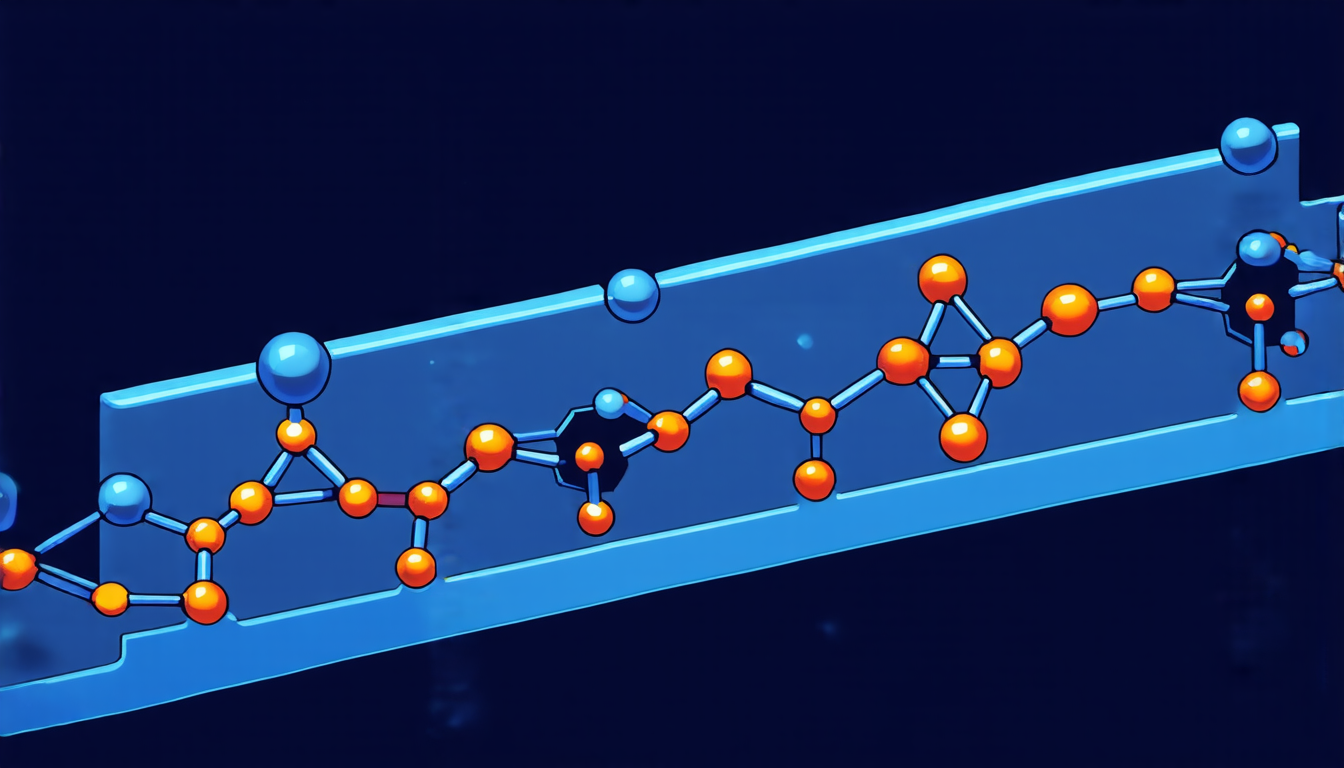
Researchers have been studying the edges of 2D materials for some time now, but it’s only recently that they’ve begun to understand the properties of metallene edges in detail. The edges of a metallene are where the metal atoms meet with the surrounding material, and this interface can be important for determining the overall properties of the material.
A recent study published in the journal Nanoscale has shed new light on the properties of metallene edges. The researchers used computer simulations to model the behavior of various types of metallenes, including those made from gold, copper, magnesium, and lead.
The study found that the edges of metallenes are not as simple as they seem at first glance. The metal atoms at the edge can form bonds with each other in a variety of ways, leading to different properties depending on the type of metallene and its edge structure.
For example, the researchers found that the edges of gold metallenes tend to relax into a closed loop shape, which can lead to unusual electronic properties. In contrast, the edges of copper metallenes are more rigid and do not exhibit this relaxation behavior.
The study also found that the edges of metallenes can have a significant impact on their overall mechanical strength. The researchers used computer simulations to model the stress and strain on the edges of metallenes under different conditions, and they found that the edges can be prone to cracking or breaking under certain types of stress.
Despite these challenges, the study suggests that metallene edges may have important applications in fields such as electronics and medicine. For example, metallene edges could be used to create tiny electronic devices that are flexible and wearable, such as sensors or transistors.
Overall, the study provides new insights into the properties of metallene edges and their potential applications.
Cite this article: “Unraveling the Properties of Metallene Edges: A New Frontier in 2D Materials Research”, The Science Archive, 2025.
Two-Dimensional Materials, Metallenens, Metallic Sheets, Computer Simulations, Nanoscale, Gold Metallenes, Copper Metallenes, Mechanical Strength, Electronic Properties, Edge Structure, Relaxation Behavior.





