
Friday 21 March 2025
The mysterious world of automated market makers has long fascinated economists and traders alike. These digital entities, designed to facilitate smooth trading on decentralized exchanges, have been scrutinized for their impact on the financial landscape. Recently, a team of researchers delved into the intricacies of two key metrics used to evaluate these market makers: impermanent loss (IL) and loss-versus-rebalancing (LVR). Their findings shed new light on the complex relationships between these metrics and the underlying price dynamics.
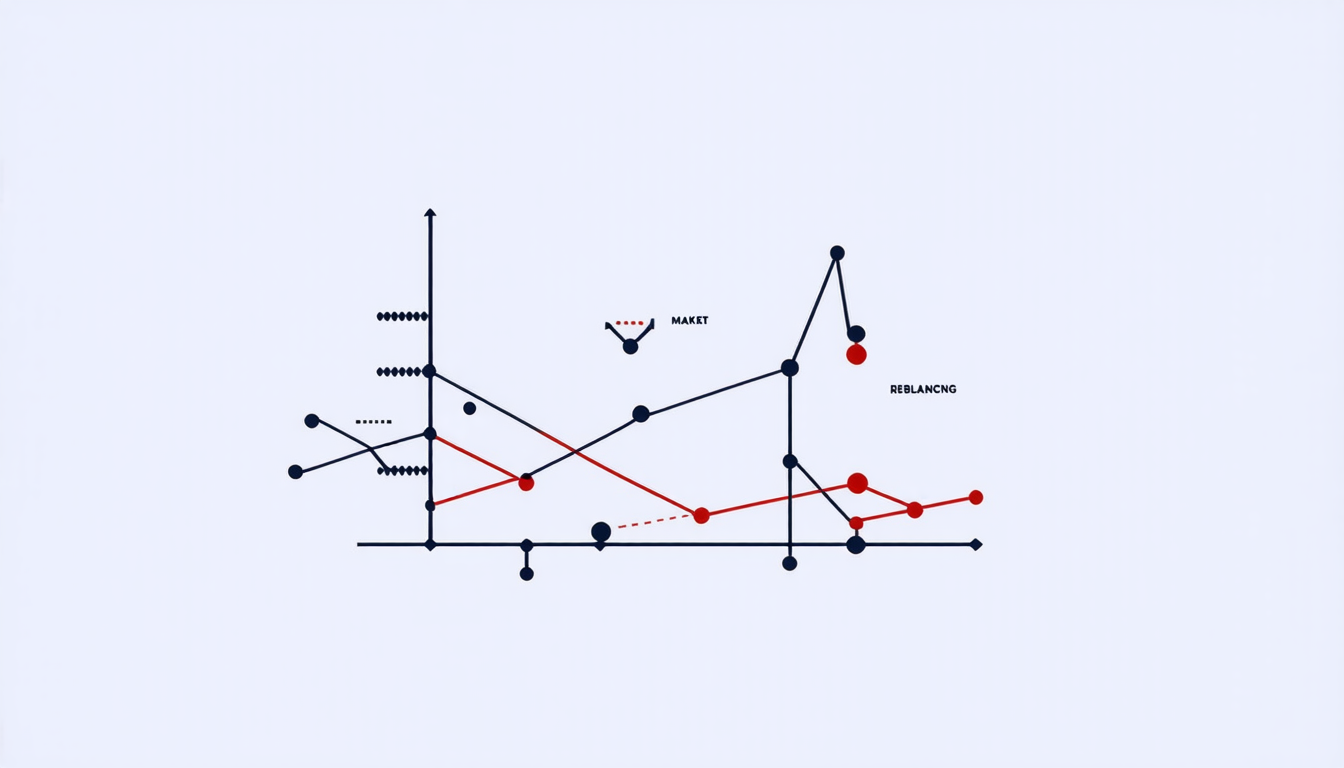
To understand the significance of IL and LVR, it’s essential to grasp their definitions. IL measures the difference between a market maker’s initial investment and its final value after a trade is executed. In contrast, LVR calculates the cumulative loss incurred by the market maker as it rebalances its portfolio in response to price fluctuations. These metrics are crucial for evaluating the performance of automated market makers, which rely on them to make informed decisions about liquidity provision.
The researchers used numerical simulations and analytical tools to investigate the relationship between IL and LVR. They discovered that, surprisingly, both metrics exhibit the same average value over time, despite their seemingly disparate nature. This finding has important implications for our understanding of how market makers operate in decentralized exchanges.
The team’s analysis revealed that IL is primarily influenced by the distribution of price changes, while LVR is affected by the cumulative impact of these changes over time. This dichotomy led to a striking observation: most trajectories exhibit sub-average IL, whereas average LVR is relatively high. This disparity can be attributed to the fact that market makers tend to rebalance their portfolios frequently, resulting in increased losses.
The researchers also explored the distribution function of IL, which turned out to be a complex and multi-peaked curve. They demonstrated that this distribution can be decomposed into two parts: one corresponding to price increases and another to decreases. This decomposition provides valuable insights into the underlying dynamics of market makers’ behavior.
The study’s findings have significant implications for the design and optimization of automated market making strategies. By better understanding the intricate relationships between IL, LVR, and price fluctuations, market makers can develop more effective approaches to managing risk and maximizing profits. Furthermore, this research contributes to a deeper comprehension of the complex mechanisms governing decentralized exchanges.
In the world of finance, the nuances of automated market making are constantly evolving. This study’s insights into the interplay between IL, LVR, and price dynamics will undoubtedly inform the development of more sophisticated market making strategies.
Cite this article: “Unraveling the Complexity of Automated Market Making: Insights into Impermanent Loss and Rebalancing”, The Science Archive, 2025.
Automated Market Makers, Impermanent Loss, Loss-Versus-Rebalancing, Decentralized Exchanges, Market Making, Liquidity Provision, Price Dynamics, Portfolio Rebalancing, Risk Management, Finance
Reference: Abe Alexander, Guillaume Lambert, Lars Fritz, “Impermanent loss and Loss-vs-Rebalancing II” (2025).