

Friday 21 March 2025
As scientists continue to push the boundaries of what’s possible with quantum computing, they’ve made a breakthrough in solving one of the most challenging problems in computer science: finding the maximum independent set (MIS) problem. This achievement has significant implications for fields such as logistics, telecommunications, and finance.
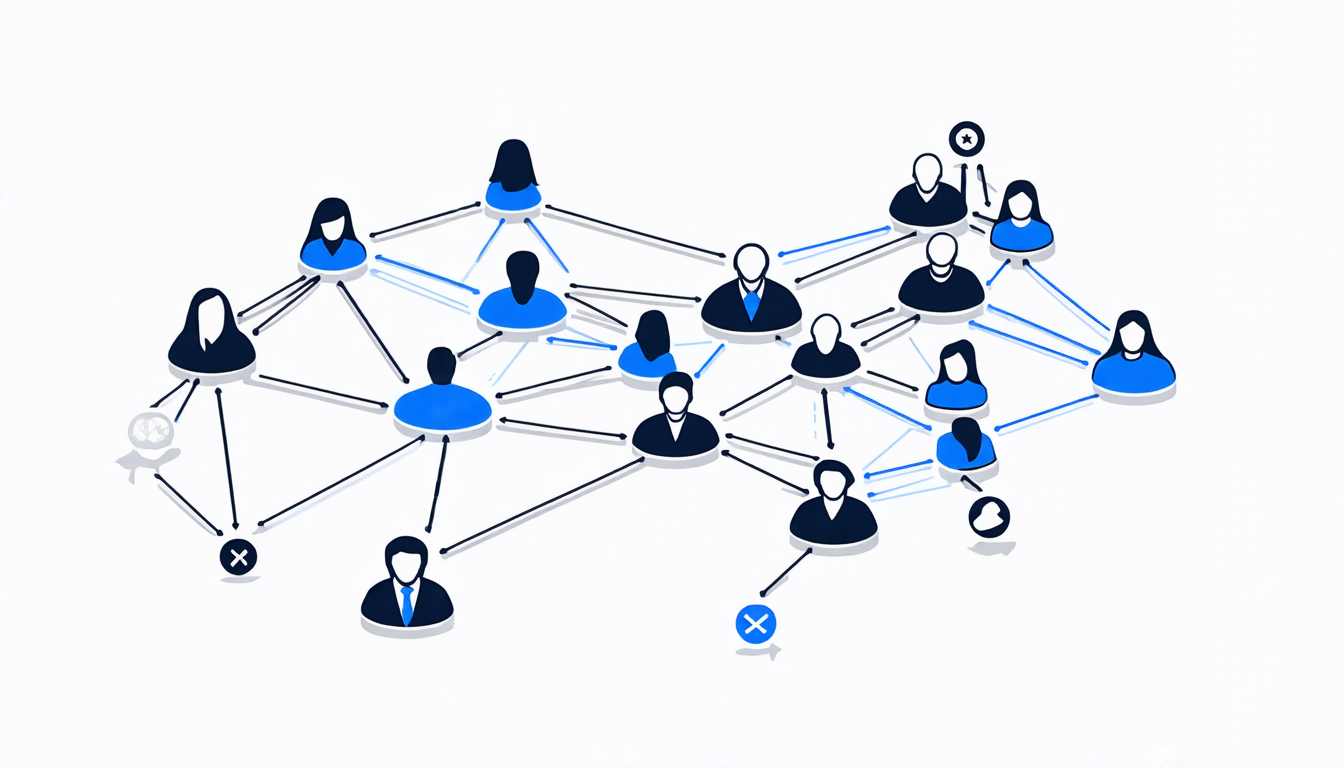
To understand why this is important, let’s dive into the basics. The MIS problem involves finding the largest subset of nodes in a graph that do not share any edges between them. It’s like trying to find the most isolated group of people in a social network without anyone being connected to each other. Sounds simple, but it’s actually an incredibly complex task.
Traditionally, solving this problem required massive computational power and time. In fact, it was considered one of the most difficult problems in computer science, alongside others like factoring large numbers and finding perfect matching in bipartite graphs. However, with the advent of quantum computing, researchers have been able to make significant strides in solving these complex problems.
The team behind this breakthrough used a combination of innovative techniques and clever algorithms to create hard instances of MIS problems that could be solved using neutral atom quantum processors. These tiny particles can be manipulated to solve specific problems, like finding the maximum independent set, with unprecedented speed and accuracy.
To generate these hard instances, the researchers employed various methods, including matching-based weighting, degree- centrality weighting, and graph centrality-weighting. By carefully crafting the weights of each node in the graph, they created a landscape of challenging problems that would be difficult to solve using traditional classical algorithms.
The results were impressive: with their quantum processor, the team was able to find the maximum independent set for larger instances than ever before. In fact, they were able to solve problems with 1000 nodes and densities as high as 1 kHz, which is a significant milestone in this field.
But what does this mean for real-world applications? For industries that rely on complex logistical networks, finding the most efficient routes or scheduling deliveries can be a daunting task. By solving the MIS problem more efficiently using quantum computing, companies could optimize their operations and reduce costs.
In telecommunications, this breakthrough could enable faster and more reliable communication networks by optimizing network topology and reducing congestion.
For finance, it could mean improved portfolio management and risk assessment by identifying the most isolated groups of assets in a complex financial system.
Cite this article: “Quantum Breakthrough: Solving the Maximum Independent Set Problem with Unprecedented Speed and Accuracy”, The Science Archive, 2025.
Quantum Computing, Maximum Independent Set Problem, Mis, Graph Theory, Logistics, Telecommunications, Finance, Optimization, Algorithms, Computational Power, Complexity Theory





