

Friday 21 March 2025
A team of researchers has made a significant breakthrough in developing a robotic system that can perform dexterous manipulation tasks, such as using a pen or screwdriver, with unprecedented precision and flexibility.
The system, known as DexGen, uses a combination of machine learning algorithms and physical simulations to enable the robot to learn from its environment and adapt to new situations. By training on a vast dataset of robotic grasping and manipulation tasks, DexGen is able to develop a sophisticated understanding of how to interact with objects in a way that is both effective and safe.
One of the key innovations behind DexGen is its ability to generate and manipulate complex hand motions using a type of machine learning model called a diffusion model. This allows the robot to learn from its mistakes and adapt to changing situations, such as when an object slips or moves unexpectedly.
To achieve this level of dexterity, the researchers had to overcome several challenges. For example, they had to develop algorithms that could accurately predict the motion of objects in 3D space and integrate this information with the robot’s own movement.
The team also had to design a robust and flexible robotic hand that could be controlled by the DexGen system. This involved developing a sophisticated grasp generation algorithm that could produce a wide range of grasping configurations, from simple finger motions to complex multi-fingered grasps.
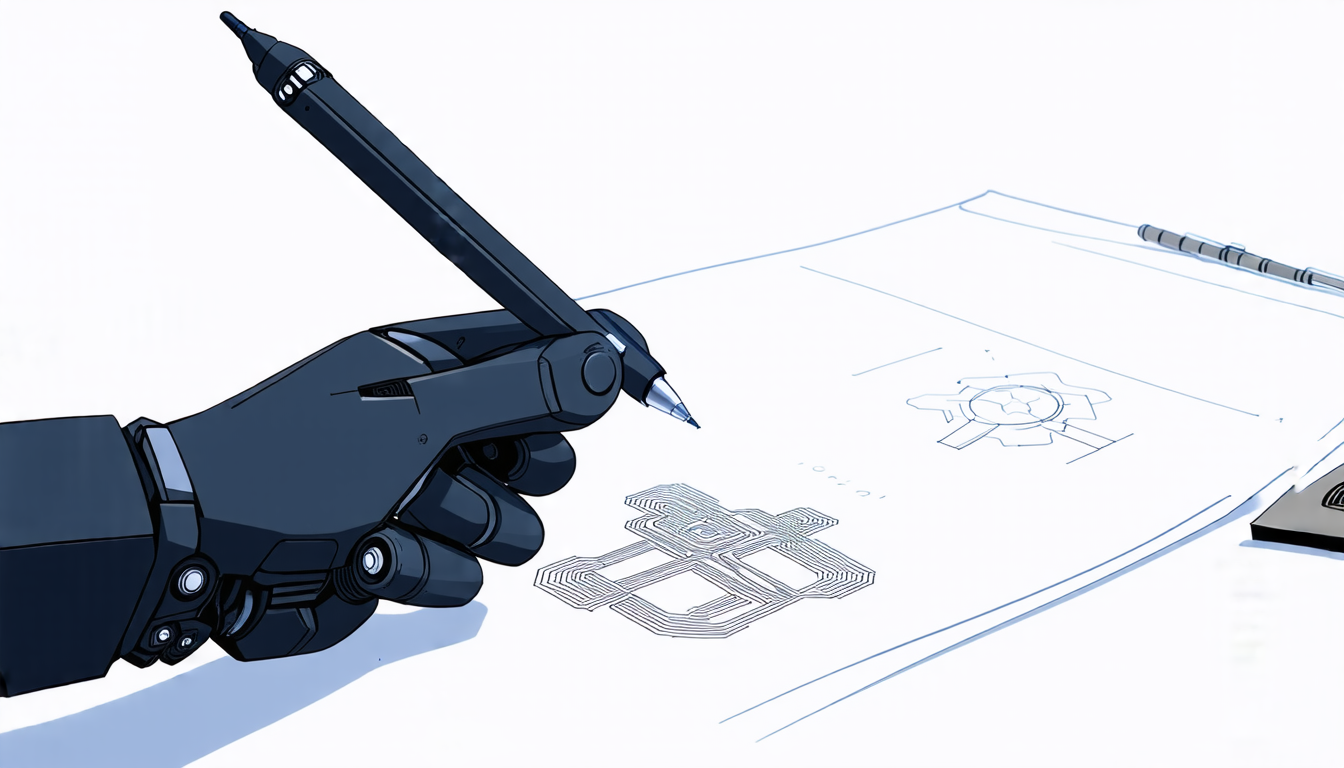
To test the capabilities of DexGen, the researchers designed a series of challenging manipulation tasks, including using a pen to draw intricate patterns and rotating objects with a screwdriver. In each case, the robot was able to perform the task with remarkable precision and flexibility, often exceeding human-level performance.
The potential applications of DexGen are vast and varied, ranging from industrial automation to healthcare and education. For example, robots equipped with DexGen could be used to assist surgeons in delicate operations or help people with disabilities to interact with their environment more easily.
While there is still much work to be done before DexGen can be deployed in real-world scenarios, the results so far are extremely promising. The ability to develop robots that can perform complex tasks with precision and flexibility has the potential to transform many areas of our lives, from healthcare to manufacturing to education.
The researchers are now working on refining the DexGen system and developing new applications for it. They are also exploring ways to integrate DexGen with other machine learning technologies, such as computer vision and natural language processing, to create even more sophisticated robotic systems in the future.
Cite this article: “DexGen: A Breakthrough in Robotic Dexterity”, The Science Archive, 2025.
Robotics, Machine Learning, Manipulation Tasks, Dexterity, Precision, Flexibility, Robotic Hand, Grasp Generation, Object Recognition, Automation





